TL;DR
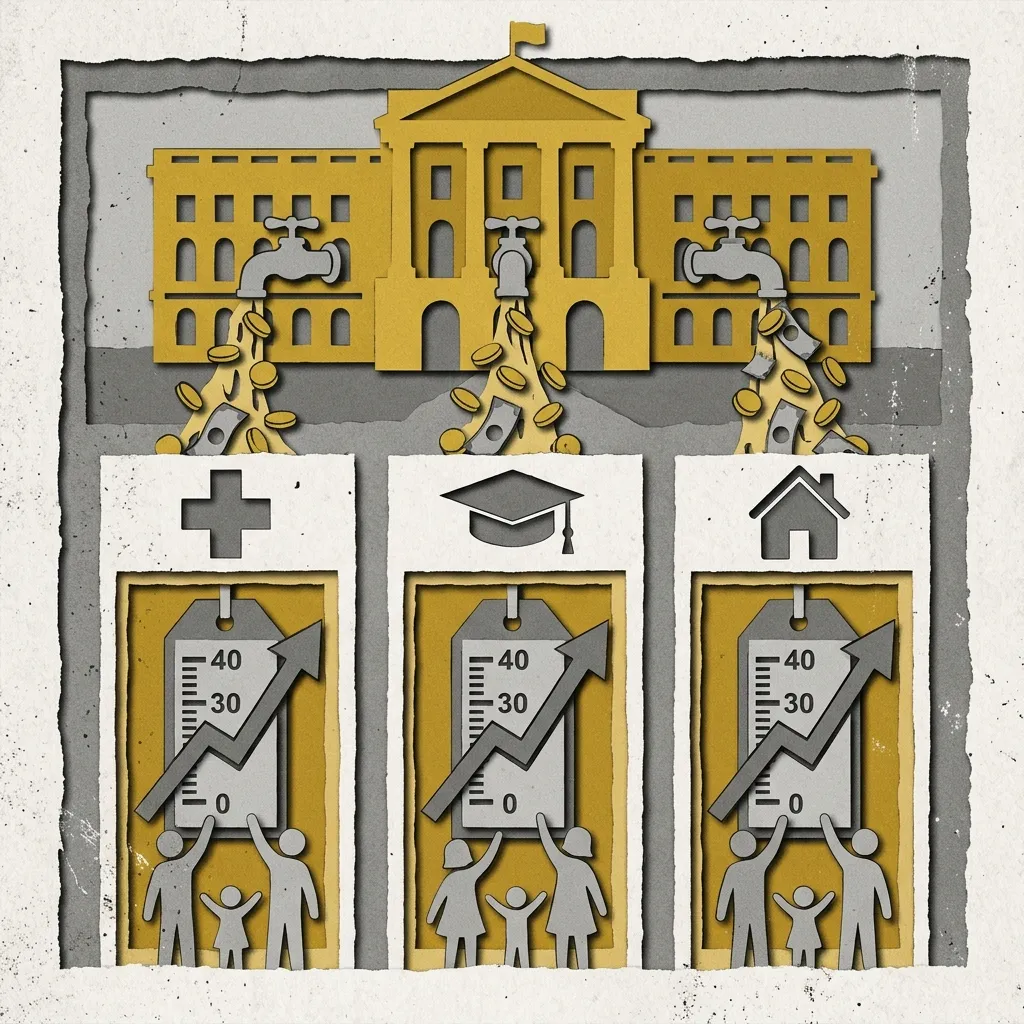
- Three of the largest household costs, healthcare, housing, and education, have outpaced general inflation for four consecutive decades. All three are also sectors with large, active government financing programs. Economic research suggests the relationship is meaningful, not incidental.
- In healthcare, the structure of third-party payment through Medicare, Medicaid, and employer-sponsored insurance insulates patients from the direct cost of care, reducing price sensitivity and enabling providers to charge more than a direct-payment market would support.
- In higher education, the expansion of federal student lending since the 1980s correlates strongly with tuition increases. Multiple peer-reviewed studies find that increases in federal loan limits are passed through to tuition at meaningful rates, particularly at schools facing limited competitive pressure.
- In housing, demand-side subsidies through GSE-backed mortgage guarantees, the mortgage interest deduction, and FHA lending have supported house price levels above what a pure cash market would produce, though local supply restrictions mediate how much of the demand increase translates into higher prices versus more housing.
- The evidence does not support the conclusion that eliminating these programs would automatically make things affordable. Supply constraints, regulatory barriers, and market structure all play independent roles. But the evidence does support a more modest conclusion: demand-side financing programs can and do raise prices when supply cannot expand to meet the stimulated demand.
There is a frustrating paradox at the center of American affordability policy. The three things that have become most financially burdensome for ordinary families over the past forty years, healthcare, housing, and higher education, are also the three sectors in which the federal government has most aggressively expanded financing programs designed to make those things accessible. The federal government now guarantees or directly provides nearly all student lending. It finances healthcare for the elderly, the poor, and veterans through programs that together cover roughly half of all medical spending. It underwrites the mortgage market through Fannie Mae, Freddie Mac, FHA insurance, and the VA loan program to such a degree that without these institutions, most Americans would struggle to obtain a 30-year fixed-rate mortgage.
The standard political defense of each of these programs is that they allow people to access things they otherwise could not afford. That defense is not entirely wrong. Many individual recipients of these programs genuinely benefit from access they would not otherwise have. But the aggregate price effect of these programs, what they do to the cost of healthcare, education, and housing across the whole market, is a separate question from whether individual recipients benefit. And on that question, the evidence is considerably more uncomfortable than the standard policy defense acknowledges.
This article examines that evidence carefully. The goal is not to make a sweeping ideological case that all government financing is bad, or that the programs should be abolished tomorrow. The goal is to look honestly at what researchers have found about the relationship between government-subsidized demand and price levels in these sectors, where the evidence is solid, where it is more contested, and what the evidence implies about the likely effects of further expansion of these programs.
The Basic Economic Mechanism
The economic logic behind the concern about government financing programs is not complicated, though its application to specific markets involves significant nuance.
When the government makes it easier for buyers to spend more on a product, whether by lending them money at subsidized rates, insulating them from the direct cost of purchase, or guaranteeing loans they could not otherwise obtain, demand for that product rises. If supply can expand freely to meet the increased demand, prices stay roughly stable and more of the product gets produced. If supply cannot expand, or expands slowly due to regulatory constraints, physical limits, or professional barriers, then much of the demand increase translates into higher prices rather than more output.
The critical variable is supply elasticity: how much does the quantity supplied change in response to a change in price? In markets with highly elastic supply, like competitive manufacturing, demand subsidies mostly increase quantity rather than price. In markets with inelastic supply, whether due to physical constraints, regulatory barriers, or deliberate restriction, demand subsidies mostly raise prices. The same dollar of government financing does very different things depending on which side of the supply curve it lands.
Healthcare, housing, and higher education all share a common feature: their supply is substantially inelastic, for different reasons in each case. Healthcare supply is constrained by professional licensing requirements, state certificate-of-need laws that limit the number of hospitals and clinical facilities, and the long training pipeline required to produce a licensed physician. Higher education supply is constrained by accreditation requirements that impose significant barriers to entry for new institutions, reputational dynamics that give existing schools strong pricing power, and regulatory structures that make it difficult for low-cost alternatives to compete on a level field. Housing supply is constrained by the zoning laws and permitting systems that have been documented extensively elsewhere on this site.
When you combine these supply constraints with large government financing programs that stimulate demand, the result is a price dynamic that should not be surprising, even if it is politically inconvenient. The government effectively subsidizes sellers more than it subsidizes buyers.
Healthcare: The Third-Party Payment Problem
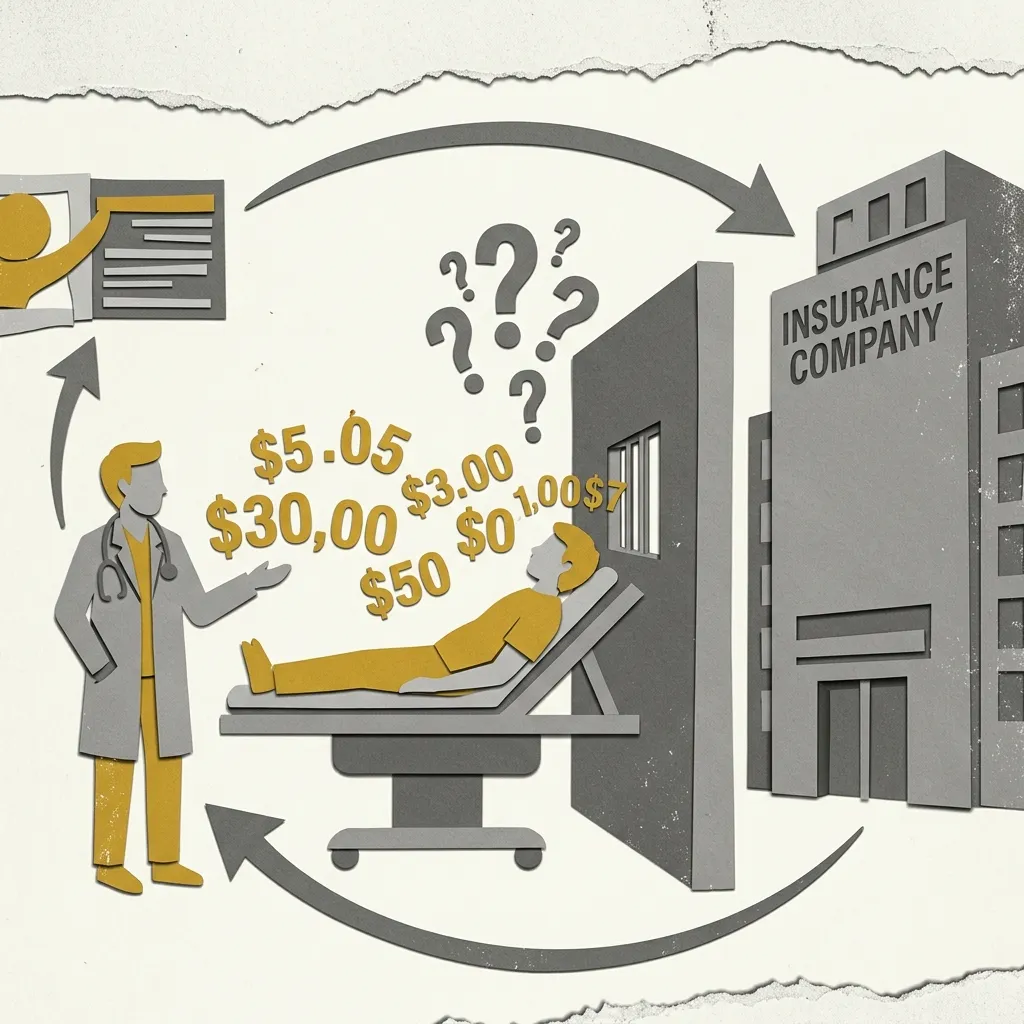
The structural peculiarity of American healthcare financing is that almost no one paying for medical care is the person deciding how much of it to consume. In most markets, the buyer choosing the product is also the one paying for it. This creates a direct feedback loop between price and consumption: if the price of something goes up, buyers buy less of it, which pushes back on the price. In American healthcare, this feedback loop is largely absent.
For most Americans with employer-sponsored insurance, the cost of medical care is paid by an insurance company that has already been paid by the employer through a premium that was partly shaped by the government’s tax exclusion for employer-provided health benefits. The patient pays a copay or deductible, which typically represents a small fraction of the actual cost of the service. For the roughly 19 percent of Americans covered by Medicare and the roughly 23 percent covered by Medicaid, government programs directly finance the care. When you add in VA health coverage, CHIP, and other programs, government sources finance nearly half of all health spending in the United States, according to the Centers for Medicare and Medicaid Services.
This structure has a predictable economic consequence. When people do not pay the full price of what they consume, they consume more of it than they would if they did. Economists call this moral hazard, and it is not a moral judgment but a description of a structural feature: when the cost of something is borne largely by a third party, the person consuming it faces weaker incentives to economize. The demand for healthcare services is higher than it would be in a system where patients paid closer to the full price, which supports higher prices for those services.
The empirical evidence for this effect is substantial. The RAND Health Insurance Experiment, conducted between 1974 and 1982, remains the largest randomized controlled trial of healthcare financing policy ever conducted. It randomly assigned participants to health insurance plans with varying levels of cost-sharing, from full coverage to plans requiring participants to pay 95 percent of costs up to a catastrophic ceiling. The results were clear: people with free care used roughly 40 percent more medical services than people who had to pay 95 percent of costs. More importantly for the price question, the study found no significant difference in health outcomes between the groups except for very sick and very poor individuals who genuinely needed more care. This suggests that a substantial portion of the additional healthcare consumed under third-party payment systems is not producing equivalent health improvements; it is simply responding to the insulation from price signals.
The Medicare program, enacted in 1965, extended this third-party payment structure to the elderly, who represent the highest consumers of healthcare services. The effects on healthcare price inflation were measurable. Before Medicare, hospital prices and physician fees grew in line with general inflation. After Medicare, the growth rate accelerated. This does not prove Medicare caused the acceleration, since other factors were changing simultaneously, but the pattern is consistent with the third-party payment hypothesis and has been documented by health economists including Victor Fuchs at Stanford, who has studied medical price inflation over several decades.
The specific mechanism by which Medicare contributes to price inflation is somewhat different from the classic moral hazard story. Medicare does not simply pay whatever providers charge; it negotiates reimbursement rates for each service through a fee schedule. But the fee schedule creates its own distortions. Medicare pays more for procedures, such as surgeries, imaging, and interventions, than for cognitive services like diagnosis, counseling, and care coordination. This reflects the lobbying influence of specialist physician groups in the rate-setting process and has encouraged a supply shift toward procedural medicine and away from primary care, changing the composition of healthcare in ways that drive up overall costs.
There is also a well-documented phenomenon called cost-shifting, in which providers charge private insurers more to compensate for Medicare and Medicaid reimbursement rates that are set below market levels. The American Hospital Association and several independent researchers, including James Capretta at the American Enterprise Institute, have documented that hospitals facing low Medicare and Medicaid reimbursement rates respond by increasing charges to privately insured patients. This means the government’s below-market reimbursement rates do not simply reduce prices for the government; they redistribute costs to private payers, effectively taxing private insurance to subsidize public coverage.
The Affordable Care Act of 2010 added another layer of government financing through the insurance exchanges and the Medicaid expansion. The premium subsidies on the exchanges function similarly to the traditional third-party payment problem: they allow people to purchase more coverage than they would buy at unsubsidized prices. A 2017 study by economists Mark Duggan, Gopi Shah Goda, and Emilio Honda, published in the American Economic Review, found that the ACA’s premium subsidies led to significant premium increases in markets where competition among insurers was limited, consistent with the prediction that subsidies flow to providers when supply constraints prevent the quantity of coverage from expanding commensurately.
None of this analysis implies that the millions of Americans who lack adequate healthcare access should simply go without. The argument is narrower and more specific: the structure of third-party payment insulates consumers from price signals, which supports higher prices across the whole system, and the design choices in government financing programs can either mitigate or amplify this effect depending on how much cost-sharing they incorporate. Programs that require more cost-sharing moderate prices better than programs that shield recipients entirely from the cost of individual services.
Higher Education: The Bennett Hypothesis
In January 1987, William Bennett, who was then the U.S. Secretary of Education, published an op-ed in the New York Times arguing that increases in federal financial aid were allowing colleges to raise their tuitions at a faster rate than they otherwise would. This observation, which became known as the Bennett Hypothesis, was controversial when he made it and has been the subject of a substantial body of economic research in the nearly four decades since.
The pattern Bennett identified is real and well-documented. Between 1980 and 2023, the average net price of attending a four-year college in the United States increased by approximately 213 percent in inflation-adjusted terms, according to data from the College Board. Over the same period, federal Pell Grant funding increased dramatically, federal student loan limits were raised multiple times, and the total outstanding stock of federal student loan debt grew from under $50 billion to over $1.7 trillion. The correlation between the expansion of federal financial aid and the increase in college tuition is not in dispute. The empirical question is how much of the tuition increase was caused by the aid expansion versus other factors.
The most careful empirical work on this question has found a statistically significant causal relationship, though the effect size varies depending on the type of institution and the type of aid. A 2015 paper by Stephanie Riegg Cellini and Claudia Goldin, published in the American Economic Journal: Economic Policy, studied for-profit colleges and found that institutions eligible to receive federal financial aid charged tuition approximately 78 percent higher than comparable institutions not eligible for federal aid, after controlling for other relevant factors. The mechanism is straightforward: eligibility for federal aid expands the effective purchasing power of students, and profit-maximizing institutions respond by raising prices to capture that expanded purchasing power. The study found that the tuition premium at aid-eligible for-profit schools was roughly equal to the maximum available federal financial aid, suggesting near-complete pass-through of federal subsidies into tuition increases.
The for-profit sector result is particularly clean because for-profit institutions have strong price-maximizing incentives and less reputational constraint on tuition-setting behavior than nonprofit universities. But the relationship extends, with more modest estimated effects, to the nonprofit and public sectors as well.
Grey Gordon and Aaron Hedlund, economists at Indiana University and the University of Missouri, published a 2017 paper in the Journal of Political Economy that built a structural model of the higher education market to estimate how much of the tuition increase since 1987 could be attributed to federal aid expansion. Their model suggested that the expansion of federal student lending explained a large fraction of the tuition increase, and that the majority of the welfare gains from increased loan availability accrued to universities rather than to students, precisely because universities were able to capture the subsidized credit by raising prices.

A complementary piece of evidence comes from the natural experiments created by changes in the federal student loan program. David Lucca, Taylor Nadauld, and Karen Shen, economists at the Federal Reserve Bank of New York, published a 2019 paper in the Review of Financial Studies examining what happens to tuition in the years immediately following increases in federal loan limits. They found that institutions raised their tuition by approximately 60 cents for every additional dollar of subsidized loan availability and by approximately 15 cents for every dollar of unsubsidized loan availability. The distinction matters: institutions respond more to subsidized credit, which is cheaper for students and therefore more likely to be fully utilized, than to unsubsidized credit, which carries market interest rates and is therefore a smaller behavioral subsidy. This suggests the mechanism is specifically about the subsidy content of the financing, not just the availability of credit generally.
The caveat that needs to be stated clearly is that these estimates apply most strongly to institutions where competition is limited and where price-setting is relatively unconstrained. At highly selective private universities where demand far exceeds supply, tuition has been rising for decades primarily because the institutions can charge market-clearing prices for an extremely scarce product. The role of federal aid in this segment of the market is smaller, because students at elite institutions would find a way to pay even without federal loan programs. The Bennett Hypothesis applies most forcefully at the broad middle of the higher education market: regional universities, community colleges, and for-profit institutions, where students are more price-sensitive and where the availability of federally guaranteed credit meaningfully expands what they can spend.
There is a separate question worth addressing: would restricting federal financial aid actually lower tuition, or would it simply reduce access for lower-income students who genuinely need the support? This question has no clean empirical answer because no major federal aid program has been substantially restricted in recent decades for researchers to study the effect. What the evidence does suggest is that means-tested aid targeted to students who could not otherwise attend any college is less likely to feed tuition inflation than broad-based loan programs available to students attending expensive schools regardless of family income. Income-contingent loan programs that cap repayment as a fraction of earnings also change the risk structure in ways that may moderate the price-seeking behavior of institutions, though the evidence on this is still developing.
The political story of higher education financing is also worth noting. The expansion of federal student lending from the 1980s onward was driven in large part by the lobbying of higher education institutions themselves, which recognized that federally backed lending would allow them to raise tuition without losing students who could not otherwise afford the increases. This is not a conspiracy; it is the predictable behavior of institutions that understand how subsidy programs work and which use the political process to secure access to them. The result is a system in which the programs nominally designed to help students access college have contributed substantially to making college more expensive, with the financial gains flowing largely to the institutions receiving the tuition payments and the financial costs flowing largely to students carrying decades of debt.
Housing: The Demand Engine
The federal government’s role in housing finance is older, larger, and more structurally embedded than its role in healthcare or education finance. The 30-year fixed-rate mortgage, which most Americans think of as a natural feature of the housing market, is actually an artifact of federal intervention. Before the New Deal era reforms that created the Federal Housing Administration and eventually Fannie Mae, mortgages in the United States were typically five-year balloon loans requiring large down payments. The modern mortgage market is largely a product of federal design.
The government-sponsored enterprises, primarily Fannie Mae and Freddie Mac, currently own or guarantee approximately half of all outstanding residential mortgage debt in the United States, roughly $7 trillion. The FHA insures roughly 12 percent of purchase mortgages. The VA guarantees loans for veterans and active-duty military. Together, these programs guarantee the availability of 30-year fixed-rate mortgages at interest rates that would not exist in a purely private market where lenders bore the full risk of default.
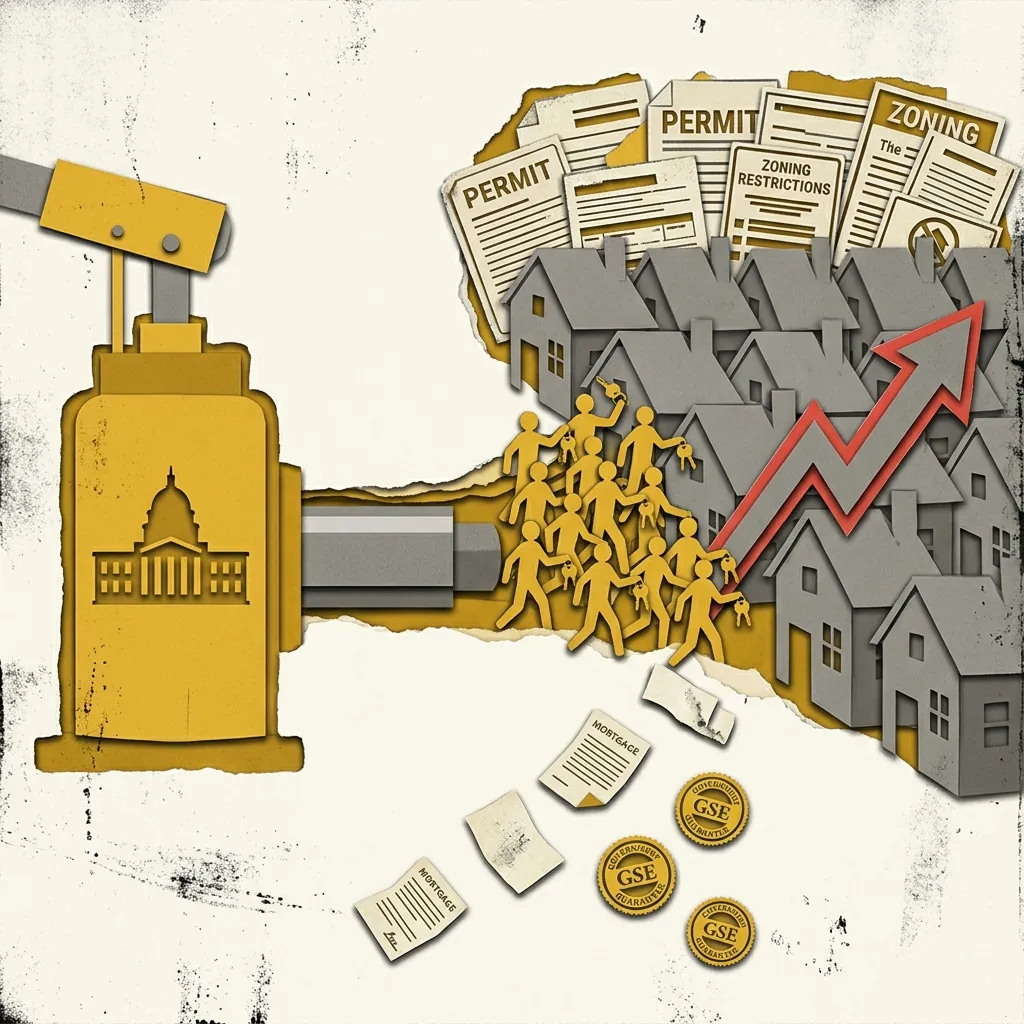
The economic effect of these programs on housing prices is a function of the same supply-elasticity argument discussed earlier. By making it easier for buyers to borrow more money, GSE guarantees and FHA insurance increase the effective demand for housing. In markets where housing supply is elastic, places with permissive zoning, available land, and streamlined permitting, this demand increase mostly leads to more housing being built at roughly stable prices. In markets where housing supply is inelastic, the high-demand coastal metros with restrictive zoning, the demand increase mostly leads to higher prices.
Research on the GSE guarantee structure suggests that it effectively allows buyers to offer more for a given house than they could without the guarantee, because lenders are willing to extend more credit when the default risk is socialized. This pushes up the equilibrium price of housing in markets where supply cannot expand. The effect is not evenly distributed: it is largest in supply-constrained markets and smallest in places where supply can respond.
The scholarship on the 2000s housing bubble provides a concrete case study. Economists Atif Mian and Amir Sufi, in their 2014 book House of Debt and in subsequent research published in the Quarterly Journal of Economics, document how the expansion of mortgage credit to lower-income borrowers during the 2000s drove house price increases, particularly in areas where housing supply was constrained by geography or regulation. Their research finds that the expansion of credit availability, supported by GSE-backed securitization and private-label mortgage securities, was a primary driver of the price run-up that ultimately led to the 2008 financial crisis. When the credit expansion reversed, prices fell sharply, confirming that a significant portion of the price increase had been sustained by the financing rather than by underlying demand.
The mortgage interest deduction functions as an additional demand subsidy, though its effects have received less rigorous empirical attention than GSE guarantees. By allowing homeowners to deduct mortgage interest from taxable income, it reduces the effective cost of homeownership and increases the amount buyers are willing to pay for a given house. The Congressional Budget Office has estimated the cost of the mortgage interest deduction at roughly $30 billion to $40 billion per year in forgone revenue. Because the benefit scales with the interest paid, it is larger for more expensive homes and accrues disproportionately to higher-income homeowners who itemize deductions and carry larger mortgages. The distributional effect is the opposite of what an affordability-focused program would design: it provides larger subsidies to people buying more expensive homes, increasing demand at the high end of the market.
Demand-side housing subsidies like Section 8 vouchers operate differently. Vouchers directly subsidize rent for low-income households, allowing them to pay market rents in privately owned housing. The economic effect of vouchers on local rental prices has been studied using the natural experiments created by lottery-based voucher allocations. Research examining these allocations has found that in tight housing markets with inelastic supply, a concentration of voucher recipients can put upward pressure on local rents, because landlords respond to the increased purchasing power of tenants by raising asking prices. The effect is smaller in markets with more elastic housing supply, where the voucher funding can bring more rental units into the market rather than simply inflating prices on existing ones.
The housing case is the one where the evidence is most complex, because the demand-side programs interact most directly with an independent supply-side problem. Housing supply restrictions through zoning and permitting have been extensively documented to cause housing shortages that exist independently of federal financing programs. In this context, criticizing demand subsidies without addressing supply restrictions misses part of the picture. But defending demand subsidies while ignoring their price effects in supply-constrained markets is equally incomplete.
The Common Thread
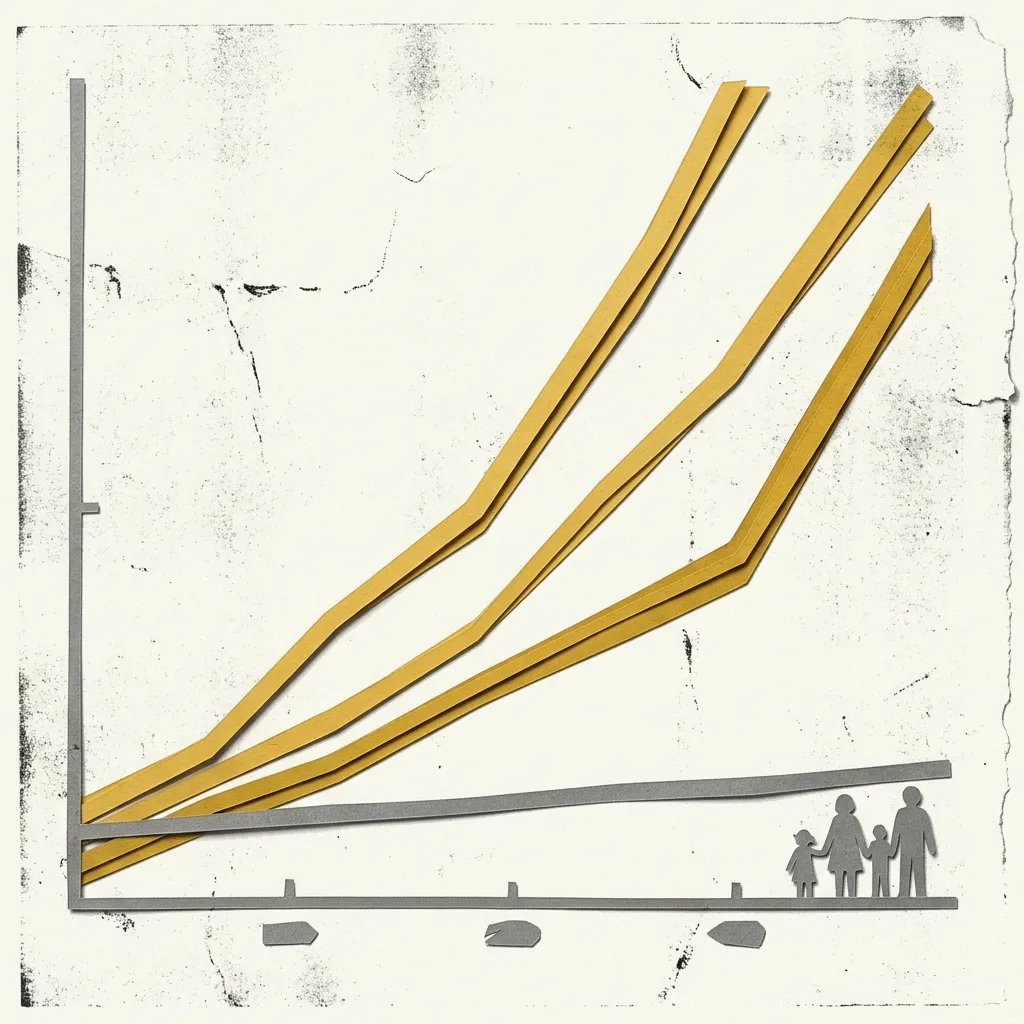
Looking across all three sectors, a common pattern emerges. Each has experienced decades of price growth that substantially outpaces general inflation. Each features significant government financing programs on the demand side. Each has supply conditions that limit how much the quantity supplied can expand in response to increased financing. And in each case, economic research provides credible evidence that the demand-side financing has contributed meaningfully, though not exclusively, to the price increases that have made these sectors increasingly burdensome for ordinary households.
Healthcare prices have risen at roughly double the rate of general inflation since the 1970s. College tuition has risen at roughly four times the rate of general inflation since 1980. Home prices have risen at roughly twice the rate of general income growth since the mid-1990s. These are not uniform or continuous trends; they have varied by era, by type of institution, and by geographic market. But the aggregate pattern across four decades is consistent enough to warrant serious attention to the structural features that might explain it.
The sectors also share a pattern in the political economy of reform. In each case, the primary political coalition for expanding government financing programs argues that the programs help people access things they cannot otherwise afford, while the evidence on aggregate price effects receives little attention. In each case, the primary political coalition for restricting the programs sometimes ignores the genuine access problems that would arise for the lowest-income recipients if the programs were suddenly eliminated. Both coalitions talk past each other because they are measuring different things: individual access versus aggregate prices.
The sectors also share the feature that the financing programs tend to benefit institutions as much as or more than the individuals they nominally serve. Medicare and Medicaid financing supports hospital and physician revenue. Federal student lending supports university budgets. GSE-backed mortgage finance supports real estate prices that benefit existing homeowners. When you ask who has the strongest political incentive to defend each of these programs, the answer in each case is not primarily the low-income person who needs affordable healthcare, a college education, or housing; it is the institution that profits from the program’s ability to direct subsidized purchasing power into its sector.
What the Evidence Does Not Say
This analysis has a natural tendency to slide toward a conclusion that seems cleaner than the evidence warrants: that government financing programs are the primary cause of high prices in these sectors, and that reducing or eliminating them would therefore lower prices substantially. That conclusion is not what the evidence shows, and stating it accurately matters.
In healthcare, the evidence on third-party payment and moral hazard is solid, but healthcare costs are also high in the United States relative to other wealthy countries for reasons that include supply restrictions through medical licensing and scope-of-practice laws, the administrative overhead of a multi-payer billing system, the consolidation of hospital systems into regional monopolies, and the absence of effective price negotiation in substantial portions of the private sector. Countries with universal single-payer systems have far more third-party payment than the United States in the sense that government pays everything, but many achieve lower per-capita healthcare costs, suggesting that the third-party payment problem is real but not the only driver of American healthcare prices. Administrative efficiency and monopoly power matter independently.
In education, the Bennett Hypothesis is supported by credible empirical evidence, but tuition has also risen because of genuine cost increases in running universities: declining state support for public universities, which shifted costs to tuition; increasing administrative overhead; capital investment in amenities that attract students in a competitive market; and real increases in the cost of research infrastructure. Restricting federal financial aid without addressing these underlying cost drivers would reduce access without necessarily reducing the cost structure that makes higher education expensive.
In housing, the demand-side financing programs are real contributors to price levels in supply-constrained markets, but the supply constraints themselves, driven by zoning laws, permitting costs, construction regulations, and organized opposition from existing homeowners, are an independent problem that would generate high prices even in the absence of federal mortgage guarantees. Cities that have liberalized zoning have seen housing cost growth moderate relative to comparable cities, even without changes to federal mortgage policy.
The evidence supports a middle-ground conclusion that is politically difficult precisely because it assigns partial responsibility to programs that each political coalition has strong reasons to defend or to attack simplistically. Government financing programs in these three sectors have contributed to price inflation by stimulating demand in markets with inelastic supply. They have also provided genuine access to millions of people who would not otherwise have been able to purchase healthcare, education, or housing. Both of these things are true simultaneously, and pretending otherwise does not help anyone think more clearly about what reforms might actually improve affordability.
What It Implies for Policy
If the analysis above is roughly correct, the policy implications are not symmetrical. The question is not simply whether to have government financing programs or not. The question is how those programs are designed, and whether the design choices moderate or amplify the price effects.
Demand-side financing programs in markets with inelastic supply are likely to raise prices unless they are paired with supply-side reforms that make supply more elastic. This is why expanding Medicaid without reforming certificate-of-need laws and scope-of-practice restrictions may raise healthcare prices. A 2017 study by Thomas Stratmann and David Wille found that certificate-of-need laws are associated with higher healthcare prices and lower availability of care in the markets that have them, suggesting that supply-side deregulation in healthcare could meaningfully improve the price environment into which federal healthcare financing flows. It is why expanding student lending without creating competitive alternatives to accredited universities primarily benefits the existing institutions that hold pricing power. It is why expanding FHA lending and GSE guarantees without reforming exclusionary zoning primarily raises house prices in high-demand markets.
Supply-side reforms, by contrast, can moderate prices directly and can change the dynamics in which demand subsidies operate. Eliminating certificate-of-need laws would allow healthcare supply to expand more readily in response to Medicare and Medicaid financing. Reforming accreditation rules to allow more low-cost educational models to compete for federal aid eligibility would reduce the pricing power of existing institutions. Eliminating single-family zoning would allow housing supply to respond more elastically to demand financing.
The uncomfortable reality is that the political coalitions most strongly supporting the expansion of demand-side financing programs are often the same ones most strongly opposing supply-side deregulation. The coalition that supports universal healthcare coverage tends to oppose deregulation of medical licensing and hospital entry. The coalition that supports expanding Pell Grants and student loan access tends to oppose making it easier for non-accredited providers to compete with traditional universities. The coalition that supports affordable housing programs tends to oppose eliminating single-family zoning, which benefits the existing homeowners who are often the same constituencies voting for housing assistance programs.
This is not a coincidence. The demand-side financing programs, whatever their stated goals, function in practice as subsidies to the incumbent institutions in each sector. Expanding them without supply-side reform benefits those institutions at the expense of the people the programs are designed to help. Genuine affordability reform requires confronting both sides of the equation simultaneously, and that kind of reform tends to attract fewer powerful political allies than either pure expansion of financing or pure restriction of it.
The Honest Accounting
The three sectors examined in this article, healthcare, housing, and higher education, account for a combined share of American household spending that has roughly doubled relative to median income since 1980. The families struggling to afford all three are not struggling because of some natural economic law that makes these things expensive. They are struggling in part because of specific policy choices that have shaped the market structure of each sector over decades: choices about how to finance demand without expanding supply, about which incumbent interests to protect through regulatory barriers, and about which reform coalitions to include versus exclude.
None of this means the government financing programs in these sectors are purely harmful or should be eliminated without regard to the access problems that would follow. It means that defending those programs while pretending their price effects do not exist is an intellectual failure that serves institutional interests at the expense of the families those programs claim to help.
The evidence that government financing programs contribute to price inflation in supply-constrained sectors is credible, peer-reviewed, and consistent across multiple research methodologies. It is also incomplete, contested in some specifics, and insufficient by itself to predict exactly what would happen if any particular program were restructured. Honest policy analysis requires holding both of those things at once: taking the price effects seriously without treating them as the whole story, and recognizing the access benefits without letting them foreclose questions about whether the programs could be better designed.
The alternative, continuing to expand demand-side financing in supply-constrained markets while attributing the resulting price increases to greed, market failure, or forces outside anyone’s control, is the approach that has characterized American policy in all three sectors for most of the past four decades. The results of that approach are visible in the price trajectories of healthcare, housing, and higher education. There is good reason to ask whether more of the same will produce different results.