TL;DR
- The United States spends $14,885 per person on healthcare annually, more than double the average of comparable wealthy countries, and ranks last among those countries in overall health system performance. The problem is not that Americans get more or better care; they get fewer doctor visits and shorter hospital stays than citizens of most peer nations. The problem is structural: the US system has the worst features of both heavy government intervention and opaque private markets simultaneously.
- Thirty countries have developed functioning healthcare systems using four basic models: national health services, social insurance, single-payer national insurance, and hybrid savings-based approaches. None of them are utopias. All of them produce better outcomes at lower cost than the United States.
- The path forward does not require a political revolution or a single sweeping reform. It requires a sequenced series of changes that reduce regulatory barriers protecting incumbents, introduce genuine price competition, restructure the tax treatment of insurance, and expand the role of non-state mechanisms for coverage and quality assurance.
Americans argue about healthcare constantly and agree on almost nothing except that the current system is broken. The left wants Medicare for All. The right wants free markets. The center wants to “fix” the Affordable Care Act without specifying what fixing means. Meanwhile, the debate generates enormous heat and very little light, because it is almost never grounded in an honest assessment of what the current system actually is, why it got this way, and what other countries have actually tried.
This article attempts that grounding. It describes the structural roots of the American healthcare crisis, surveys the healthcare architectures of thirty other countries with their genuine pros and cons, draws the honest conclusions that comparison forces, and proposes a set of politically viable reforms that move in the right direction without requiring anyone to win an ideological argument first.
How the US System Got This Way: An Accidental Architecture
The American employer-based health insurance system was not designed. It was an accident.
During World War II, the federal government imposed strict wage controls to contain wartime inflation. Employers who needed to attract scarce labor during the wartime production boom could not compete on wages. So they competed on benefits, offering health insurance as a non-wage compensation that did not violate the freeze. In 1943, the War Labor Board ruled that employer contributions to health plans did not count as wages for freeze purposes. In 1954, the IRS enshrined this arrangement in the tax code: employer-paid premiums became deductible for the employer and excluded from the employee’s taxable income.
That tax exclusion is now worth more than $300 billion annually in foregone federal revenue. It is the largest single tax expenditure in the federal budget. And it built a healthcare market around a completely backwards set of incentives. Because insurance is purchased by employers rather than individuals, employees have no particular reason to shop for cost-effective coverage. Because premiums are tax-free, there is a systematic incentive to over-insure rather than pay directly for routine care. Because coverage is tied to employment, losing a job means losing coverage at precisely the moment a person is most financially stressed. (Tax Policy Center, “The Tax Exclusion for Employer-Sponsored Health Insurance,” updated 2024.)
Layered on top of this accidental foundation are several deliberate interventions that made things worse.
Certificate of Need (CON) laws, first promoted by the Nixon administration in 1974 and required by federal law until 1987, require healthcare providers to get state government permission before opening new facilities or purchasing major equipment. The original theory was that limiting hospital supply would contain costs by preventing duplication. The reality, documented across decades of research, is that CON laws function as a competitor’s veto: existing hospitals can formally challenge new entrants and often block them entirely. States with CON laws have fewer hospitals per capita, fewer ambulatory surgery centers, and higher prices. (Mercatus Center, “Certificate of Need Laws: Are They Achieving Their Goals?” Matthew Mitchell, 2016.) Thirty-five states and the District of Columbia still have some form of CON law.
Hospital consolidation has accelerated dramatically since the 1980s. Independent community hospitals have been absorbed into large regional systems at a pace that has left most American healthcare markets with one or two dominant hospital chains whose pricing power faces no meaningful competitive check. A 2019 study in the Journal of the American Medical Association found that hospital mergers resulted in price increases of 6 to 18 percent for inpatient services, with no measurable improvement in quality. (Cooper et al., “The Price Ain’t Right? Hospital Prices and Health Spending on the Privately Insured,” JAMA Internal Medicine, 2019.)
Pharmaceutical pricing adds another layer. The United States is the only developed country that does not allow the government insurer (Medicare) to negotiate drug prices directly with manufacturers. That prohibition, inserted into the Medicare Modernization Act of 2003, resulted in pharmaceutical companies charging Americans prices that are two to four times higher than what the same drugs cost in Germany, Canada, or Australia. The Inflation Reduction Act of 2022 permitted Medicare to negotiate prices on a small number of drugs beginning in 2026, a meaningful first step still vastly smaller in scope than what peer nations have had for decades.
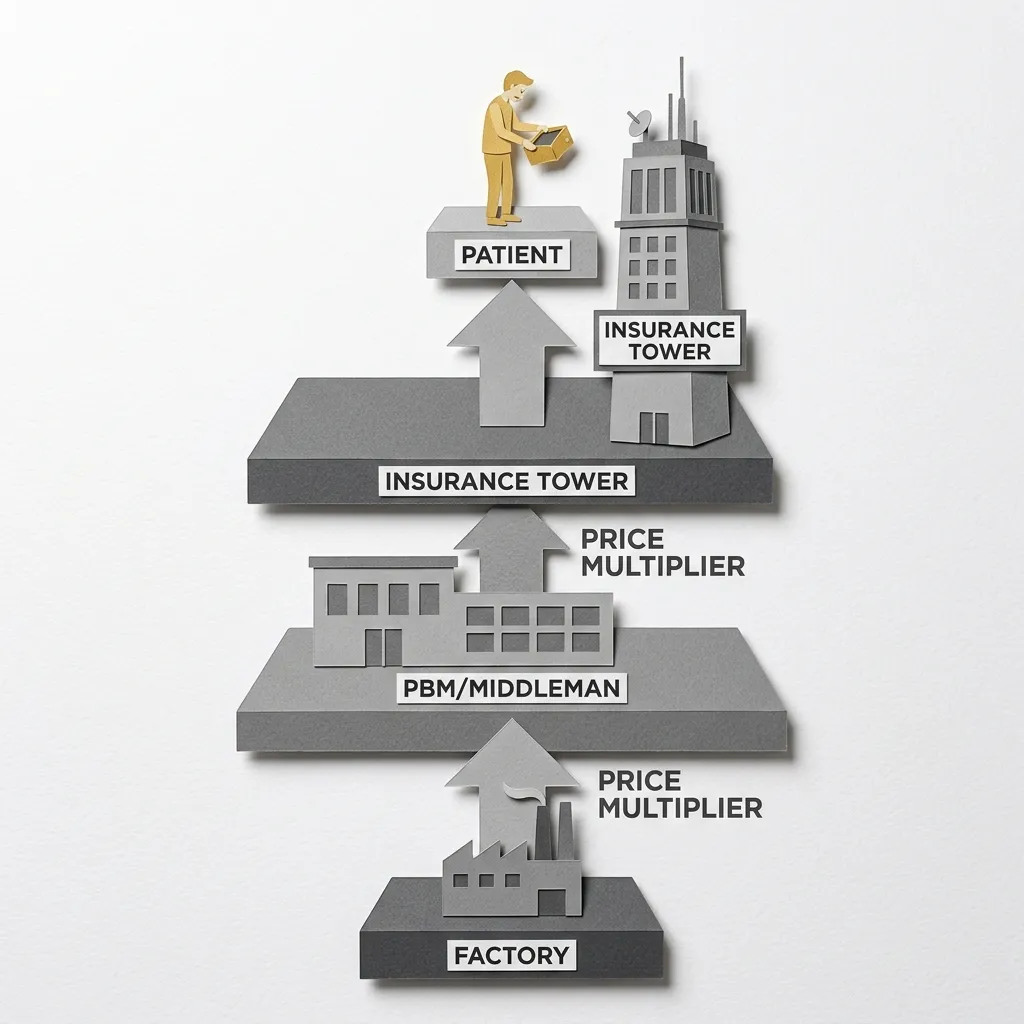
The result of these accumulated decisions is a system characterized by administrative complexity that eats an estimated $1,000 per person annually, simply processing bills and claims across hundreds of different insurance contracts. That figure is roughly five times what administrative costs consume in comparable countries. (Commonwealth Fund, “Mirror Mirror 2024: A Portrait of the Failing U.S. Health System,” 2024.) Americans have fewer doctor visits per year than citizens of most OECD countries, shorter average hospital stays, and no measurable advantage in access to specialists for most conditions. What they pay is simply and dramatically more.
The Four Models: A Framework for Comparison
Before surveying thirty countries, it is useful to map the territory. Every functioning healthcare system in the world fits into one of four basic architectures, or a hybrid of them.
The Beveridge Model (National Health Service): Named for William Beveridge, whose 1942 report created the intellectual foundation for Britain’s NHS. The government finances healthcare through general taxation and either owns or directly controls the delivery system. Hospitals are often government property. Physicians are often government employees. Care is free at the point of use. The government is both insurer and provider, which eliminates the administrative overhead of billing between insurer and provider. The tradeoff is that the single payer also has monopsony buying power, which can suppress both prices and wages in ways that affect supply over time.
The Bismarck Model (Social Insurance): Named for Otto von Bismarck, who created the first compulsory health insurance system in Prussia in 1883. Employers and employees jointly fund non-profit insurance funds (called sickness funds in Germany) through payroll contributions. Funds are required to accept all applicants and cannot profit from basic coverage. Providers are largely private. The government sets prices and benefit standards but does not operate the system. This model maintains more pluralism than the Beveridge model but requires tight regulation to prevent insurers from competing by avoiding sick people.
The National Health Insurance Model (Single-Payer): A hybrid in which delivery is private (as in the Bismarck model) but financing is through a single government insurer funded by taxes (as in the Beveridge model). The government acts as buyer but not provider. Because it is the only buyer, it has substantial price-setting power. Canada, Taiwan, and South Korea use variants of this model. Administrative simplicity is a major advantage: providers deal with one insurer rather than hundreds.
The Savings and Subsidy Model: Singapore’s system, discussed in depth below, uses a combination of mandatory personal health savings accounts, catastrophic insurance, and government subsidies to create a system that maintains individual cost-consciousness while providing a safety net for serious illness and poverty. It is the most market-oriented of the four models and the one that produces the most striking cost-efficiency results.

Thirty Countries: What Works, What Doesn’t, and What the Honest Assessment Reveals
What follows is a structured assessment of thirty countries’ healthcare systems, organized by model type, with their genuine tradeoffs described honestly rather than as propaganda for any single approach.
United Kingdom. Beveridge model. The National Health Service, founded in 1948, covers all residents at no point-of-use cost, funded entirely through general taxation. Life expectancy and infant mortality compare favorably to the US at approximately one-third the cost per capita. The core weakness is chronic underfunding: waiting times for elective procedures and specialist referrals have grown substantially over the past decade as costs have risen faster than political will to fund them. The NHS also experiences persistent workforce shortages, as salaries for NHS physicians compare poorly to private-sector alternatives in other countries.
Spain. Beveridge model. Spain’s Sistema Nacional de Salud covers all legal residents and is consistently ranked among the top global systems for health outcomes. Life expectancy in Spain is among the highest in the EU. Spain spends roughly $3,600 per capita, less than a quarter of the US figure, with better outcomes on most measures. Primary care is genuinely integrated, with patients assigned to local health centers rather than navigating a referral maze. The weakness is a dual system dynamic: those who can afford private insurance do so to avoid waits, which creates a two-tier reality in practice.
Italy. Beveridge model. The Servizio Sanitario Nazionale covers all residents. Italy consistently produces exceptional longevity statistics at moderate cost. The system has significant regional variation: northern Italian healthcare delivery is generally excellent; southern regions have historically faced underfunding and staffing shortages that create meaningful inequality of access within the country.
Australia. Hybrid Beveridge/Bismarck. Medicare Australia provides universal public coverage funded through a 2 percent income levy. Private insurance is encouraged through tax incentives and covers approximately 44 percent of the population for extras (dental, optical, private hospital rooms). The public-private balance reduces pressure on the public system while preserving universal access. Waiting times for elective surgery in the public system are the main complaint; private insurance largely bypasses these waits. The system produces excellent outcomes at roughly $6,500 per capita.
New Zealand. Beveridge model. A compact, well-integrated system that covers all residents. Strong primary care infrastructure means most health needs are addressed before they require expensive specialist or hospital intervention. The main weakness is geographic: delivering equitable care to rural and island communities is challenging. Pharmaceutical purchasing is handled through PHARMAC, a single national buyer that negotiates aggressively and maintains a much lower pharmaceutical cost structure than the US.
Canada. Single-payer. Medicare Canada covers all medically necessary hospital and physician services through a provincially administered single-payer system funded by federal and provincial taxes. The universal pool and single-payer structure eliminate most administrative overhead and give provinces substantial bargaining power on prices. The well-documented weakness is wait times: Canada consistently reports longer waits for specialist consultations and elective procedures than most other wealthy nations. A 2023 Commonwealth Fund survey found Canadian patients far more likely than those in other surveyed countries to wait more than two months to see a specialist. The system also does not cover dental, vision, or most prescription drugs at the national level, leaving significant gaps addressed unevenly by provincial programs and employer benefits.
France. Bismarck model. France’s statutory health insurance system is regularly cited as among the best in the world. All residents are covered through mandatory contributions, and the government-negotiated fee schedules apply to most care. Patients can see any physician without referral. Co-payments are required but modest, and supplemental private insurance (mutuelles) covers most of what the statutory system does not. The weakness is cost growth: France spends approximately $5,700 per capita and faces ongoing deficits in the statutory system as the population ages and technology costs rise. The administrative structure is also more complex than single-payer systems because multiple statutory funds cover different worker categories.
Germany. Bismarck model. The oldest social insurance system in the world. About 90 percent of the population is covered by one of approximately 100 competing, not-for-profit sickness funds. The remaining 10 percent (higher earners and civil servants) may opt into private insurance. Risk equalization transfers between funds prevent cherry-picking. Germany’s system is notable for its combination of universal coverage, free choice of insurer and physician, and very strong outcomes. The weakness is cost: at roughly $9,400 per capita Germany is among the most expensive systems in Europe, reflecting both its high quality standards and its complex multi-fund administrative structure. Co-payments have been introduced at various points as a cost-containment mechanism with mixed results.
Netherlands. Bismarck model with managed competition. The Netherlands restructured its system in 2006 to introduce genuine insurer competition within a regulated framework. Insurers must offer a standard basic package at community-rated premiums. Government subsidies assist lower-income households. Insurers compete on price and service for the basic package and can offer richer supplemental coverage competitively. The managed competition design was intended to bring market discipline to cost control. Results have been mixed: the system achieves universal coverage and good outcomes but the competition among insurers has produced consolidation rather than the price-reducing competition theorists anticipated. Administrative costs remain higher than single-payer alternatives.
Belgium. Bismarck model. Strong universal coverage through a network of mutuality associations (sickness funds organized by ideological affiliation going back to the 19th century). Patients have broad freedom to choose providers. Belgium has high access to specialists and prescription drugs. Cost-sharing is limited for lower-income patients. The weakness is coordination: the Belgian system has significant administrative complexity as a result of its federal structure and multiple payers.
Austria. Bismarck model. Austria’s system is structurally similar to Germany’s: mandatory social insurance funded by employer-employee contributions, with regional sickness funds providing coverage. Outcomes are strong. Like Germany, the system has higher administrative costs than single-payer models.
Switzerland. Regulated private insurance with mandate. Switzerland has the second-most expensive healthcare system among developed nations after the United States, at roughly $9,900 per capita. The system requires every resident to purchase basic coverage from one of dozens of competing private insurers. Insurers cannot profit from basic coverage and must accept all applicants. The government subsidizes premiums for lower-income households. Co-payments are high by European standards: a minimum deductible of roughly CHF 300 annually and a 10 percent co-insurance after that. The system achieves excellent outcomes and high patient satisfaction with broad provider choice. The main problem is the cost: Swiss households pay a substantial share of income on premiums and out-of-pocket costs, and total healthcare spending is driven by high prices similar in some respects to the US problem, though without the administrative waste.
Sweden. Beveridge model administered at county level. Regional county councils run the system and set their own priorities within national standards. Sweden achieves excellent outcomes with strong equity across income levels. The county-level administration creates some variation in access and waiting times across regions.
Norway. Beveridge model. Norway’s system is funded largely through petroleum revenues and general taxation. It produces outstanding outcomes and covers all residents. As with other Beveridge systems, wait times for elective care are the main point of friction.
Denmark. Beveridge model. Universal coverage, strong primary care, free choice of general practitioner. Denmark has invested heavily in digital health infrastructure and has among the most integrated electronic health record systems in the world. Outcomes are strong; administrative efficiency is high.
Finland. Beveridge model with municipal administration. Like Sweden, organized at the subnational level. Finland has seen healthcare equity concerns as wealthier residents increasingly use occupational health systems that provide faster access to specialists than the public system, effectively creating parallel tracks.
Japan. Bismarck model with universal coverage since 1961. Every resident belongs to one of several insurance programs: large employers provide employment-based insurance, small businesses and self-employed individuals join community-based plans, and the elderly have a separate scheme. The government sets uniform fee schedules for all treatments nationwide, giving it effective price control without single-payer administration. Japan achieves the highest life expectancy in the world at moderate cost. The weakness is an aging population placing increasing strain on the financing structure, and a culture of very high healthcare utilization (Japanese patients have far more doctor visits per year than Americans) that challenges capacity.
South Korea. Single-payer. National Health Insurance covers all citizens through a single public insurer with a mixture of employer contributions and government subsidies for the self-employed and low-income. Outcomes are excellent; administrative costs are low. The system is technology-forward: South Korea has strong diagnostic capacity and rapid access. The main challenges are very high patient volume placing pressure on physicians, and a growing out-of-pocket cost burden for services not covered by the statutory benefit package.
Taiwan. Single-payer. Taiwan’s National Health Insurance, established in 1995, is the model most frequently cited by health policy analysts as a genuine success story. It covered nearly zero percent of the population in 1994; within a year of launch it covered 92 percent, and now covers effectively 100 percent. Administrative costs are under 2 percent, compared to roughly 8 percent in the US system. Patients can see any licensed provider with their NHI smart card. Wait times for primary care are minimal; for specialist care, moderate. Taiwan spends roughly $2,500 per capita and achieves health outcomes broadly comparable to much wealthier nations. The main concerns are system sustainability as the population ages and questions about provider payment rates that have kept physician compensation modest.
Singapore. Savings and subsidy model. Singapore’s “3M” system (MediSave, MediShield Life, MediFund) is the most analytically interesting healthcare architecture in the world from a libertarian perspective. Every working resident contributes 8 to 10.5 percent of their wages into a personal MediSave account. These funds can pay for personal or immediate family hospitalization and certain outpatient costs. MediShield Life is a national catastrophic insurance plan funded by premiums that can be paid from MediSave, providing protection against large bills. MediFund is an endowment that provides last-resort subsidies for those who cannot afford care even after the other two pillars. The government also directly subsidizes care in public hospital wards on an income-tested basis, with subsidies as high as 80 percent for lower-income patients. Singapore spends approximately 5 percent of GDP on healthcare while achieving life expectancy comparable to Japan. The individual savings mechanism creates genuine cost-consciousness among patients; using your own MediSave money to pay a hospital bill feels different from using anonymous insurance, and that feeling translates into more careful consideration of treatment choices.
Israel. Bismarck model. Four competing non-profit health funds (kupot holim) cover all residents under a national health law requiring universal membership. The government transfers funds based on population and health risk characteristics. Outcomes are strong; the system covers dental care for children and has good mental health integration. Israel spends approximately $3,500 per capita with outcomes that compare favorably to much wealthier systems.
Czech Republic. Bismarck model. Universal coverage through a social insurance system reorganized after the post-communist transition. Multiple competing health insurance funds provide statutory coverage. Outcomes are good for a country at its income level; the system has improved substantially since the 1990s.
Poland. Bismarck model. The National Health Fund (NFZ) provides universal coverage funded by payroll contributions. Access to specialist care requires referrals and involves notable wait times. Poland has a growing private sector that supplements the public system for those who can afford it, creating equity concerns.
Portugal. Beveridge model. The Serviço Nacional de Saúde covers all residents. Portugal has significantly improved its health outcomes over the past three decades, narrowing the gap with wealthier Western European nations through consistent investment in primary care infrastructure.
Brazil. Beveridge model at the lower end of income. The Sistema Único de Saúde (SUS) provides universal care for all Brazilian residents funded by federal, state, and municipal revenues. Given Brazil’s income level, the SUS is an impressive achievement in coverage breadth. The challenge is quality and equity: urban centers have adequate facilities while rural and poorer areas struggle with underinvestment. A large private sector serves those who can afford it.
Mexico. Mixed model. Mexico has made substantial progress toward universal coverage through the IMSS (social insurance for formal workers), ISSSTE (government employee insurance), and Seguro Popular/IMSS-Bienestar for the informal sector and rural poor. Coverage is officially near-universal but the quality gap between the different systems is substantial, and informal workers historically received meaningfully inferior care.
India. Predominantly out-of-pocket with government programs. India’s public healthcare infrastructure is vastly underfunded relative to need, and most healthcare spending is out-of-pocket. Government schemes like Ayushman Bharat aim to extend catastrophic coverage to the poor, but implementation capacity remains limited. Private hospitals in urban centers provide excellent care to those who can afford it; rural primary care remains severely underserved.
China. Rapid expansion of social insurance. China has extended basic health insurance coverage to more than 95 percent of its population over the past two decades through Urban Employee Basic Medical Insurance, Urban and Rural Resident Basic Medical Insurance, and the New Rural Cooperative Medical Scheme. Coverage is broad but benefit packages are limited and out-of-pocket costs for serious illness remain substantial. Quality varies enormously between major urban hospitals and rural facilities.
Thailand. Universal coverage since 2002. Thailand’s Universal Coverage Scheme covers approximately 47 million of its 70 million residents not covered by other programs. The program is funded from general taxation and provides comprehensive benefits through public health facilities. Thailand achieves surprisingly good health outcomes for its income level and has been held up as a model for lower-middle-income countries pursuing universal coverage.
Saudi Arabia. Government-provided for nationals; employer-mandatory private insurance for expatriates. Saudi citizens receive free healthcare at government facilities, which have improved substantially with oil wealth. Expatriates, who constitute roughly 40 percent of the workforce, are covered through mandatory employer-provided private insurance. The system faces demographic pressures as the Saudi population grows and ages, and the government has initiated market-oriented reforms including Vision 2030 efforts to expand private provision.
What the International Evidence Actually Proves
Drawing honest lessons from this comparison requires resisting the temptation to cherry-pick. Here is what the evidence actually shows.
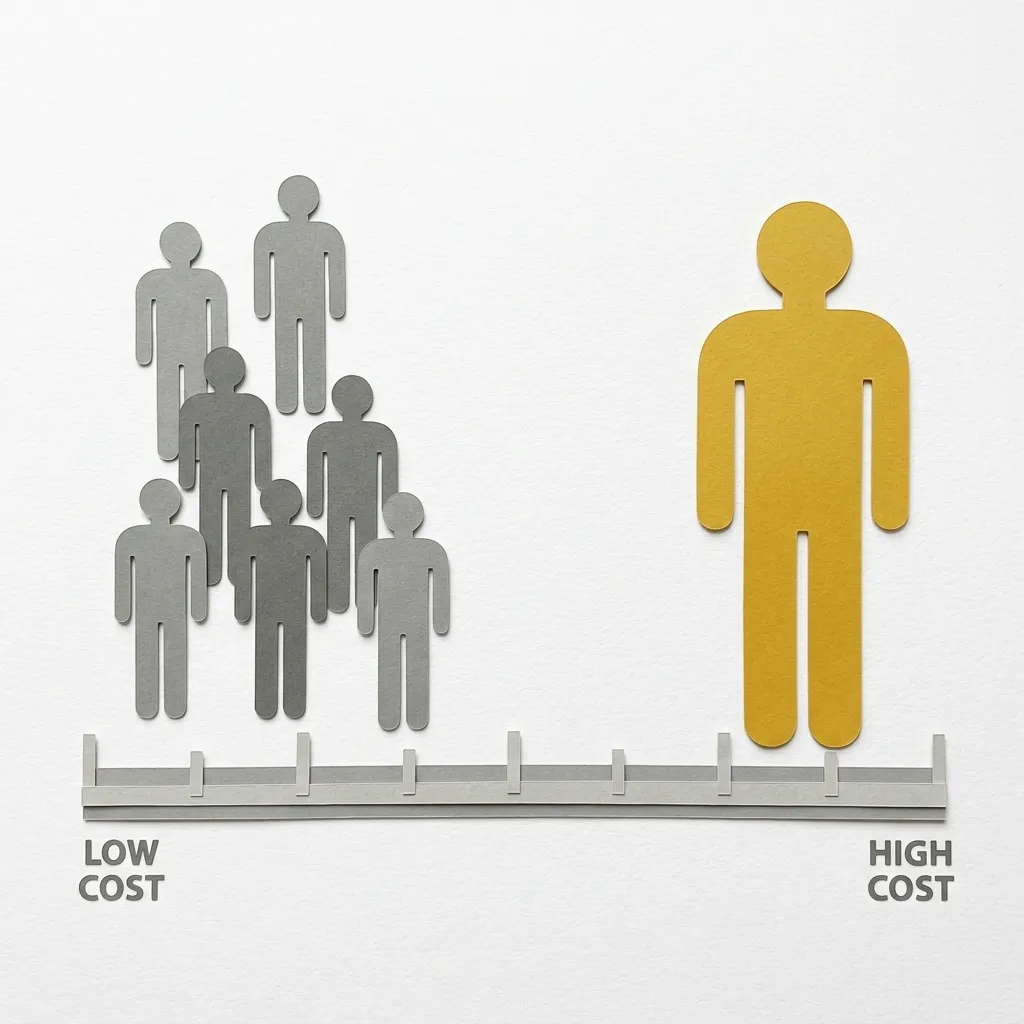
No single model has a monopoly on good outcomes. The UK’s Beveridge model, Japan’s Bismarck model, Taiwan’s single-payer, and Singapore’s savings model all produce excellent health outcomes at dramatically lower cost than the United States. This means the US problem is not a consequence of using private insurance or market mechanisms. It is a consequence of using private insurance badly: without price transparency, without genuine competition, without individual cost-consciousness, and with enormous regulatory protection for incumbent providers.
Universal coverage and cost control are compatible goals, but they require choosing a mechanism and following through on it. Countries with universal coverage achieve it through different mechanisms: some use taxes, some use mandates, some use employer contributions, some use savings accounts. What they share is a commitment to ensuring the whole population is in a risk pool and a willingness to use the resulting bargaining power to control prices. The US has neither consistently: it subsidizes coverage while maintaining price opacity and provider market power that keep costs at multiples of the international norm.
The savings-based model deserves serious attention from market-oriented reformers. Singapore’s results are striking: comparable health outcomes to Japan at half the cost. The key mechanism is that individuals bearing some cost-consciousness in their routine care choices, through their own MediSave money, reduces over-utilization without requiring the administrative overhead of managed care. The model is not purely private (the government subsidizes substantially), but it channels individual responsibility in a way that other universal systems do not.
Wait times are a real trade-off in government-dominated systems, not a myth. Canada and the UK have genuine wait-time problems for elective care that represent real quality-of-life costs for their patients. Single-payer advocates who dismiss this are not being honest. The fair counter-argument is that the US has wait-time problems of its own (for primary care in underserved areas, for mental health care, for care that is nominally available but practically unaffordable), and that the comparison is between different kinds of access failure rather than between perfection and imperfection.
Administrative complexity is a structural drag, not a detail. The thousand-dollar-per-person administrative overhead that the US system carries is not a rounding error. It is money that pays no doctor, purchases no drug, performs no procedure. Every other developed country manages to deliver healthcare without it. The source is the multi-payer complexity of hundreds of different insurance contracts, each with different rules, prior authorization requirements, billing codes, and network configurations. Simplifying the payer landscape, even without moving to single-payer, would generate substantial savings.
The Root Cause: Not Capitalism, Not Government, But Regulatory Capture
The central error in the American healthcare debate is the framing: it is presented as a choice between free markets and government programs. The honest diagnosis is more uncomfortable than either side typically admits.
The United States does not have a free healthcare market. Certificate of Need laws, occupational licensing restrictions, FDA approval processes, patent protections, Medicare cost-accounting rules, and the tax exclusion for employer-sponsored insurance are all government interventions that shape who can provide care, at what price, and to whom. The incumbent hospital systems, pharmaceutical companies, insurance corporations, and pharmacy benefit managers who benefit from this regulatory architecture are not victims of excessive government involvement. They are its principal beneficiaries. They wrote the rules, or paid to have them written, and they enforce them through lobbying and legal challenge.
This is regulatory capture in the fullest sense: a market that is nominally private but structurally protected from competition by an elaborate apparatus of government intervention that serves incumbents rather than patients. The solution is not to add more government on top of this structure (the progressive position) or to pretend the market is functional and simply deregulate further without addressing the incumbent protection apparatus (the conservative position). It is to systematically dismantle the incumbent protections while preserving and strengthening the safety-net functions that protect vulnerable people who cannot navigate markets on their own.

Learning from Singapore: The Hybrid Model Worth Studying
Singapore deserves its own discussion because its architecture challenges both the standard left and right positions most directly.
Singapore is not a libertarian dreamland. The government heavily regulates healthcare supply, controls which drugs are subsidized, sets fee schedules for public hospital wards, and mandates savings contributions. What makes it different is the structure of financial responsibility: individuals are expected to cover routine costs from their own MediSave accounts, which creates genuine cost-consciousness at the point of care. The catastrophic insurance layer (MediShield Life) pools risk for large, unpredictable expenses. The government subsidy and safety-net layer (MediFund) ensures that income does not determine access to essential care.
The 3M architecture works because it matches the financing mechanism to the nature of the risk. Routine, predictable care is best financed from savings because individuals can plan for it, can shop for it, and will be more careful consumers when they are spending their own money. Catastrophic, unpredictable illness is best financed through insurance because no individual can plan for open-heart surgery or cancer treatment. Genuine poverty is best addressed through direct subsidy because insurance mechanisms and savings requirements both fail for people without income.
The American system gets this backwards. It uses rich insurance (with zero or low deductibles) for routine care (which encourages over-utilization and impedes price sensitivity) while leaving people financially devastated by catastrophic care even when they have insurance (through deductibles, out-of-pocket maximums, and balance billing that the insurance architecture does not actually contain).
A pragmatic reform path toward a Singapore-like structure in the US would involve expanding Health Savings Accounts (HSAs) substantially while pairing them with true catastrophic-only insurance. This combination exists in the ACA market as high-deductible health plans linked to HSAs, but it is not the dominant form, and the HSA benefit is sharply limited in ways that prevent it from functioning as the robust savings vehicle that MediSave provides.

A Practical Reform Path: Politically Viable Steps in the Right Direction
The political economy of healthcare reform in the United States is brutal. Every incumbent in the system, every hospital network, every insurance company, every pharmaceutical manufacturer, has lobbyists, campaign contributions, and voter-facing arguments for why the specific protection that benefits them must be maintained. This creates a ratchet: rules accumulate in the incumbents’ favor, and removing them requires confronting organized interests with diffuse beneficiaries.
The honest reformer must therefore work with the grain of political feasibility while moving in a consistent direction. The goal is not a single transformative bill. It is a sequence of changes that each enjoy their own coalition of support, that each produce visible results, and that collectively move the system toward genuine competition, price transparency, and individual financial responsibility backed by a functional safety net.
Here is that sequence, ordered from most to least politically contentious, with the least contentious first.
Step One: Repeal Certificate of Need Laws Nationally. CON law repeal enjoys support across the political spectrum for different reasons. Conservatives support it as deregulation. Progressives in some states support it as a way to open more community health centers and urgent care clinics in underserved areas. Libertarians support it as removing incumbent protection. The evidence from the fifteen states that have already eliminated CON laws (or never had them) is that repeal leads to more facilities, more competition, and lower prices without the decrease in quality that CON proponents predicted. (Federal Trade Commission and Department of Justice, “Improving Health Care: A Dose of Competition,” 2004.) A federal preemption of remaining state CON laws, or aggressive conditioning of federal healthcare funds on CON repeal, would be the fastest path to a national impact. This step alone would inject meaningful competition into hospital markets that have operated as protected monopolies for decades.
Step Two: Enforce and Expand Price Transparency Requirements. The Trump administration’s hospital price transparency rule (effective January 2021) required hospitals to publish their negotiated rates for all services. Compliance has been incomplete and the data, when published, is often in formats inaccessible to ordinary patients. Extending the rule to all healthcare providers (not only hospitals), requiring machine-readable formats, and attaching real penalties for non-compliance would begin to create a functioning price market for healthcare. Price transparency alone does not create competition, but it is a precondition: competition cannot work when buyers have no information about price. States that have adopted reference-based pricing for state employee health plans, in which the plan pays a fixed amount tied to a market benchmark and employees can choose lower-cost providers while keeping the difference, have seen meaningful price reductions for shoppable procedures.
Step Three: Restructure the Tax Treatment of Health Insurance. The $300 billion annual tax subsidy for employer-sponsored insurance should be converted into a universal tax credit available to all Americans regardless of employment status. This single change would have cascading effects: it would break the link between employment and insurance, allowing workers to maintain coverage when changing jobs or becoming self-employed; it would create a genuine individual market for insurance rather than the employer-mediated group market that prevents individual shopping; and it would remove the incentive for over-insurance that drives up premiums and insulates patients from cost signals. The credit should be indexed to a defined contribution, not to whatever premium an employer pays, to maintain cost discipline. This reform is complex and would create winners and losers in ways that require careful design, but the direction is clear: neutralizing the tax treatment of insurance is essential to creating a functional market.
Step Four: Dramatically Expand HSA Contribution Limits and Eligible Uses. Current HSA contribution limits are $4,300 for an individual and $8,550 for a family in 2025. These limits were set to constrain the revenue loss from the tax-preferred accounts and bear no relationship to actual healthcare cost structures. Raising them substantially (to, say, $10,000 individual and $20,000 family), allowing rollovers without limit, and expanding the list of qualifying expenses to include dental, vision, gym memberships, and certain preventive care, would move the US closer to the Singapore MediSave model. Over time, robust HSA accounts would give individuals and families a genuine financial cushion for routine care, reducing their dependence on insurance for non-catastrophic expenses and creating genuine price sensitivity in the markets for routine services.
Step Five: Allow Medicare to Negotiate Drug Prices on the Full Formulary. The Inflation Reduction Act of 2022 permitted Medicare negotiation for a small number of drugs; expanding that authority to the full formulary would bring US pharmaceutical prices for government programs closer to international norms. This is already politically popular across partisan lines. The opposition comes primarily from the pharmaceutical industry, which argues that price controls will reduce R&D investment. The empirical evidence from countries with negotiated pricing is that innovation has not collapsed; the pharmaceutical industry remains globally profitable and research-intensive even in markets where governments negotiate prices. The question is not whether price negotiation is a form of government intervention (it is) but whether the alternative, which is the current prohibition on negotiation that functions as a $300 billion annual subsidy to pharmaceutical manufacturers, is defensible. It is not.
Step Six: Establish a Genuine Catastrophic Coverage Option for the Uninsured. The current ACA structure makes it difficult for young, healthy, low-income individuals to access affordable coverage because the ACA benefit mandate requires all plans to cover a broad list of services, driving premiums up. A catastrophic-only coverage option available to all Americans regardless of age, paired with an expanded HSA for routine costs, would provide the safety net function that the uninsured currently lack while avoiding the cost of comprehensive insurance for those who primarily need protection against financial catastrophe. This is not a full solution, but it is a politically viable expansion of coverage that builds the architecture toward the Singapore-style model rather than away from it.
These six steps do not require anyone to agree on a final destination. They do not require choosing between single-payer and free market. They require only the observation that the current system is protected by incumbent-serving regulations that drive up costs without improving outcomes, and that removing those protections while expanding individual financial tools and maintaining safety-net functions is a direction that can gather coalitions across the political divide.

The Libertarian Insight That Both Sides Are Missing
The standard left critique of American healthcare is that it is too market-oriented: it needs more government. The standard right critique is that it is too regulated: it needs more market. The honest analysis shows that both are partly right and both are missing the core problem.
The US healthcare market is not a market in any meaningful sense. It is a protected incumbency system in which large, politically connected providers extract rents from a captive customer base whose purchasing decisions are mediated by employers, insurers, and pharmacy benefit managers, none of whom are spending their own money and none of whom have strong incentives to drive prices down. The regulatory apparatus that should discipline this system has been captured by its beneficiaries.
The libertarian insight is that the answer to regulatory capture is not more regulation of the captured regulators. It is structural: open the market to competition that incumbents cannot block, make prices visible so individuals can make informed choices, and strip the tax and regulatory advantages that currently flow to incumbent forms of provision.
This is not the same as abandoning the safety net. The population of people who cannot navigate any market for healthcare, the elderly poor, the severely disabled, those in genuine medical crisis, requires direct public support regardless of what the rest of the system looks like. Singapore provides that support. France provides it. Canada provides it. The question is not whether to provide it but whether to build the rest of the system around it in a way that creates genuine efficiency and individual responsibility, or to expand the managed-care apparatus indefinitely while the incumbents extract their share.
The countries that have figured healthcare out are not ideologically pure. They are pragmatically functional: they have found mechanisms that match their cultural and institutional context, they have enforced those mechanisms against the incumbent interests that inevitably try to corrupt them, and they have been willing to adjust them when the evidence shows they are not working. The United States has been unwilling to do any of these three things consistently.
That can change. But it will require a politics that is willing to name the incumbents, challenge their protections, and build a reform coalition around the honest diagnosis rather than the ideological comfort of either side.
Go Deeper: Books by Alex Merced
The healthcare crisis is simultaneously an economic problem, a political philosophy problem, and a question about how American political thought has developed over two centuries of debating the proper role of government in providing for welfare. Alex Merced has written directly in all three registers.
Economic Ideas: From Beginning to Early 2026 is the right place to start for the economic framework this article builds on. The theory of regulatory capture, the economics of health insurance market failure (adverse selection, moral hazard, and the principal-agent problem when employers rather than patients purchase coverage), the public choice analysis of why CON laws and drug pricing rules persist despite their demonstrated costs, and the international health economics literature comparing system performance across models are all economic arguments with rich intellectual histories. This book traces those histories and brings them to bear on current policy debates.
The Field Guide to Libertarianism develops the political philosophy behind the reform path proposed in this article. The libertarian is often caricatured as wanting no healthcare system, but the actual argument is more specific: it is against incumbent protection masquerading as market freedom, for genuine competition that disciplines prices, and for a safety net built on individual responsibility tools (HSAs, catastrophic insurance, income-tested subsidies) rather than the managed-care bureaucracy that enriches intermediaries. This guide articulates that distinction and its practical policy implications.
Political Thought and Debates of the United States situates the healthcare debate in the longer arc of American political argument. The New Deal expansion of federal social programs, the Great Society creation of Medicare and Medicaid, the Reagan-era effort to introduce market mechanisms into the public sector, and the ACA’s attempt to build universal coverage through a regulated private market are all episodes in an ongoing American argument about the relationship between individual responsibility and collective provision. Understanding how that argument has developed explains why the current system looks the way it does and what political coalitions might be available for changing it.
All three are available on Amazon. The full catalog of Alex Merced’s work is at books.alexmerced.com.
Sources and Further Reading
-
Peterson-Kaiser Family Foundation Health System Tracker. “How does U.S. health care spending compare to other countries?” pgpf.org/healthsystemtracker, updated 2024.
-
Commonwealth Fund. “Mirror Mirror 2024: A Portrait of the Failing U.S. Health System.” commonwealthfund.org, 2024.
-
OECD Health Statistics. “Health at a Glance 2023: OECD Indicators.” oecd.org, 2023.
-
Tax Policy Center. “The Tax Exclusion for Employer-Sponsored Health Insurance.” taxpolicycenter.org, updated 2024.
-
Mitchell, Matthew. “Certificate of Need Laws: Are They Achieving Their Goals?” Mercatus Center at George Mason University, 2016.
-
Cooper, Zack, Stuart V. Craig, Martin Gaynor, and John Van Reenen. “The Price Ain’t Right? Hospital Prices and Health Spending on the Privately Insured.” Journal of the American Medical Association Internal Medicine, 2019.
-
Reid, T.R. The Healing of America: A Global Quest for Better, Cheaper, and Fairer Health Care. Penguin Press, 2009. (Source of the four-model framework.)
-
Papanicolas, Irene, Liana R. Woskie, and Ashish K. Jha. “Health Care Spending in the United States and Other High-Income Countries.” JAMA 319, no. 10 (2018): 1024-1039.
-
Federal Trade Commission and Department of Justice. “Improving Health Care: A Dose of Competition.” ftc.gov, 2004.
-
Singapore Ministry of Health. “MediSave, MediShield Life and MediFund.” moh.gov.sg, updated 2024.
-
Drug Policy Alliance and Guttmacher Institute comparative pharmaceutical pricing data, cited through OECD health statistics.
-
Enthoven, Alain C. “The History and Principles of Managed Competition.” Health Affairs 12, Supplement 1 (1993): 24-48. (Foundation of managed competition theory applied in Netherlands and Switzerland.)
-
Kronick, Richard. “Medicare’s Disproportionate Share Hospital Payment: The Good, the Bad, and the Ugly.” Health Affairs 37, no. 7 (2018): 1158-1166.
-
Taiwan National Health Insurance Administration. “NHI Overview.” nhi.gov.tw, updated 2024.
-
Reinhardt, Uwe E., Peter S. Hussey, and Gerard F. Anderson. “U.S. Health Care Spending in an International Context.” Health Affairs 23, no. 3 (2004): 10-25.
-
Anderson, Gerard F., Uwe E. Reinhardt, Peter S. Hussey, and Varduhi Petrosyan. “It’s the Prices, Stupid: Why the United States Is So Different from Other Countries.” Health Affairs 22, no. 3 (2003): 89-105.
-
Murray, Christopher J.L., and Julio Frenk. “Ranking 37th: Measuring the Performance of the U.S. Health Care System.” New England Journal of Medicine 362, no. 2 (2010): 98-99.