TL;DR
- A tariff is a tax. Not on foreign governments, not on foreign corporations, but on American consumers and businesses that buy imported goods. Two hundred years of American history confirm this every time the experiment is tried.
- From the Tariff of Abominations in 1828 to Smoot-Hawley in 1930 to the Trump tariff program of 2025 and 2026, the pattern is identical: prices rise, trading partners retaliate, farmers and exporters lose markets, and the people least able to afford it pay the bill.
- The constitutional power to set tariffs belongs to Congress, not the president. The Supreme Court said so again in February 2026. Bypassing that deliberative check produces the same kind of unaccountable damage as bypassing the declare-war clause.
In April 2025, the Trump administration announced sweeping unilateral tariffs covering nearly all U.S. trading partners, invoking emergency economic powers under the International Emergency Economic Powers Act. Within weeks, the administration had imposed effective tariff rates higher than anything the United States had seen since the Great Depression. The stock market dropped sharply. Trading partners announced retaliatory measures within days. American farmers began losing export contracts they had spent years building.
By February 2026, the Supreme Court ruled that IEEPA does not authorize the president to impose tariffs, calling the tariff power a “core congressional power” under Article I, Section 8. The administration pivoted to Section 122 of the Trade Act of 1974, and a 10 percent global tariff remained in place. As of May 2026, that authority too faces legal challenges, with the Court of International Trade having ruled it unlawful in May, though a stay keeps the tariffs collecting while appeals proceed.
The legal fight matters. But the economic argument is older than the legal one, and just as clear. The United States has run this experiment repeatedly over two centuries. The results are not ambiguous. Understanding why requires starting where the argument always starts: with the question of what a tariff actually is.
What a Tariff Actually Does: The Economic Foundation
A tariff is an excise tax levied on imported goods at the border. The importer pays the tax to the U.S. government. The importer then passes that cost, in whole or in large part, to the buyer of the goods. The buyer is an American: a manufacturer buying steel, a retailer buying consumer electronics, a family buying clothing. The foreign exporter does not pay the tariff in any meaningful economic sense. The American consumer does.
This is not a contested claim among economists. It is about as close to consensus as economics gets. A comprehensive study by economists at the Federal Reserve Bank of New York, Columbia University, and Princeton University, published in the American Economic Review in 2019 analyzing the 2018 Trump tariffs, found that “the tariffs have been almost completely passed through into U.S. domestic prices,” meaning American businesses and consumers bore essentially the full cost. (Amiti, Redding, and Zorn, “The Impact of the 2018 Trade War on U.S. Prices and Welfare,” American Economic Review, 2019.)
The broader theory behind this result comes from David Ricardo’s 1817 principle of comparative advantage, one of the most robust and counterintuitive insights in all of economics. Ricardo demonstrated that even if one country is more efficient at producing everything than another, both countries gain from specialization and trade. Each should produce the things for which its opportunity cost is lowest, and trade for the rest. When a tariff disrupts this specialization, it forces domestic producers to make things they are relatively less efficient at making. Resources, labor, and capital are misallocated. The economy produces less total output than it otherwise would.
Economists measure this misallocation as “deadweight loss”: the value of economic activity that simply does not happen because the tariff has distorted prices above the point where some mutually beneficial exchanges would have occurred. The government collects tariff revenue. Domestic producers gain from reduced competition. But the gains to those two groups are smaller than the losses to consumers and the broader economy. The difference is the deadweight loss, and nobody collects it. It evaporates. (Krugman, Obstfeld, and Melitz, “International Economics: Theory and Policy,” 11th edition, Pearson, 2018.)
There is a genuine theoretical exception to this free trade baseline: the “optimal tariff” argument, which holds that a country large enough to influence world prices can sometimes improve its terms of trade by imposing a carefully calibrated tariff. Economists acknowledge this possibility. They also note that it requires precise calibration, that it almost always invites retaliation that eliminates the gain, and that no government in history has managed to implement it successfully in practice. It is the exception that tests the rule, not the rule that replaces it.
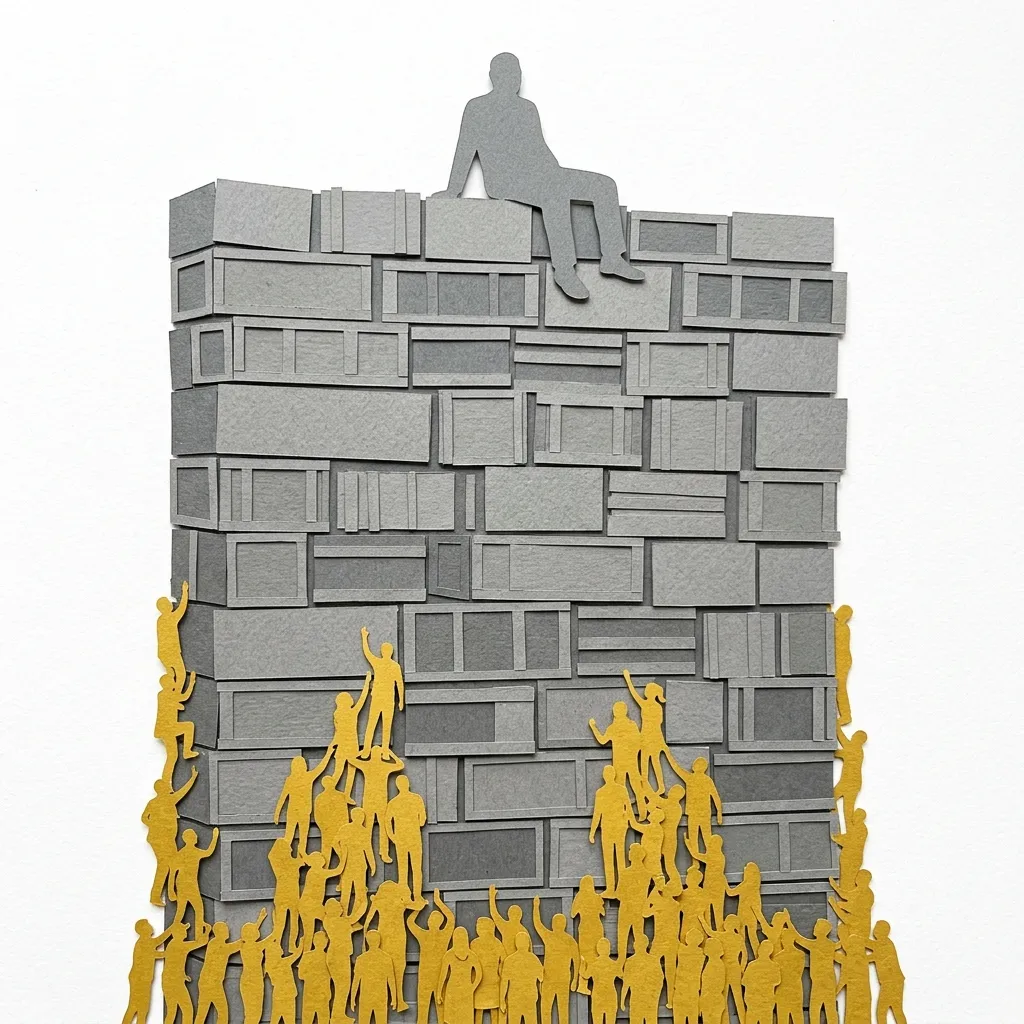
The Tariff of Abominations: The First Major Lesson
The United States was born into a tariff debate. Alexander Hamilton’s 1791 “Report on Manufactures” argued for protective tariffs to develop infant industries, and Congress passed modest tariffs from the start. But it was the Tariff of 1828 that first demonstrated, at scale, what happens when protection is taken to its logical extreme and stripped of any pretense of balance.
The 1828 tariff raised duties on a wide range of manufactured goods and raw materials to levels between 25 and 50 percent. Its explicit purpose was to protect Northern manufacturing interests, particularly textile mills in New England. The costs fell primarily on the South, whose cotton-growing economy depended on exporting to Britain and importing the manufactured goods that the tariff now priced out of reach. Southerners nicknamed it the Tariff of Abominations, and that name was not hyperbole. Vice President John C. Calhoun, writing anonymously in what became the “South Carolina Exposition and Protest,” argued that the tariff was not merely economically destructive but constitutionally illegitimate, a transfer of wealth from one section of the country to another through federal power.
The political fallout was immediate and severe. South Carolina’s legislature passed an Ordinance of Nullification in 1832, declaring the tariff null and void within the state and threatening secession if the federal government attempted to enforce it. President Andrew Jackson, himself a Southerner and no friend of special-interest tariffs, nonetheless issued a proclamation declaring nullification unconstitutional and threatening to use military force. The crisis was resolved by Henry Clay’s Compromise Tariff of 1833, which gradually reduced rates. But the sectional bitterness it generated did not dissolve. Historians who trace the path to the Civil War often include the tariff wars of the 1820s and 1830s among the factors that hardened Southern resentment of Northern economic power wielded through federal policy. (Howe, Daniel Walker, “What Hath God Wrought: The Transformation of America, 1815-1848,” Oxford University Press, 2007.)
The economic logic of the objection was sound. A tariff on manufactured goods that Southerners needed to buy was a direct subsidy to Northern manufacturers funded by Southern consumers, with no compensating benefit to the South in the form of export market access or any other policy concession. It was redistribution through trade policy: one region’s political power used to extract wealth from another. That is not an argument against all tariffs under all circumstances. It is an argument against what tariffs typically become when they are set by politicians responding to concentrated industry lobbying rather than by any coherent analysis of national economic interest.
The McKinley Tariff and Its Swift Political Consequence
Sixty years later, the Republican Party reprised the experiment. The McKinley Tariff of 1890, championed by Representative William McKinley of Ohio, raised average import duties to approximately 48 percent, the highest level in American history at that point. Its stated justification was protection of American manufacturing and labor. Its actual effect was to raise prices on a wide range of consumer goods, from tinplate for canning to clothing fabric, while simultaneously provoking foreign governments to restrict American agricultural exports.
The political backlash was swift enough to be remarkable. Just six weeks after the McKinley Tariff became law, the 1890 midterm elections delivered a landslide defeat to the Republican Party. The GOP lost 85 House seats, their majority collapsing from 166 to 88. McKinley himself was defeated in his own congressional race. The specific targeting of consumer goods with visible price effects had made the tariff’s costs impossible to ignore or obscure. Grover Cleveland, running against tariff protection, won the presidency in 1892 with a campaign centered on what he described as the tariff’s “vicious, inequitable, and illogical” character as a tax on ordinary consumers to benefit a wealthy few. (Summers, Mark Wahlgren, “The Gilded Age, or, The Hazard of New Functions,” Prentice Hall, 1997.)
The farmers who bore the double burden of the McKinley Tariff deserve particular attention, because their situation is nearly identical to what American farmers face today. In 1890, American farmers needed to export their crops to European markets and needed to import affordable machinery and building materials. The tariff raised the cost of their inputs while triggering retaliatory measures that shrunk their export markets. They were being taxed to subsidize urban manufacturers while simultaneously being priced out of the tools they needed to compete. That asymmetry, protected industry versus unprotected farmer, is structural to how protectionism works whenever it is applied to an economy that exports agricultural commodities and imports manufactured goods.
Smoot-Hawley: When the Lesson Had to Be Learned the Hard Way
The definitive American case study in tariff catastrophe is the Smoot-Hawley Tariff Act of 1930. It is worth spending time on in detail, because its mechanics illuminate exactly why the pattern keeps repeating.
The Smoot-Hawley Act was originally conceived as a modest bill to help American farmers who were struggling under falling crop prices in the late 1920s. By the time it passed Congress, it had become something far larger. The legislative process had been dominated by logrolling: each member of Congress traded votes for higher protection of industries important to their constituents, and the duties that emerged from this process had little relationship to any coherent economic analysis. The act ultimately raised duties on more than 20,000 categories of imported goods, pushing the average effective tariff rate on dutiable imports to approximately 46 percent.
More than 1,000 economists signed a petition urging President Hoover to veto the bill. Henry Ford, no opponent of American manufacturing, personally lobbied against it. Thomas Lamont of J.P. Morgan described it as “almost incredible” that a country with the largest favorable trade balance in the world would “deliberately” invite retaliation from its customers. Hoover signed it anyway. (Irwin, Douglas, “Peddling Protectionism: Smoot-Hawley and the Great Depression,” Princeton University Press, 2011.)
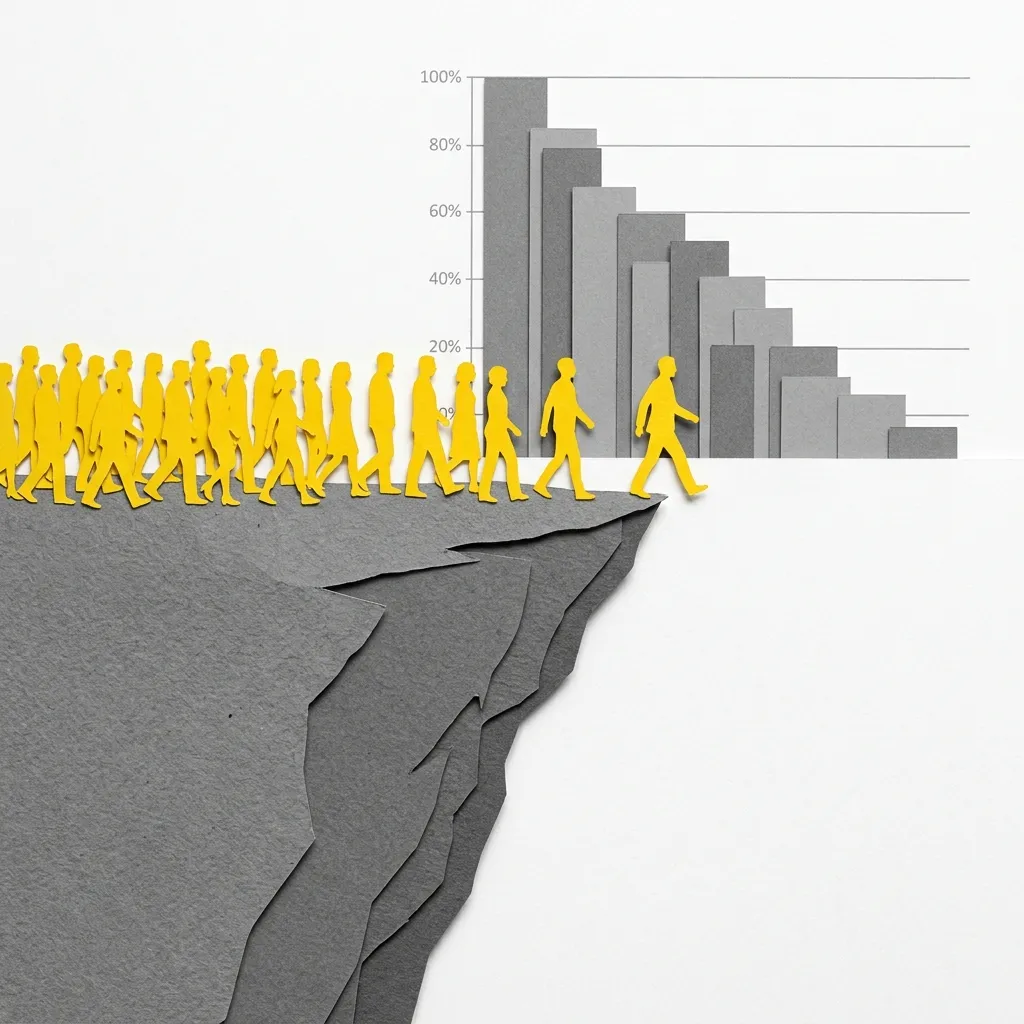
The retaliation was immediate and severe. Canada, the largest U.S. trading partner, responded within days with higher tariffs on American goods. Britain and its dominions adopted imperial preference policies that shut out American exports. Germany, France, and dozens of other countries raised their own barriers. Between 1929 and 1934, global trade declined by roughly 66 percent. U.S. exports fell from $5.2 billion in 1929 to $1.7 billion in 1933. The agricultural sector, which depended heavily on export markets, was devastated.
The Great Depression was underway before Smoot-Hawley passed, triggered by the 1929 financial crisis. Economists debate the precise magnitude of Smoot-Hawley’s additional contribution. What is not seriously debated is that it made a bad situation significantly worse: contracting trade, accelerating deflation, deepening the farm crisis, and converting what might have been a severe recession into a prolonged depression. The policy lesson Congress drew from the experience was codified in the Reciprocal Trade Agreements Act of 1934, which transferred tariff-setting authority from the logrolling-prone legislative process to the executive branch, authorizing the president to negotiate bilateral agreements reducing tariffs by up to 50 percent without requiring additional congressional ratification. Secretary of State Cordell Hull, the act’s principal architect, explicitly framed it as a structural correction to the political economy of congressional protectionism. The RTAA became the legal foundation for U.S. participation in GATT in 1947 and, ultimately, for the World Trade Organization.
The Constitutional Dimension: Who Gets to Set Tariffs?
The Founders were explicit about where the power to tax trade resides. Article I, Section 8 of the Constitution gives Congress the power to “lay and collect Taxes, Duties, Imposts and Excises” and to “regulate Commerce with foreign Nations.” This was not an accident of drafting. The Constitutional Convention understood that the power to set trade policy was the power to tax, and that the power to tax had to be lodged in the most directly accountable branch: the legislature, not the executive.
For the first century and a half of American history, Congress exercised this power directly, setting actual tariff rates through legislation. The political results, as the Tariff of Abominations and Smoot-Hawley both demonstrated, were often dismal, because Congress is structurally susceptible to the concentrated lobbying of protected industries against the diffuse interests of consumers who pay higher prices but do not organize around any single tariff line. The Reciprocal Trade Agreements Act of 1934 was Congress’s attempt to solve this problem by delegating authority to the executive, where the political calculus tilts slightly away from industry-specific protectionism and toward the macroeconomic benefits of market access.
That delegation was never unlimited. Congress specified the purposes for which executive tariff authority could be used: addressing national security threats (Section 232), retaliating against specific unfair trade practices (Section 301), responding to balance of payments emergencies (Section 122). The International Emergency Economic Powers Act of 1977 was a broader grant of presidential authority to respond to economic emergencies, used historically for sanctions against foreign governments, not as a blanket authority to tax all imports.
The Trump administration’s use of IEEPA to impose broad tariffs was, from the start, constitutionally contested. In February 2026, the Supreme Court ruled in a series of cases that IEEPA does not grant this authority. The majority opinion emphasized that the tariff power is a “core congressional power” rooted in Article I’s taxing clause, and that Congress must speak clearly and specifically before delegating such significant authority to the executive. IEEPA’s text did not mention tariffs or duties, and the Court applied the major questions doctrine: when an executive action claims authority over a matter of vast economic and political significance, it must rest on a clear congressional grant, not an inference. (Supreme Court of the United States, Learning Resources, Inc. v. Trump and Trump v. V.O.S. Selections, Inc., February 2026.)
The parallel to the war powers argument made in this blog’s previous article is exact. Both the power to declare war and the power to set tariffs are explicitly vested in Congress by the Constitution. Both have been progressively delegated to the executive through statutes that were not designed for the uses to which they have been put. Both delegations have been justified by arguments about flexibility, speed, and the impracticality of legislative deliberation in complex situations. And in both cases, bypassing the deliberative process has produced outcomes worse than the problem it was supposedly solving: wars that could not be finished because they were started without genuine public consensus, and tariffs that could not be calibrated because they were imposed without the economic rigor that adversarial legislative process, whatever its other flaws, at least occasionally forces.
What the Current Tariffs Are Actually Doing
The Trump administration’s tariff program of 2025 and 2026 is not a targeted surgical intervention. It is a broad, across-the-board tax increase on American imports.
The Tax Foundation estimated in February 2026 that the administration’s tariff actions cost the average U.S. household approximately $1,000 in 2025, with that figure projected to rise to $1,300 in 2026 if the tariffs remained in place. (Tax Foundation, “Tracking the Economic Impact of U.S. Tariffs,” February 2026.) The Peterson Institute for International Economics placed the cost of the tariffs on Canada, Mexico, and China alone at more than $1,200 per household annually. These are not projections of possible future harm. They are measurements of taxes already being paid, largely by people who have no idea a tariff is the mechanism through which their grocery bills and hardware store prices have risen.
That distributional point matters and is not argued enough. A tariff is a regressive tax. Lower-income households spend a larger share of their income on goods. Higher-income households spend more of their income on services, which tariffs do not tax. A blanket tariff on imported consumer goods, therefore, falls most heavily as a percentage of income on the people with the least. It is, in effect, a transfer from lower-income Americans to the shareholders and employees of whichever domestic industries happen to be protected. (Peterson Institute for International Economics, “Who Bears the Burden of U.S. Tariffs?” Mary Lovely and David Trubinsky, 2025.)
The retaliation from trading partners has followed the same pattern as every previous episode. China, Canada, Mexico, and the European Union all announced retaliatory tariffs targeting American agricultural exports, among other sectors. Soybeans, corn, wheat, pork, and beef, all major American agricultural exports, faced new duties in key markets. American farmers found themselves in the exact position their predecessors were in under the McKinley Tariff and Smoot-Hawley: facing higher costs for inputs (because tariffs on machinery and materials drive up production costs) while simultaneously losing market access in the countries they had spent years cultivating as customers. The American Farm Bureau Federation documented billions of dollars in annualized agricultural export losses attributable to retaliatory tariffs in 2025. (American Farm Bureau Federation, “Impact of Tariff Retaliation on U.S. Agriculture,” 2025.)
The stated rationale for the tariffs has varied, which itself is a red flag. At various times the administration argued that the tariffs were intended to reduce trade deficits, bring manufacturing jobs back to the United States, raise government revenue, and force better trade deals. These goals are not compatible with a single policy instrument. A tariff does not reduce a trade deficit in any meaningful way: the deficit reflects macroeconomic saving and investment patterns, not import prices. A tariff does not bring back manufacturing jobs net across the economy: it may preserve jobs in protected industries while destroying jobs in export industries and in the sectors that use protected inputs. A tariff does generate some revenue, but at a cost to consumers that exceeds the revenue collected. And tariffs are an extremely inefficient negotiating tool because they impose immediate costs on domestic consumers while the foreign counterpart can simply wait out the political pressure, especially if their government is not accountable to the people paying higher prices in the same way an American administration is.

The Protected Industry Problem: Who Tariffs Actually Help
To be fair to the protectionist argument, tariffs do help someone. They are not uniformly bad for all Americans. The industries that receive protection from foreign competition gain real advantages: higher prices for their goods, increased domestic sales, preserved jobs in their sector. Steel companies, aluminum producers, and certain manufacturers have benefited from the Trump tariffs just as the New England textile mills benefited from the 1828 tariff and the tinplate industry benefited from the McKinley Tariff.
The libertarian critique of this is not that those industries do not deserve to compete, or that American workers in those industries should be abandoned to market forces without any concern. The critique is structural and empirical. First, the beneficiaries of tariff protection are a small, visible, organized group with strong incentives to lobby intensively for protection. The losers are a large, dispersed, nearly invisible group (all American consumers and users of the protected inputs) with weak collective action capacity and often no awareness that a tariff is responsible for a price increase they experience. This asymmetry systematically biases trade policy toward protection regardless of whether protection is economically justified.
Second, protected industries tend not to become more competitive through protection. The purpose of competition is to force efficiency, innovation, and adaptation. Shielding an industry from competition shields it from those pressures. The American steel industry has been protected, in various forms, since at least the 1960s. It remains a high-cost producer relative to international competitors. Decades of protection have not transformed it into a global efficiency leader; they have made it an industry accustomed to operating behind walls that its customers pay to maintain.
Third, the gains to protected industries are smaller than the losses to their customers. This is the deadweight loss problem again: the tariff does not simply transfer money from consumers to producers. It eliminates economic activity that would have been mutually beneficial. The higher prices that consumers pay do not all flow to domestic producers. Some disappear into the inefficiency of producing domestically what could have been produced more cheaply elsewhere.
The honest version of the pro-tariff argument acknowledges all of this and argues that there are non-economic values, specifically national security and geopolitical resilience, that might justify accepting economic losses in certain strategic industries. That is a real argument and deserves honest engagement. But it is not the argument that was made for the 2025 tariffs, which were applied to allies (Canada, the European Union, Japan) alongside adversaries, to hundreds of industries with no plausible national security significance, and at rates that bore no relationship to any strategic supply chain analysis. The “national security” frame was invoked procedurally because Section 232 requires it, not because a genuine security analysis drove the rates.
The Deeper Pattern: What Protection Does to a Culture
There is a cultural and political dimension to protectionism that the purely economic analysis misses, and it connects directly to the broader argument this blog makes.
Protectionism cultivates a particular political psychology: a zero-sum worldview in which trade is conquest, in which foreign goods are attacks rather than offers, in which the economy is a closed system where American jobs can only be preserved by preventing foreigners from competing for them. This psychology is coherent only if you believe that the gains from trade are illusory, that specialization and exchange create no net value, that every import is a loss and every export is a victory. Economists since Adam Smith have spent 250 years explaining why this view is wrong. The results of the experiments this country has run with it have confirmed that explanation repeatedly.
What is politically concerning is that protectionism, once established, tends to compound itself. Each wave of protection creates organized constituencies that defend their protection fiercely and lobby for extensions. The protected industries hire the lawyers, the lobbyists, and eventually the former trade officials who write the rules. The consumers who pay the costs are diffuse, unorganized, and often unaware. The Smoot-Hawley catastrophe was the product of exactly this political dynamic: each congressman adding protection for their district’s industries until the cumulative tariff had become something no individual member of Congress would have endorsed if forced to vote on it as a whole.
Executive tariff authority, divorced from the deliberative legislative process, does not solve this problem. It replaces the congressional logrolling problem (many organized interests each getting a slice) with the executive willfulness problem (one organized interest, or one ideological framework, dominating policy without any adversarial check). The Supreme Court’s February 2026 ruling pushing back against IEEPA-based tariffs is therefore not merely a legal technicality. It is the constitutional structure reasserting itself: the principle that decisions of such broad economic consequence require accountable deliberation, not executive fiat.

What a Genuine Trade Policy Would Look Like
The Loveatarian position on trade is not “do nothing” or “free trade regardless of context.” It is that trade policy should be made deliberately, with genuine analysis of costs and benefits, with accountability to the people who will bear those costs, and through constitutional processes designed to prevent any single faction from using federal power to extract wealth from everyone else.
A genuine trade policy would distinguish between the small number of industries with actual national security significance (rare earth mineral processing, certain semiconductor production, specialized military inputs) and the vastly larger number of industries that simply have political influence. It would apply targeted, time-limited protection to the former with explicit sunset provisions and requirements to demonstrate competitive progress. It would negotiate reciprocal market access agreements that expand opportunities for American exporters, especially in agriculture, services, and technology, rather than tariffs that close foreign markets to retaliation.
It would acknowledge that the trade deficit is not the problem it is often framed to be: the deficit reflects that foreigners are investing in the United States, which is a sign of economic strength, not weakness. It would address genuine unfair trade practices, like Chinese state subsidies and intellectual property theft, through the WTO dispute resolution process and targeted Section 301 actions rather than blanket tariffs that harm allies and adversaries alike.
Most fundamentally, it would be honest about who pays. Every tariff is a tax on an American. Before any administration imposes one, it should be required to explain publicly which Americans will pay, how much they will pay, and why the benefit to the protected industry justifies that specific cost to those specific people. That transparency is what the constitutional requirement of congressional deliberation was designed to force. When it is bypassed, so is the accountability.
Conclusion: The Tax That Hides Its Name
Tariffs are popular in the abstract because they sound like they punish foreigners. They are unpopular in the specific because every grocery receipt and hardware store bill reflects their real incidence. The political genius of the tariff, from the perspective of the politician imposing it, is that the connection between the tax and the price increase is invisible to most consumers. Nobody’s receipt says “Steel tariff surcharge: $47.” The cost is distributed invisibly across thousands of products and transactions.
But the invisibility does not change the economics. A tariff is a tax on Americans who buy things from abroad, which is to say a tax on Americans who want more for less. It protects the relatively few at the expense of the many. It invites retaliation that punishes American exporters, who are often farmers, technology companies, and service providers who had nothing to do with whatever industry lobbied for the protection. It misallocates resources from more efficient to less efficient uses, shrinking the total economic pie even as it redistributes some slices.
The history of American tariffs is a history of this pattern playing out with depressing regularity: protection promised as a solution, prices rising in ways the promise did not mention, foreign retaliation striking sectors that had no voice in the original decision, political backlash that sometimes produces correction and sometimes just produces more protection. Smoot-Hawley ended the era of congressional tariff-setting. The Trump administration’s IEEPA tariffs have now been rejected by the Supreme Court as beyond executive authority as well.
The constitutional and economic arguments point in the same direction. Trade policy that affects every American household should be made by the people’s representatives, with public deliberation, with the costs and benefits stated plainly, and with the accountability that comes from having to defend those choices at election time. That is not a procedural formality. It is how a republic prevents any faction from using federal power to make itself rich at everyone else’s expense.
The bar is there for a reason. It always is.
Go Deeper: Books by Alex Merced
The arguments in this article draw on decades of economic history and theory that most people never encounter in the public debate about trade. If you want to understand the intellectual foundations more deeply, Alex Merced has written on all three of the relevant frameworks.
Economic Ideas: From Beginning to Early 2026 is the direct companion to this article. It traces the full arc of economic thought from Adam Smith and David Ricardo through Keynes, Hayek, Friedman, and the AI era. The comparative advantage argument, the deadweight loss concept, and the public choice critique of how protection gets legislated are all there in their full intellectual context, not as talking points but as ideas with histories and serious counterarguments.
The Field Guide to Libertarianism builds out the political philosophy behind the economic critique. The argument that tariffs are a form of government-enforced redistribution from many to few, that concentrated interests systematically distort democratic trade policy, and that voluntary exchange is both more efficient and more just than managed trade are all core libertarian arguments that this book develops in full.
Political Thought and Debates of the United States places the tariff debate in the context of the broader American struggle over what federal power is for. The conflict between Hamiltonian industrial policy and Jeffersonian free commerce, the sectional politics of the Tariff of Abominations, and the constitutional battles over executive versus legislative trade authority are all threads in the longer story of American political thought that this book traces.
All three are available on Amazon. The full catalog of Alex Merced’s work is at books.alexmerced.com.
Sources and Further Reading
-
Amiti, Mary, Stephen J. Redding, and David E. Weinstein. “The Impact of the 2018 Trade War on U.S. Prices and Welfare.” American Economic Review 109, no. 7 (2019): 2169-2209.
-
Irwin, Douglas A. Peddling Protectionism: Smoot-Hawley and the Great Depression. Princeton University Press, 2011.
-
Krugman, Paul R., Maurice Obstfeld, and Marc J. Melitz. International Economics: Theory and Policy, 11th edition. Pearson, 2018.
-
Howe, Daniel Walker. What Hath God Wrought: The Transformation of America, 1815-1848. Oxford University Press, 2007.
-
Summers, Mark Wahlgren. The Gilded Age, or, The Hazard of New Functions. Prentice Hall, 1997.
-
Tax Foundation. “Tracking the Economic Impact of U.S. Tariffs and Retaliatory Actions.” taxfoundation.org, updated February 2026.
-
Peterson Institute for International Economics. Mary Lovely and David Trubinsky. “Who Bears the Burden of U.S. Tariffs?” piie.com, 2025.
-
American Farm Bureau Federation. “Impact of Tariff Retaliation on U.S. Agriculture.” fb.org, 2025.
-
Supreme Court of the United States. Learning Resources, Inc. v. Trump and Trump v. V.O.S. Selections, Inc. February 2026.
-
Court of International Trade. Ruling on Section 122 tariff authority. May 7, 2026.
-
Congressional Research Service. “Trade Authorities and Procedures.” fas.org/sgp/crs, updated 2025.
-
Ricardo, David. On the Principles of Political Economy and Taxation. John Murray, 1817. Available via Project Gutenberg.
-
Hull, Cordell. The Memoirs of Cordell Hull, Vol. 1. Macmillan, 1948. (Documents the rationale and design of the Reciprocal Trade Agreements Act of 1934.)
-
Calhoun, John C. “South Carolina Exposition and Protest.” 1828. Reprinted in Union and Liberty: The Political Philosophy of John C. Calhoun, ed. Ross Lence. Liberty Fund, 1992.