TL;DR
- The United States has spent over one trillion dollars and imprisoned millions of people in a fifty-year campaign to eliminate drug use. Drug use has not been eliminated. Overdose deaths have reached record highs. The primary measurable effects of the War on Drugs are: the construction of a system of mass incarceration that falls hardest on Black and brown communities despite similar drug use rates across racial lines; the creation and empowerment of violent criminal organizations that control the drug supply in the absence of legal markets; the erosion of Fourth Amendment protections through warrantless searches, civil asset forfeiture, and the militarization of police; and the deaths of users who would have survived with access to quality-controlled, regulated supply.
- The policy debate has been structured falsely as a choice between prohibition and “endorsing” drug use. That is not the choice. The choice is between a legal regulated market that controls access, quality, and potency versus an illegal unregulated market that does none of those things. The evidence from Portugal’s 2001 decriminalization and from state marijuana legalization in the United States strongly supports that treating drug use as a public health problem rather than a criminal justice problem produces better outcomes on every metric that matters.
- This is not a comfortable argument for many people. The libertarian case for drug policy reform is not that drugs are harmless or that use should be normalized. It is that the prohibition approach has demonstrably failed to reduce drug use while producing enormous collateral harm, and that evidence-based alternatives work better. The argument from evidence requires no agreement on the cultural questions about drug use.
Richard Nixon declared the War on Drugs in 1971, describing drug abuse as “public enemy number one” and calling for a “new, all-out offensive” against it. Nixon’s domestic policy advisor John Ehrlichman later gave a remarkably candid account of the political logic behind the declaration. In a 2016 interview published in Harper’s Magazine, Ehrlichman described the Nixon administration’s two primary political enemies as the antiwar left and Black Americans: “We knew we couldn’t make it illegal to be either against the war or Black, but by getting the public to associate the hippies with marijuana and Blacks with heroin, and then criminalizing both heavily, we could disrupt those communities… Did we know we were lying about the drugs? Of course we did.”
This origin story is contested and its direct policy implications are disputed, but it sets the frame for understanding why fifty years of evidence that the War on Drugs does not work has not been sufficient to end it. The drug war was never only or even primarily about drug use. It was about power, about which communities bear the cost of enforcement, and about the political interests of law enforcement agencies, prison contractors, and politicians whose careers are built on appearing tough on crime.
What the evidence actually shows about the drug war’s effects is worth examining carefully, because the political case for reform is strongest when it rests on what the policy has actually produced rather than on assertions about what it should have done.
Fifty Years of Spending, One Trillion Dollars Later
The federal government has spent over $1 trillion on drug control since Nixon’s declaration, with annual federal drug control spending reaching over $46 billion by 2024. (Office of National Drug Control Policy, National Drug Control Budget, 2024.) State and local spending on drug enforcement, prosecution, and incarceration adds substantially to this total. The total investment in the drug war, across all levels of government over fifty years, represents one of the largest sustained domestic policy expenditures in American history.
What that investment has produced is documented clearly. Drug use rates in the United States are not lower than they were in 1971. According to National Survey on Drug Use and Health data, current drug use rates are broadly comparable to or higher than rates in the early 1970s when the war was declared. Illicit drug use has not been driven toward zero or even toward significantly reduced levels by a half-century of enforcement effort. The supply of illegal drugs has not been eliminated; street prices for heroin and cocaine, adjusted for inflation, have fallen significantly since the 1980s, which is the market signal of adequate supply meeting demand. The War on Drugs has failed entirely at the stated goal of reducing the supply and use of illegal drugs.
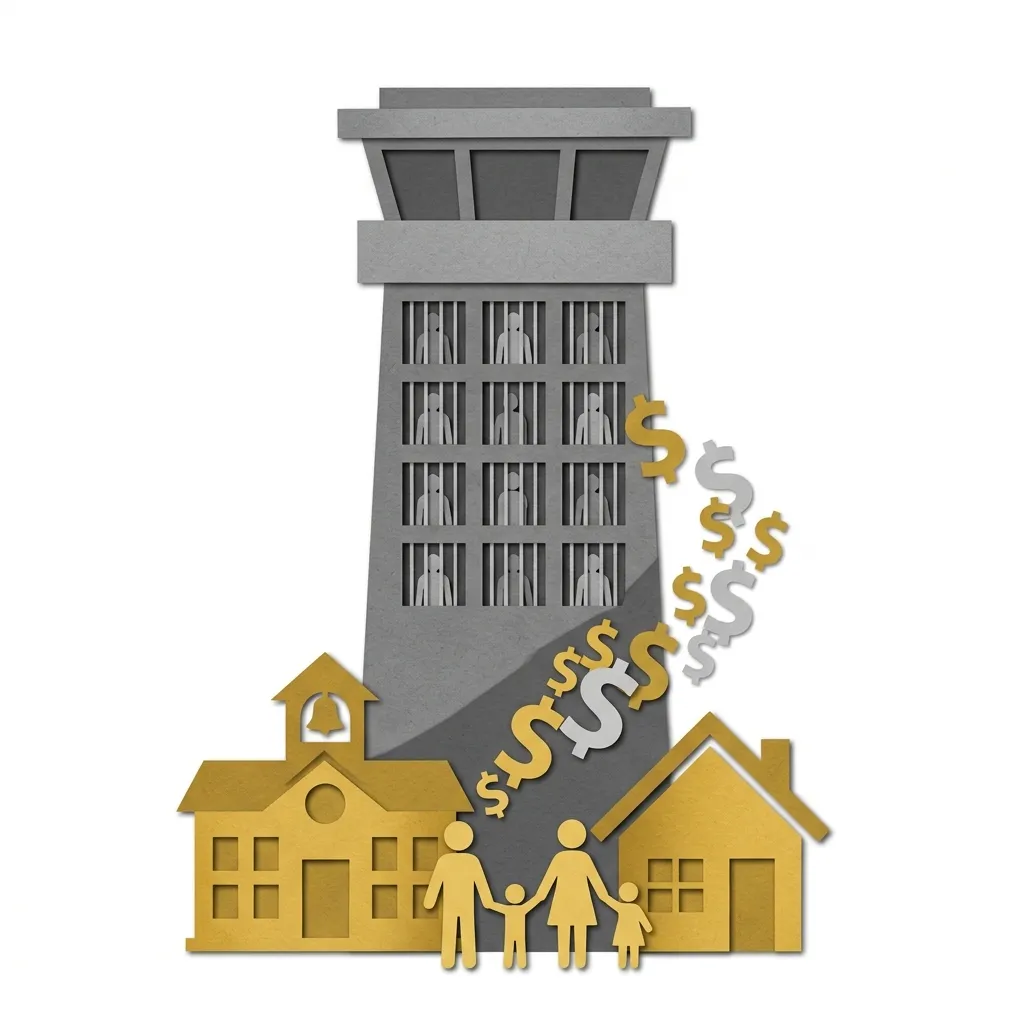
What it has not failed at is filling prisons. The United States incarcerates approximately 1.9 million people as of 2024, giving it the highest incarceration rate of any country in the world. Approximately 20 percent of the people in state and federal prisons are serving time for drug offenses, and in the federal prison system specifically, approximately 46 percent of inmates are there for drug-related charges. (Bureau of Justice Statistics, Prisoners, 2023.) Law enforcement makes approximately 1 million drug arrests per year, with over 85 percent for possession alone rather than for trafficking or distribution.
The cost of incarcerating a person for a year at the federal level averages approximately $44,000. At the state level, costs vary widely but average over $35,000 per year. Incarcerating hundreds of thousands of people annually for drug offenses that in other countries are treated as public health matters represents an enormous diversion of resources that could instead fund treatment, education, and the community infrastructure that actually reduces drug use and its harms.
The Racial Arithmetic of Drug Enforcement
One of the most thoroughly documented facts about drug enforcement in the United States is that it falls with dramatically disproportionate weight on Black Americans, despite research consistently showing that rates of drug use and sales are similar across racial groups.
The ACLU has published extensive analysis of marijuana arrest data showing that Black Americans are 3.6 times more likely than white Americans to be arrested for marijuana possession nationally, despite similar rates of use. In some states the disparity is far larger. This disparity existed before marijuana legalization began at the state level and has persisted in the federal data. (ACLU, “A Tale of Two Countries: Racially Targeted Arrests in the Era of Marijuana Reform,” 2020.)
For harder drugs, the disparities in incarceration are similarly stark. Black Americans make up approximately 13 percent of the U.S. population but represent approximately 27 percent of people arrested for drug offenses and 30 percent of people incarcerated for drug offenses. (Sentencing Project, “Drug Policy Reform and Racial Justice,” 2022.) These disparities are not explained by differential rates of drug use. They are explained by differential rates of policing, prosecution, and sentencing that reflect decisions about where to deploy enforcement resources and how to exercise prosecutorial discretion.
The crack cocaine versus powder cocaine sentencing disparity, which for most of its history set a 100:1 ratio meaning that possession of one gram of crack triggered the same mandatory minimum sentence as possession of 100 grams of powder cocaine, is perhaps the most documented example of how drug sentencing policy has operated in practice to impose dramatically higher sentences on Black defendants (who are disproportionately charged with crack offenses) than on white defendants (who are disproportionately charged with powder offenses) for what is pharmacologically the same drug. The Fair Sentencing Act of 2010 reduced this ratio to 18:1. It remains at 18:1. It has not been eliminated.
The collateral consequences of drug convictions extend far beyond the prison term itself. In many states, a drug conviction results in the loss of voting rights, either permanently or during incarceration and parole. Federal law bars people with drug convictions from receiving federal student loans, federal housing assistance, and certain professional licenses. These legal barriers to economic reintegration, which are specific to drug offenses in ways they are not for most other crimes, make it significantly harder for people convicted of drug offenses to rebuild their lives, which increases recidivism and perpetuates the cycle of enforcement.
The Black Market Is the Danger: How Prohibition Creates the Harm It Claims to Prevent
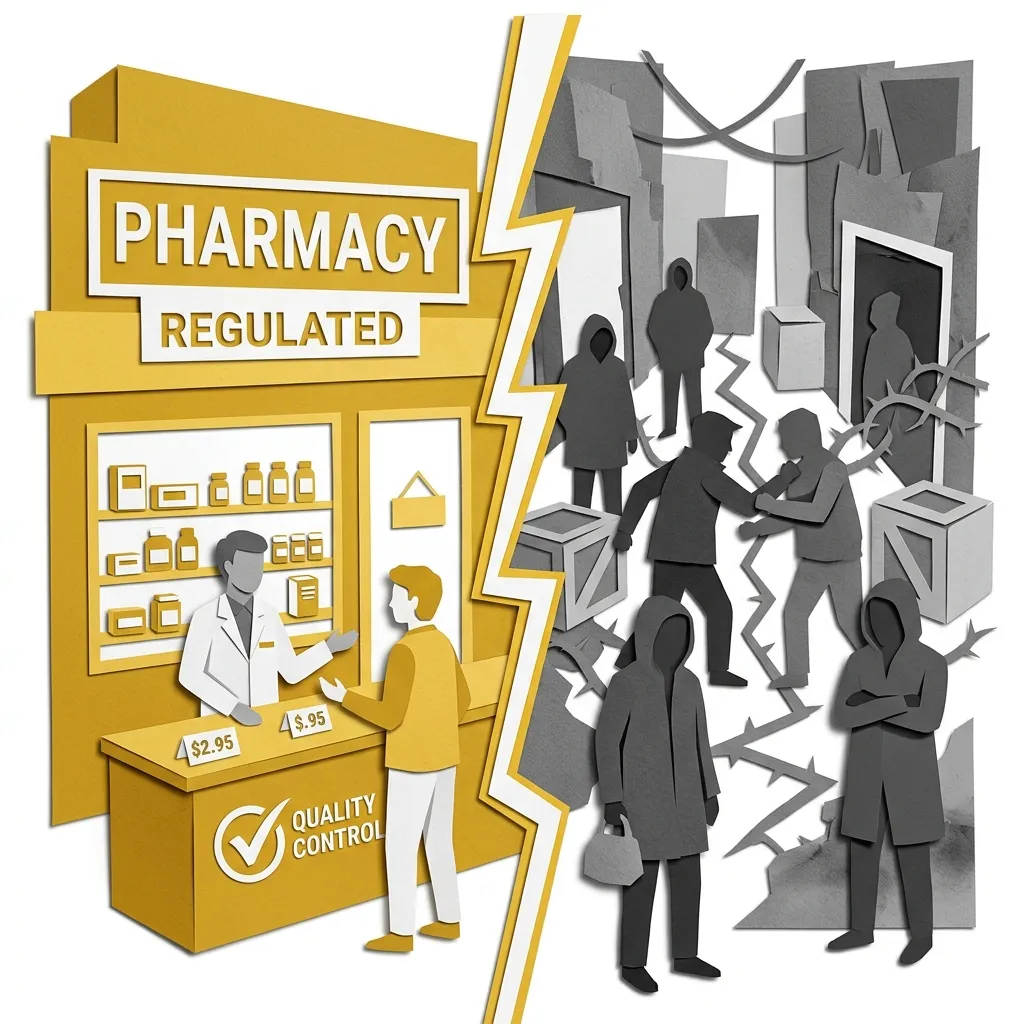
The most important and most consistently misunderstood mechanism in drug policy is the relationship between prohibition and the harm that drug use produces. The intuitive logic of prohibition is that if supply is restricted, use falls, and harm falls. The economic and historical reality is more complicated: when legal supply is eliminated, illegal supply fills the gap, and illegal supply is more dangerous than legal supply in several specific and predictable ways.
Quality control is the most direct mechanism. Pharmaceutical-grade opioids have consistent dosage and known purity. Heroin and fentanyl obtained from street markets have neither. The concentration of fentanyl in street supplies is unknown to the buyer, varies enormously from batch to batch, and the difference between a dose that produces the desired effect and a dose that kills is very small. The overdose crisis that has killed over 100,000 Americans per year in recent years is not primarily a story of people dying from drugs they knew they were taking at known doses. It is primarily a story of people dying from unexpected fentanyl contamination in supplies they believed to contain something else. That contamination is a product of the illegal market and would be far less likely in a legal regulated market where potency is disclosed and controlled.
Violence is the second mechanism. Legal businesses resolve disputes through courts and contracts. Illegal businesses cannot. Drug trafficking organizations resolve disputes through violence, because violence is the only enforcement mechanism available to participants in markets that the law refuses to recognize. The violence associated with drug trafficking is not inherent to the drug trade; it is inherent to prohibition. The alcohol trade in the United States under Prohibition was dominated by organized crime and gang violence. The alcohol trade after Prohibition was dominated by beer distributors and liquor companies that resolve their disputes in court. The same principle applies to drugs.
The HIV/AIDS crisis among intravenous drug users in the 1980s and 1990s illustrates a third mechanism. When needles are illegal to possess, users share them. When needle exchange programs are banned or underfunded because they are seen as enabling drug use, HIV spreads through shared equipment. Thousands of people contracted HIV from contaminated needles during the period when federal law prohibited using federal funds for needle exchange programs. The law did not prevent drug use. It prevented the harm-reduction measures that would have reduced the most severe consequence of drug use.
Civil Asset Forfeiture: Policing for Profit
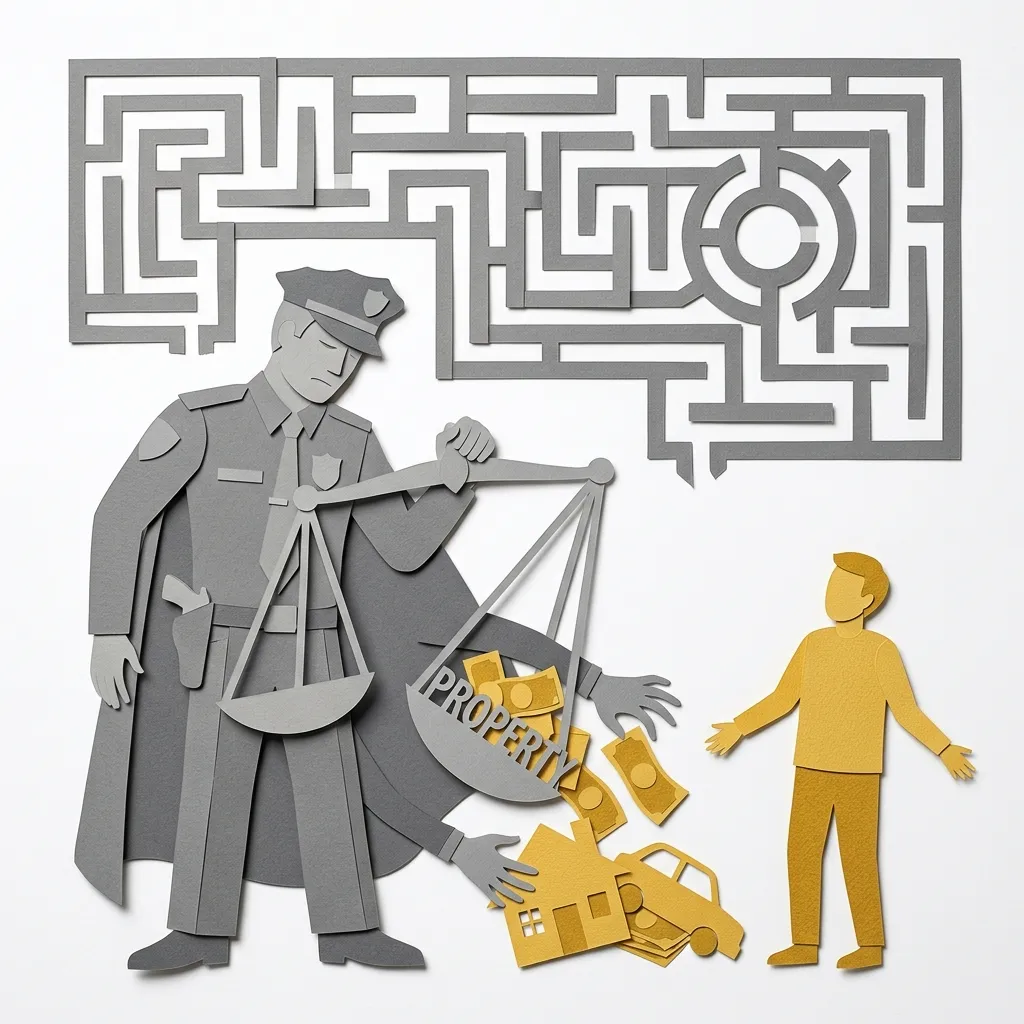
The War on Drugs created one of the most constitutionally troubling expansions of government power in American history: the practice of civil asset forfeiture, which allows law enforcement agencies to seize property suspected of being connected to drug activity, and to keep that property for their own use, without requiring a criminal conviction of the property owner.
The legal mechanism is based on a legal fiction: civil forfeiture is technically an action against the property itself, not against a person. Under this theory, a house or a car or a cash pile can be guilty of being connected to criminal activity and seized accordingly, without the owner being convicted of any crime or even charged with one. The owner who wants their property back must sue in civil court to recover it, placing the burden of proof on the owner rather than on the government.
The practical consequences of this legal structure have been extensively documented. The Institute for Justice, in its 2015 report “Policing for Profit,” found that federal and state governments forfeited more than $5 billion worth of property in 2014 alone, more than the total value of property stolen in burglaries reported to the FBI that year. The report documented extensive cases of people who had their property seized without conviction, including cash being seized from people who were never charged with any crime, cars being seized from people whose family members had committed drug offenses on the vehicle without the owner’s knowledge, and homes being seized from people whose adult children had sold drugs on the property.
The profit motive is explicit in most forfeiture statutes. Seized property is typically shared between the law enforcement agency that seized it and the prosecutors who handled the case, with a portion going to the federal government under “equitable sharing” programs. This financial incentive creates a perverse dynamic: law enforcement agencies have a direct financial stake in seizing as much property as possible, regardless of whether the owners are guilty of anything. Documented cases of police stopping vehicles on highways and seizing cash from travelers who cannot explain where the money came from, without charging them with any crime, represent the logical endpoint of a system where the financial incentive runs toward seizure rather than toward due process.
New Mexico, New Hampshire, Maine, and several other states have passed reforms requiring a criminal conviction before property can be forfeited. These reforms represent genuine progress. Federal law still permits equitable sharing arrangements that allow local agencies to route forfeitures through federal authorities to avoid state reform requirements, which significantly limits the effectiveness of state-level reforms.
Portugal: The Experiment That Worked
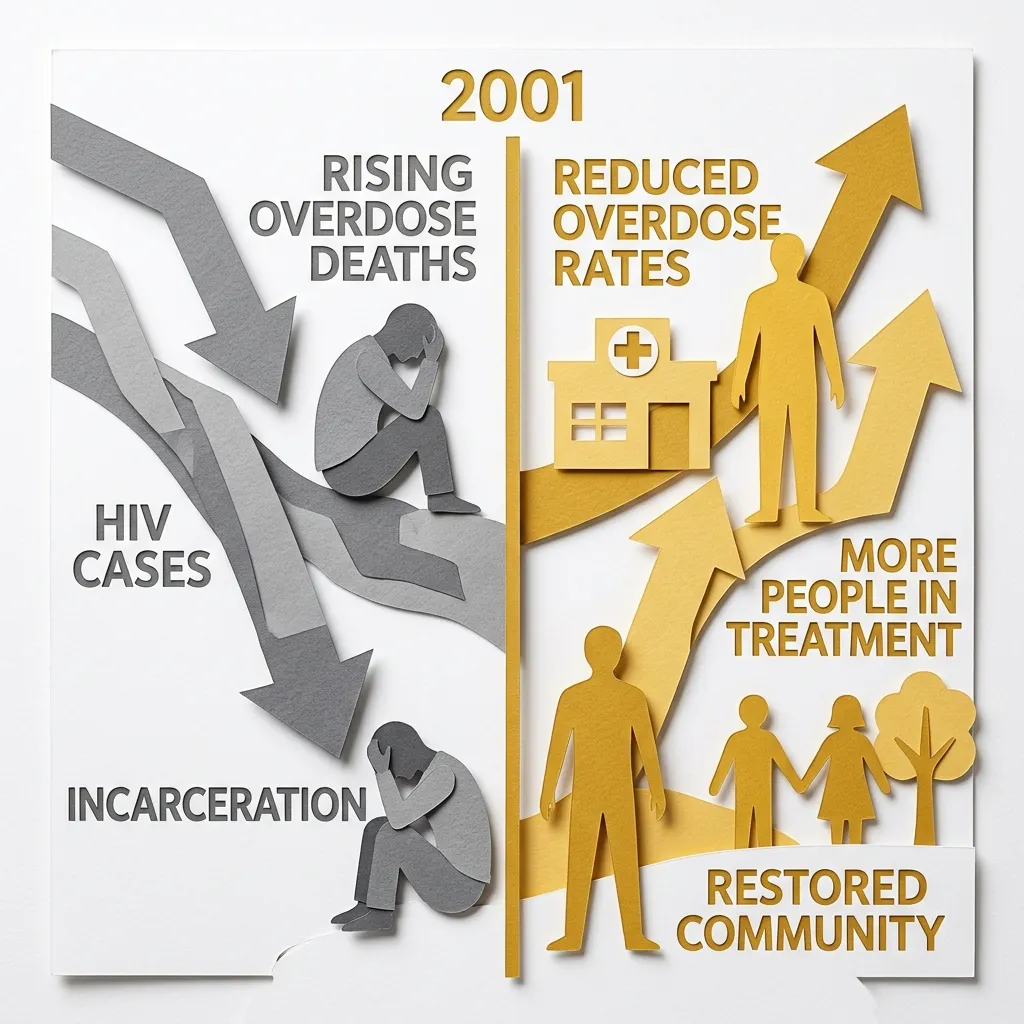
In 2001, Portugal decriminalized the personal possession of all drugs, not just marijuana but heroin, cocaine, methamphetamine, and everything else. The change did not legalize drugs: trafficking and distribution remained criminal offenses. But possession of quantities consistent with personal use became an administrative rather than a criminal matter, referring users to “Dissuasion Commissions” composed of health, social, and legal professionals who could recommend treatment, social services, or minor administrative sanctions.
The political risk was significant. Critics predicted a surge in drug tourism, an explosion in drug use, and a collapse of public order. What happened instead is one of the most-studied natural experiments in drug policy.
Within fifteen years of the reform, the proportion of new HIV/AIDS diagnoses attributable to intravenous drug use fell from over 50 percent to approximately 6 percent. Drug-related overdose deaths fell to among the lowest rates in the European Union. The number of people voluntarily entering drug treatment increased significantly, because decriminalization reduced the stigma that had prevented many users from seeking help. Drug use prevalence, the feared surge that critics predicted, remained at or below European average levels. Drug use did not explode because penalties were reduced. (Hughes and Stevens, “What Can We Learn From the Portuguese Decriminalization of Illicit Drugs?” British Journal of Criminology, 2010; Drug Policy Alliance, “Drug Decriminalization in Portugal,” 2021.)
The prison population serving drug sentences shrank. Law enforcement resources that had been devoted to processing drug possession arrests were redirected toward trafficking and distribution, which remained criminal. The Portuguese model required more than just decriminalization: it required simultaneous investment in treatment capacity, social services, and harm reduction infrastructure. Decriminalization alone, without the accompanying health investment, would likely have produced weaker results.
The United States has conducted its own partial experiments. Fourteen states and the District of Columbia have legalized recreational marijuana for adult use. The evidence from these states consistently shows that legalization does not produce the surge in youth use that opponents predicted, that black market marijuana supply declines significantly, that marijuana-related arrests fall dramatically particularly for Black residents who had been disproportionately targeted, and that tax revenue from legal sales can be directed toward public health and community investment.
What Reform Actually Requires
The argument from evidence points toward a different approach to drug policy. That approach does not require moral approval of drug use. It requires accepting that prohibition is not working and that the evidence for better approaches is available.
Decriminalize personal possession and redirect users to health services. Following the Portuguese model, treating personal possession as a public health matter rather than a criminal one would reduce the incarceration burden, reduce the racially disparate enforcement patterns, reduce HIV transmission through shared equipment, and increase the number of people willing to seek treatment without fear of criminal consequences. This change can be made at the state level and has been partially implemented in Oregon (though that state’s experience highlights the importance of accompanying the policy with adequate treatment infrastructure).
Expand harm reduction services without restriction. Needle exchange programs, naloxone distribution, drug testing services that allow users to identify fentanyl contamination, and supervised consumption sites where overdose can be reversed have strong evidence of reducing harm without increasing drug use. Federal funding restrictions on these services should be removed, and states should be encouraged to expand them.
Legalize and regulate. For marijuana, the case for full legalization and regulation is supported by the evidence from the states that have done it. For harder drugs, the policy question is more complex, but regulated provision of pharmaceutical-quality opioids to established users, as practiced in Switzerland and to some extent in Canada and the United Kingdom, has strong evidence for reducing overdose deaths, reducing crime committed to fund addiction, and improving treatment engagement.
Reform civil asset forfeiture. Require a criminal conviction before property can be permanently forfeited. Eliminate equitable sharing arrangements that allow agencies to bypass state reform laws. Require that forfeiture proceeds go to the general fund rather than to the seizing agency, to eliminate the financial incentive for aggressive seizure.
Reform mandatory minimum sentencing. Allow judges to impose sentences below statutory minimums in cases where the facts do not warrant them. The concentration of sentencing discretion in the hands of prosecutors rather than judges has produced sentences that are systematically excessive and racially disparate.
Invest in treatment. The opioid crisis has demonstrated that treatment capacity in the United States is severely inadequate to meet need. Medication-assisted treatment for opioid use disorder, using buprenorphine or methadone, is among the most effective interventions available, with strong evidence for reducing overdose deaths, reducing criminal behavior, and improving long-term abstinence rates. Access to these treatments is severely limited by regulatory restrictions, geographic barriers, and insurance coverage gaps that should be removed.
The drug war has not been lost because the wrong drugs were targeted or because enforcement was insufficiently vigorous. It has failed because prohibition is the wrong instrument for a public health problem. The evidence for this conclusion has been available for decades. The political barriers to acting on it are not about the evidence. They are about the institutional interests that have grown up around the War on Drugs and the cultural discomfort with acknowledging that fifty years and one trillion dollars were spent producing a disaster.
A note on where these proposals sit: the libertarian case for drug policy reform does not begin with the empirical evidence, though the evidence fully supports reform. It begins with bodily sovereignty, the principle that you own your body and the government has no legitimate authority to prohibit you from putting a substance into it that affects only yourself. This is a principled limit on state power, not a harm-reduction calculation. The reforms here, decriminalization of personal possession, harm reduction services, and regulated legalization, are better than prohibition on both grounds. But decriminalization is not the libertarian endpoint. Decriminalization treats personal use as an administrative matter rather than a criminal one, which reduces the coercion, but the state still retains the power to penalize personal consumption choices. Full legalization with private market supply, quality testing, and consumer information is the libertarian endpoint for recreational drugs. Regulated legalization as proposed here involves government licensing of production and retail, which is not libertarian purity but is a practical and achievable improvement. The mandatory minimum sentencing and civil forfeiture reforms are genuinely libertarian in direction: they reduce state power and restore due process. Readers should understand the full package as moving significantly toward better policy, with the most principled reforms being those that restore due process and remove prohibition, and the compromise elements being the government-managed treatment and harm reduction infrastructure.
How 11 Countries Handle Drug Policy: A Range of Approaches
The United States is an international outlier in the severity and scope of its drug enforcement. Looking at how other countries approach the same challenge of drug use, addiction, and trafficking reveals a spectrum from strict prohibition to full legalization, with the most successful outcomes clustering around decriminalization and regulation rather than at the prohibition end.
Portugal decriminalized personal possession of all drugs in 2001 and is covered extensively above. Its results, including dramatic reductions in HIV transmission, overdose deaths, and drug-related incarceration, combined with stable or declining drug use prevalence, represent the clearest evidence that treating drug use as a public health matter produces better outcomes than criminalization. Portugal’s success is inseparable from the simultaneous investment in treatment and social services that accompanied decriminalization.
The Netherlands has maintained a policy of “tolerance” (gedoogbeleid) toward cannabis since the 1970s, allowing retail sale of cannabis in licensed coffee shops while technically keeping production and wholesale illegal. This front-door-legal, back-door-illegal arrangement is widely acknowledged as incoherent, producing a regulated retail market supplied by an unregulated criminal wholesale market. The Dutch have debated moving to a regulated supply chain for cannabis for decades. Several municipalities have begun pilot programs for regulated cannabis cultivation. The Netherlands also provides heroin-assisted treatment for long-term heroin users with evidence of reduced crime and improved health outcomes.
Switzerland implemented a heroin prescription program in the early 1990s after an open drug market in Zurich’s Platzspitz park (dubbed “Needle Park”) made the human and public order costs of prohibition vivid and impossible to ignore. Switzerland began providing pharmaceutical-grade heroin to registered users under medical supervision. The results were striking: property crime among participants fell sharply, HIV transmission declined, and a significant share of participants moved into stable housing and legal employment. Switzerland now treats heroin addiction as a chronic medical condition, maintaining patients on medically supervised heroin provision as long-term treatment rather than expecting abstinence.
Germany legalized recreational cannabis for adults in 2024, becoming the first major European country to do so. The German law permits adults to possess up to 25 grams of cannabis in public and cultivate up to three plants at home, without allowing commercial retail. Cannabis social clubs of up to 500 members may cultivate cannabis for members. The commercial retail element was separated from the initial legislation due to concerns about EU law, with pilot regional retail programs planned. Germany’s 2024 reform represents a significant political shift in European drug policy and may influence other EU member states.
Canada legalized recreational cannabis nationally in 2018 through the Cannabis Act, establishing a federally regulated retail market with provincial variation in distribution and retail models. Canada’s legalization has eliminated most cannabis arrests, generated significant tax revenue, substantially reduced the illegal market for cannabis, and produced no evidence of significant increases in youth cannabis use. Canada has also moved to decriminalize personal possession of small amounts of hard drugs in British Columbia as a pilot program, though the province faced challenges in providing sufficient treatment infrastructure.
Uruguay became the first country in the world to legalize and fully regulate recreational cannabis through a state-controlled retail market in 2013. The Uruguayan model, in which the government controls cannabis production, sale, and price, represents a different approach than the Canada/U.S. model of licensed private retail. Cannabis in Uruguay is sold at pharmacies at a fixed low price. The model has reduced illegal market activity significantly, though the pharmacy-based distribution system has faced some implementation challenges.
The Czech Republic decriminalized personal possession of cannabis, cocaine, heroin, methamphetamine, and other drugs in 2010, setting quantity thresholds below which possession is an administrative offense rather than a criminal one. The Czech approach has not been accompanied by large-scale treatment infrastructure investment of the Portuguese type. The result is that Czech drug use rates remain among the higher end for Europe without the dramatic public health improvements that Portugal achieved, suggesting that decriminalization alone, without the treatment component, delivers incomplete benefits.
The United Kingdom maintains strict prohibition with criminal penalties for possession and trafficking of most drugs, though with significant regional discretion in enforcement. The UK has some of the highest drug use rates in Europe despite strict enforcement, illustrating the same basic point the U.S. experience makes: criminal penalties do not correlate strongly with drug use prevalence. The UK has made some moves toward harm reduction, including allowing needle exchanges, but has resisted decriminalization at the national level. Scotland, which has one of the highest drug death rates in Europe, has advocated for decriminalization but cannot implement it independently under the UK’s constitutional structure.
Japan maintains among the world’s strictest drug enforcement regimes, with imprisonment for personal possession and cultural stigma around drug use so strong that use rates are among the lowest in the developed world. Japan’s low drug use rate is frequently cited as evidence that strict enforcement works. But Japan’s cultural, institutional, and social factors are so different from the United States and Western Europe that the comparison is of limited policy value. The cultural mechanisms that suppress drug use in Japan are not policies that other countries can adopt by legislation.
New Zealand held a binding referendum on cannabis legalization in 2020, in which 53 percent of voters rejected a legalization proposal. The referendum exposed sharp demographic splits, with younger and urban voters supporting legalization and older and rural voters opposing it. New Zealand’s referendum failure illustrates that drug policy reform requires popular support that in some countries has not yet materialized, even when expert opinion increasingly favors reform.
Mexico decriminalized personal drug possession in 2009, setting quantity thresholds for multiple substances. The Mexican experience is primarily a trafficking story rather than a use story, since Mexico’s position as a transit country for drugs moving to U.S. markets means that the consequences of U.S. prohibition fall disproportionately on Mexican communities through the violence of trafficking organizations. Mexican drug policy experts consistently argue that U.S. demand, sustained by prohibition, is the root cause of trafficking-related violence, and that U.S. legalization of cannabis has already reduced cartel revenues and violence in some border regions.
What emerges from international comparison is that decriminalization of personal use, combined with robust treatment infrastructure, consistently produces better public health outcomes than prohibition. Full legalization with commercial regulation, as in Canada and Uruguay for cannabis, substantially reduces illegal market activity without producing the use surges that opponents predict. Strict enforcement, as in Japan, may suppress use in cultural contexts where enforcement is supplemented by powerful social norms, but those cultural conditions are not replicable by policy choice alone.
The Fentanyl Crisis: How Prohibition Made Things Catastrophically Worse
The fentanyl epidemic is the most damaging consequence of the prohibition model in the current era, and it is a direct product of how prohibition changes the chemistry of black markets.
Fentanyl is approximately 100 times more potent than morphine by weight. A lethal dose is invisible to the naked eye. Its extreme potency makes it ideal for black market distribution, because a small quantity of fentanyl can cut a large quantity of heroin or counterfeit pills to the same apparent effect, while being far easier to conceal and transport across borders than the bulkier natural opiates it replaces. The economic logic of prohibition drives black markets toward more potent and dangerous products, because potency is a packaging efficiency advantage when concealment is the binding constraint.
This dynamic, sometimes called the Iron Law of Prohibition, was observed during alcohol prohibition when wine and beer gave way to hard liquor because spirits carried the same intoxicating effect in smaller, easier-to-conceal volumes. Fentanyl is the fentanyl era’s version of that shift. The enforcement pressure on heroin and oxycodone supply did not eliminate opioid addiction. It transformed the opioid supply into something far more lethal.
The results are visible in overdose mortality data. Approximately 70,000 Americans died of opioid overdoses in 2017. By 2021 that figure had risen to over 80,000, driven overwhelmingly by illicit fentanyl. By 2022 total drug overdose deaths exceeded 110,000 for the first time, with fentanyl involved in approximately 70 percent of them. The drugs did not become more popular; the drugs became more lethal, because prohibition’s market pressures selected for more dangerous products.
A regulated legal market for opioids, in which quality, purity, and dose are controlled and in which people who develop dependence have immediate access to treatment rather than to enforcement, would not eliminate opioid addiction. But it would eliminate the fentanyl contamination problem, just as the end of alcohol prohibition eliminated industrial alcohol poisoning deaths that had killed tens of thousands during the 1920s. The strongest argument for ending drug prohibition is not that drug use is harmless. It is that the current system makes drug use far more dangerous than it would be under legal supply, while the people dying of overdoses are human beings whose deaths are preventable by policy change.
Go Deeper: Books by Alex Merced
Drug policy represents one of the clearest applications of the prohibition fallacy that runs through The Loveatarian’s argument.: that state suppression of voluntary human behavior consistently produces the harms it was designed to prevent while imposing enormous collateral costs on the people and communities the policy was supposed to protect.
Economic Ideas: From Beginning to Early 2026 provides the economic framework for understanding why black markets emerge wherever legal supply is prohibited, how prohibition transfers supply from regulated to unregulated channels and makes harm worse rather than better, and the economics of addiction as a health condition that markets in treatment can address more effectively than markets in enforcement. The drug war’s failure is an economic prediction that came true.
The Field Guide to Libertarianism addresses the bodily sovereignty argument for drug policy reform directly: the libertarian case rests on the principle that individuals have the right to make decisions about their own bodies and consciousness, and that the state’s role is to prevent harm to others rather than to protect people from their own choices. The field guide also engages the hard question of how a libertarian society handles the collateral harms of drug use, addiction’s effects on families and communities, in ways that do not rely on criminalization.
Political Thought and Debates of the United States traces the political history of drug prohibition in America from the Harrison Narcotics Tax Act of 1914 through the Nixon declaration and the Rockefeller Drug Laws to the current debates about legalization and decriminalization, documenting how racial politics, medical authority, and moral entrepreneurship combined to produce and maintain drug prohibition despite the accumulating evidence of its failure.
All three are available on Amazon. The full catalog of Alex Merced’s work is at books.alexmerced.com.
Sources and Further Reading
-
Office of National Drug Control Policy. National Drug Control Budget, FY 2024. Executive Office of the President, 2024.
-
Bureau of Justice Statistics. “Prisoners in 2022.” U.S. Department of Justice, 2023.
-
ACLU. “A Tale of Two Countries: Racially Targeted Arrests in the Era of Marijuana Reform.” American Civil Liberties Union, 2020.
-
Sentencing Project. “Drug Policy Reform and Racial Justice.” The Sentencing Project, 2022.
-
Hughes, Caitlin, and Alex Stevens. “What Can We Learn from the Portuguese Decriminalization of Illicit Drugs?” British Journal of Criminology 50, no. 6 (2010): 999-1022.
-
Drug Policy Alliance. “Drug Decriminalization in Portugal: Learning from a Health and Human-Centered Approach.” Drug Policy Alliance, 2021.
-
Tonry, Michael. Punishing Race: A Continuing American Dilemma. Oxford University Press, 2011.
-
Institute for Justice. “Policing for Profit: The Abuse of Civil Asset Forfeiture.” 2nd ed. Institute for Justice, 2015.
-
National Survey on Drug Use and Health (NSDUH). Substance Abuse and Mental Health Services Administration (SAMHSA), updated annually.
-
Miron, Jeffrey A., and Jeffrey Zwiebel. “The Economic Case Against Drug Prohibition.” Journal of Economic Perspectives 9, no. 4 (1995): 175-192.
-
Caulkins, Jonathan P., Angela Hawken, Beau Kilmer, and Mark A.R. Kleiman. Marijuana Legalization: What Everyone Needs to Know. 2nd ed. Oxford University Press, 2016.
-
Werb, Dan, et al. “Effect of Drug Law Enforcement on Drug Market Violence.” International Journal of Drug Policy 22, no. 2 (2011): 87-94.
-
Bewley-Taylor, Dave, Tom Blickman, and Martin Jelsma. The Rise and Decline of Cannabis Prohibition: The History of Cannabis in the UN Drug Control System. Transnational Institute and Global Drug Policy Observatory, 2014.
-
Satel, Sally, and Scott O. Lilienfeld. Brainwashed: The Seductive Appeal of Mindless Neuroscience. Basic Books, 2013. (On the medicalization of addiction as a counterpoint to purely punitive models.)
-
Ehrlichman, John. Interview by Dan Baum. Harper’s Magazine, April 2016. (On the political origins of Nixon’s drug war declaration.)