The debate over foreign policy is typically framed as a choice between two forms of state action: military interventionism (often called hawkishness or neoconservatism) and diplomatic interventionism (often called liberal internationalism). Both approaches assume that the state must play an active, coercive role in global affairs, using military alliances, foreign aid, sanctions, and international governance bodies to manage the behavior of other countries.
The classical liberal and libertarian tradition offers a different vision. It proposes a foreign policy based on two simple principles: peace and trade. This approach, rooted in the writings of Enlightenment thinkers and nineteenth-century liberals, argues that the most effective way to foster global stability, protect individual liberty, and generate prosperity is to open the borders to voluntary commerce, maintain a policy of strict military neutrality, and lead by example rather than by force.
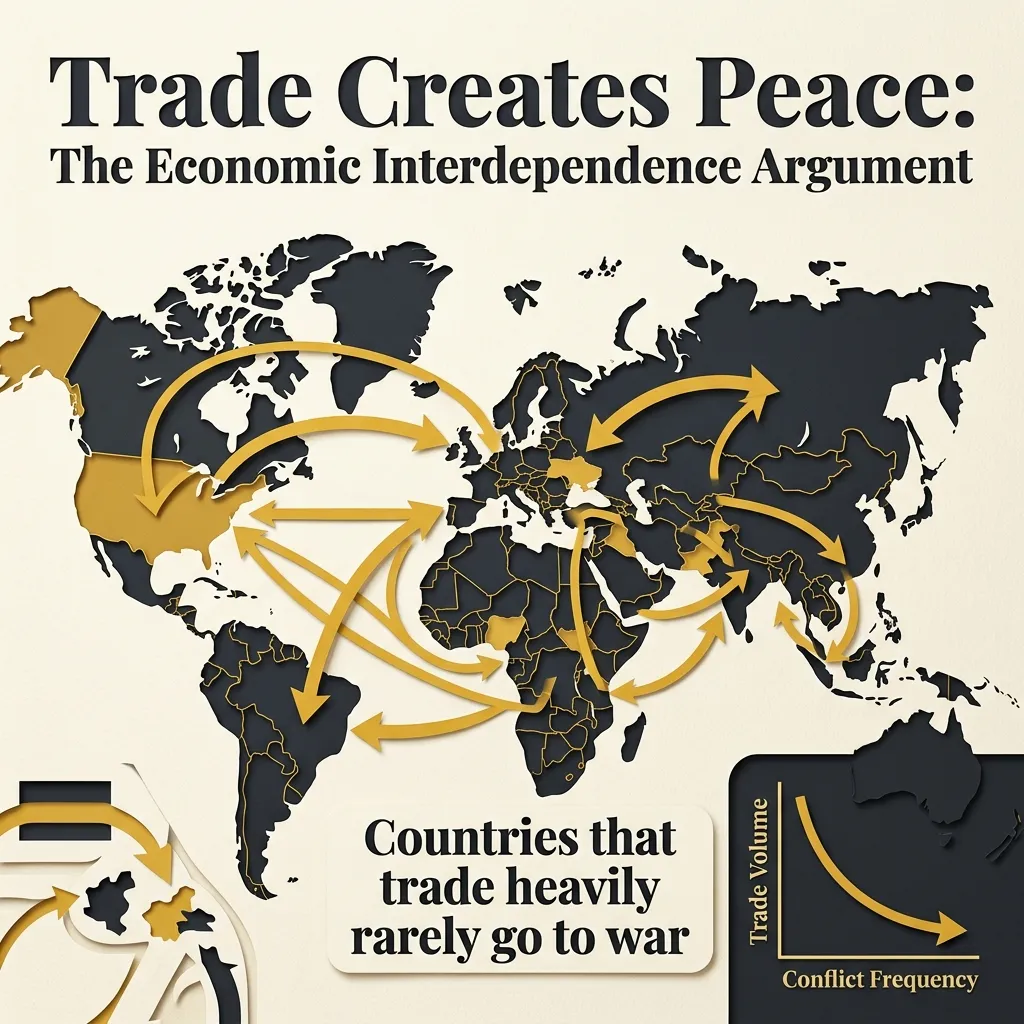
The Economic Peace: Mutual Interdependence
The core economic argument for a foreign policy of trade is that voluntary exchange aligns the material interests of different nations. In a world of closed borders and mercantilist trade restrictions, nations compete for resources through conquest. If the only way to acquire iron, oil, or agricultural land is to own it, then war is a rational, if destructive, tool of national enrichment.
Free trade changes this dynamic. When goods can cross borders freely, it is far cheaper to buy resources than to conquer them. A nation does not need to own oil fields in the Middle East or mineral mines in Africa; it can purchase their products by selling its own specialized goods in exchange.
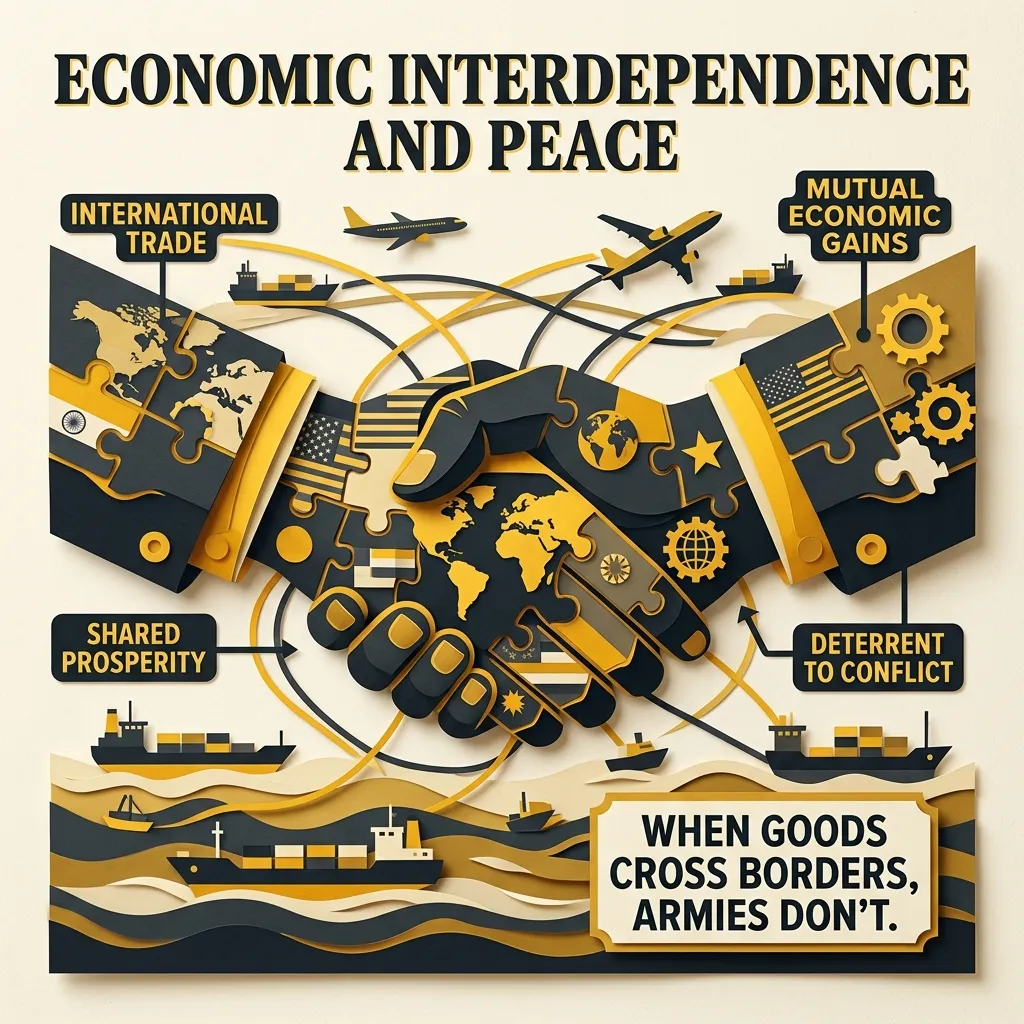
Furthermore, trade creates mutual interdependence. When two nations trade, they develop specialized supply chains that rely on each other. If one nation produces the raw materials and the other refines them into final products, physical conflict between them would destroy both economies. The cost of war soars, making cooperation highly profitable and conflict economically suicidal. The puzzle pieces of national economies lock together, creating a powerful, self-enforcing incentive for peaceful coexistence.
The Peace Dividend: Productive Capital vs. Military Destruction
Military interventionism requires a massive diversion of capital. To maintain global military bases, build armaments, and fund standing armies, the government must extract resources from its citizens through high taxes, public debt, and monetary inflation.
This military spending is economically destructive. It is a form of capital consumption. A tank, a fighter jet, or a missile does not create new wealth. It does not produce consumer goods, build factories, or transport goods. It is built to destroy, and once deployed, it is consumed or lost. The resources, engineering talent, and labor used to build these weapons are diverted away from the productive private sector.
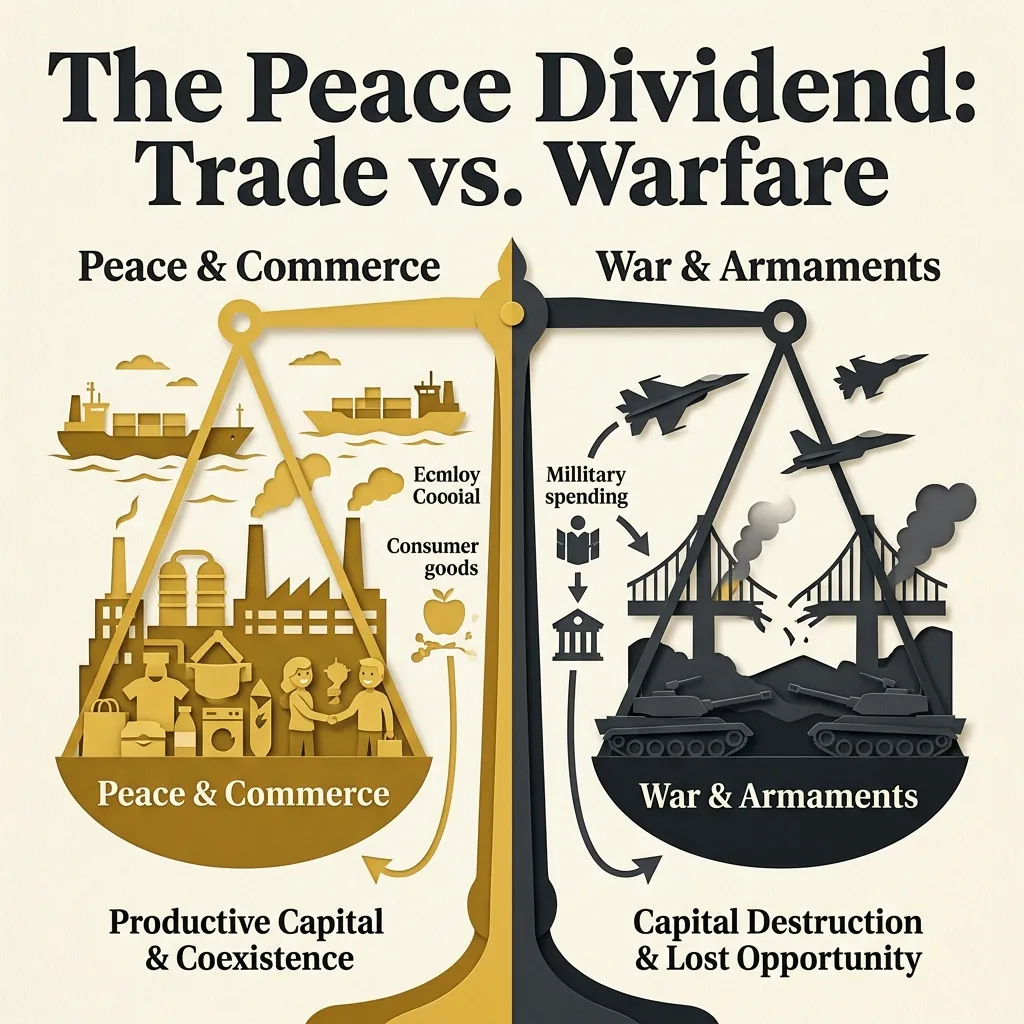
The peace dividend is the compounding economic benefit that occurs when a nation reduces its military presence and reallocates resources back to the private economy. When tax burdens are lowered, citizens can save and invest. Capital flows into factories, research, agriculture, and service industries, creating tools that make labor more productive and lower prices. By choosing peace, a society does not merely avoid the horrors of war; it builds a highly productive, resilient economy that raises the standard of living for everyone.
The Critique of Economic Sanctions
Modern foreign policy frequently uses economic sanctions as a non-military tool to punish foreign regimes. Sanctions are presented as a peaceful alternative to war, a way to pressure dictators without resorting to violence.
Libertarian analysis rejects this view. Sanctions are not peaceful; they are a form of economic warfare that relies on state coercion. They make it illegal for domestic citizens to engage in voluntary trade with foreign partners, directly violating individual property rights and freedom of contract.
Furthermore, sanctions are rarely effective. They do not harm the political leaders, who retain access to wealth and black-market resources. Instead, they devastate ordinary citizens, cutting them off from medicine, food, and global opportunities. Sanctions consolidate the power of authoritarian regimes by giving them a convenient scapegoat for their own economic failures, while driving target nations to build alternative trade alliances and financial systems that bypass the sanctioning nation's currency.
The Non-Interventionist Tradition: Steering Clear of Alliances
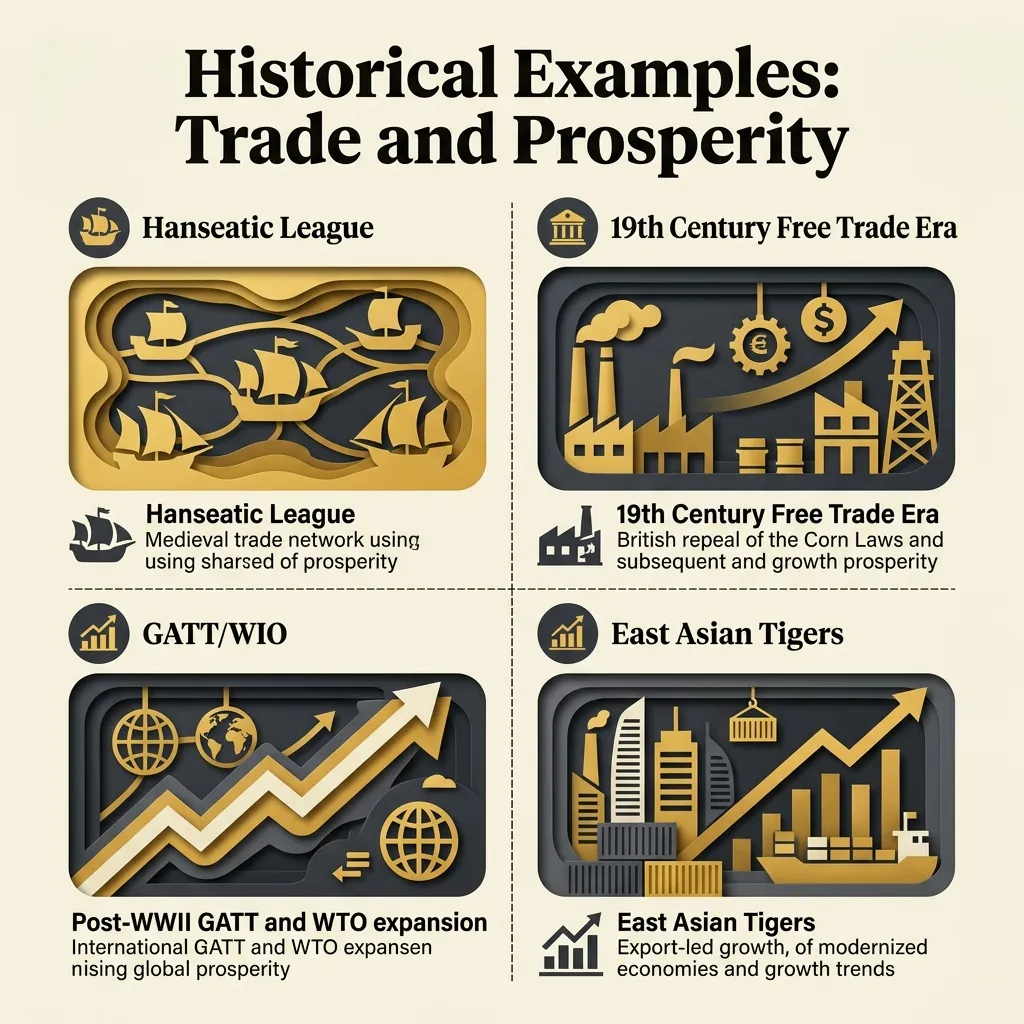
The advocacy of a foreign policy of peace and trade has a rich history in the classical liberal tradition. In his 1796 Farewell Address, George Washington gave classic expression to the policy of neutrality:
"The great rule of conduct for us in regard to foreign nations is in extending our commercial relations, to have with them as little political connection as possible. Europe has a set of primary interests which to us have none; or a very remote relation. Hence she must be engaged in frequent controversies, the causes of which are essentially foreign to our concerns."
In the nineteenth century, British liberals like Richard Cobden and John Bright built an entire political movement around the slogan: "Free Trade, Peace, and Goodwill among Nations." Cobden traveled Europe, arguing that free trade was the key to ending the dynastic wars that had plagued the continent for centuries. He insisted that the best way for a nation to promote freedom abroad was to lead by example, building a free, prosperous, and just society at home, rather than attempting to enforce democracy by gunboat diplomacy.
Conclusion: The Cosmopolitan Vision
A foreign policy of peace and trade is not a policy of isolationism. The term isolationist is a misnomer, used by proponents of intervention to dismiss their critics.
True isolationism is the restriction of voluntary movement, trade, and ideas. A policy of military neutrality and free trade is the opposite of isolationism: it is highly cosmopolitan. It encourages the free flow of goods, services, capital, and people across borders. It welcomes cultural exchange and international cooperation.
The difference is that this cooperation is voluntary, not coercive. It is organized by individuals, churches, charitable organizations, and businesses, not by state armies and international planning boards. By replacing military alliances and economic warfare with free trade and diplomatic neutrality, we protect our own liberties, avoid entangling conflicts, lower prices, and create an environment where peaceful coexistence can flourish naturally across the globe.