To the proponents of economic nationalism, tariffs and military intervention are tools of strength. They argue that a nation must use its economic and military power to protect domestic industries from foreign competition and enforce its strategic interests abroad. Tariffs are described as peaceful measures to level the playing field, while military interventions are framed as necessary actions to preserve international order and secure resource flows.
Economic and historical analysis shows that these two policies are deeply connected, forming a self-reinforcing cycle of destruction. Tariffs are not peaceful trade adjustments; they are a form of economic warfare. By placing barriers on exchange, tariffs disrupt international cooperation, foster resentment, and escalate geopolitical tensions. Historically, trade wars have frequently served as the precursor to physical conflicts. The path of war and tariffs expands the power of the state at the expense of individual liberty, destroys domestic capital, and undermines the peace that trade naturally produces.
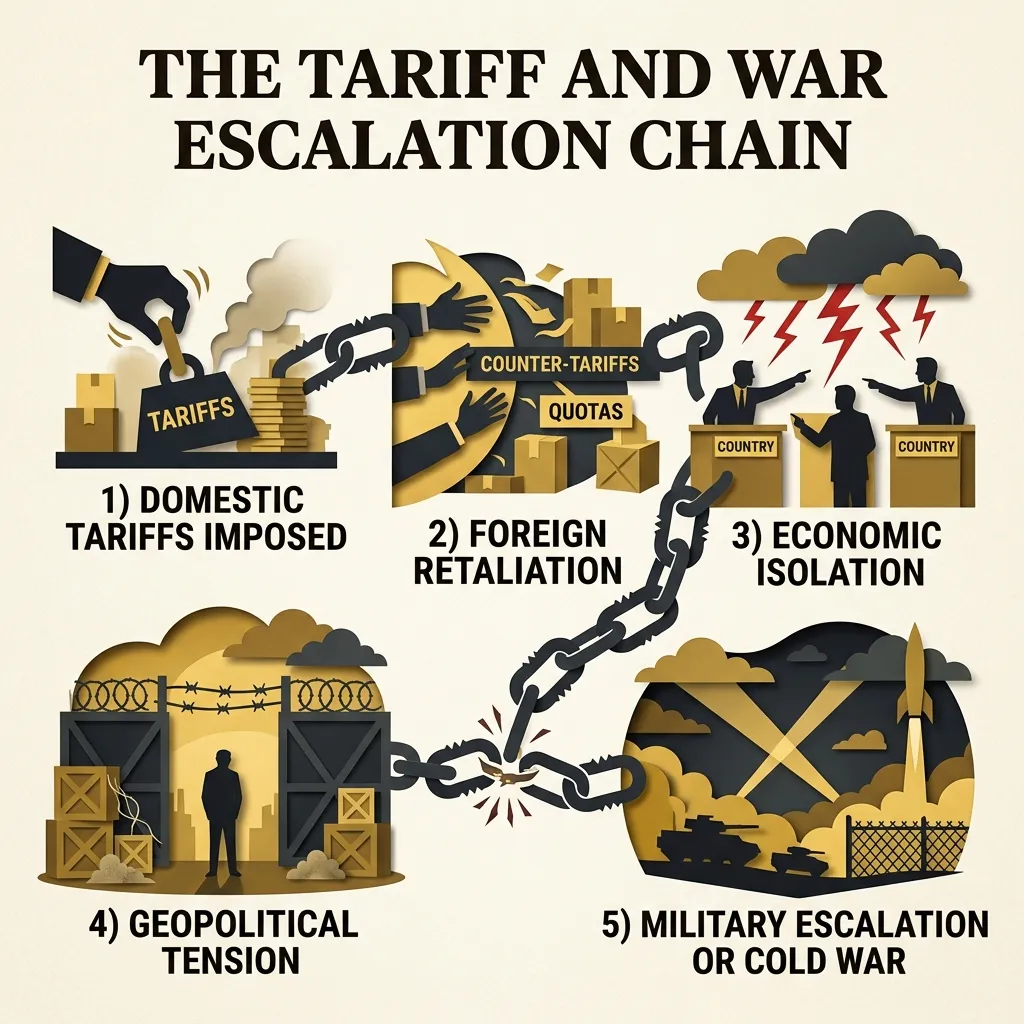
The Escalation Chain: From Tariffs to Conflict
The transition from economic nationalism to military conflict follows a predictable escalation chain.
The chain begins when a government imposes tariffs on imports to protect a domestic industry. This action disrupts the division of labor and harms foreign exporters, who find their products blocked. The affected countries respond by placing counter-tariffs on domestic exports, hurting efficient domestic firms and farmers.
As the trade war expands, economic ties are severed. The mutual interdependence that makes war unprofitable is dissolved. When countries no longer rely on each other for materials, technology, or markets, the economic cost of physical conflict falls.
This economic isolation breeds geopolitical tension. Politicians blame foreign nations for the economic hardships caused by their own protectionist policies, creating nationalistic sentiment. Under these conditions, a minor diplomatic incident or dispute over borders can easily spark a military escalation or cold war, as the cooperative relations that trade once fostered have been replaced by suspicion and economic warfare.
Mercantilism and the History of Trade Warfare
The connection between trade restrictions and war is one of the most consistent patterns in modern history. In the seventeenth and eighteenth centuries, European powers operated under the system of mercantilism. Mercantilists believed that the world's wealth was fixed and that a nation could only enrich itself by running trade surpluses, accumulating gold, and restricting imports.
This view led directly to constant warfare. European empires fought to secure exclusive colonies that could act as sources of raw materials and captive markets for finished goods. The British Navigation Acts, which forced American colonists to trade only with Britain and restricted colonial manufacturing, were a classic mercantilist policy. This economic subjugation was the primary driver of the American Revolution.
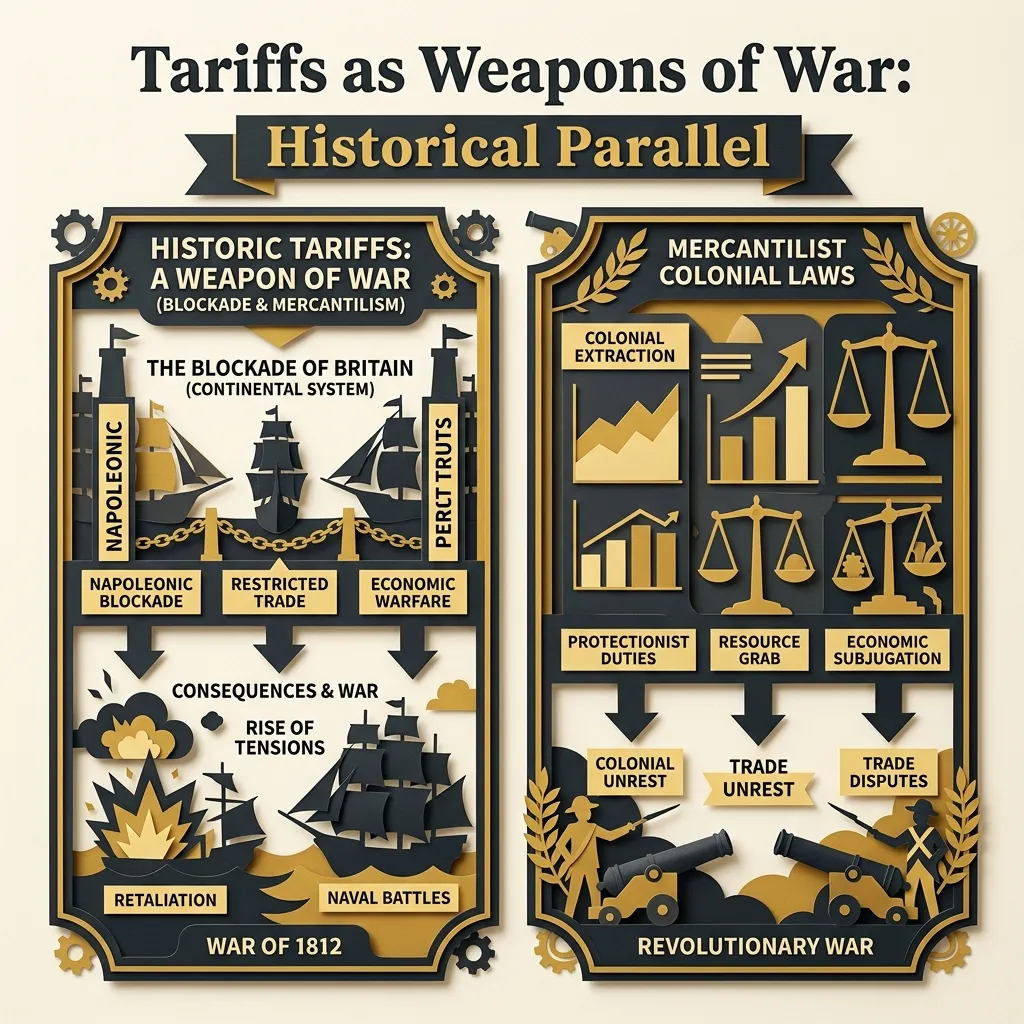
Similarly, blockades and trade restrictions have historically triggered physical conflicts. During the Napoleonic Wars, Napoleon established the Continental System, a blockade of British trade across Europe. Britain responded with the Orders in Council, blockading French-allied ports and seizing neutral American ships trading with Europe. This economic warfare directly caused the War of 1812. In the twentieth century, the U.S. embargo on oil and steel exports to Japan in 1940 and 1941 was the critical catalyst that drove Japan to launch its attack on Pearl Harbor, demonstrating that economic warfare is frequently viewed as a precursor to physical invasion.
The Domestic Cost: Centralization and the Erosion of Liberty
A foreign policy of war and tariffs demands a massive expansion of the domestic state, directly eroding the liberties of the citizens.
When a nation enters a war, the government must centralize control over the economy. It implements conscription (drafting citizens into the military), raises taxes, accumulates massive public debt, and inflates the currency to fund the war effort. It frequently imposes price controls, ration cards, and censorship, suspending the price system and property rights. This centralization, known as the ratchet effect, permanently expands the size and scope of government; when the war ends, the state's power shrinks slightly but never returns to its pre-war baseline.
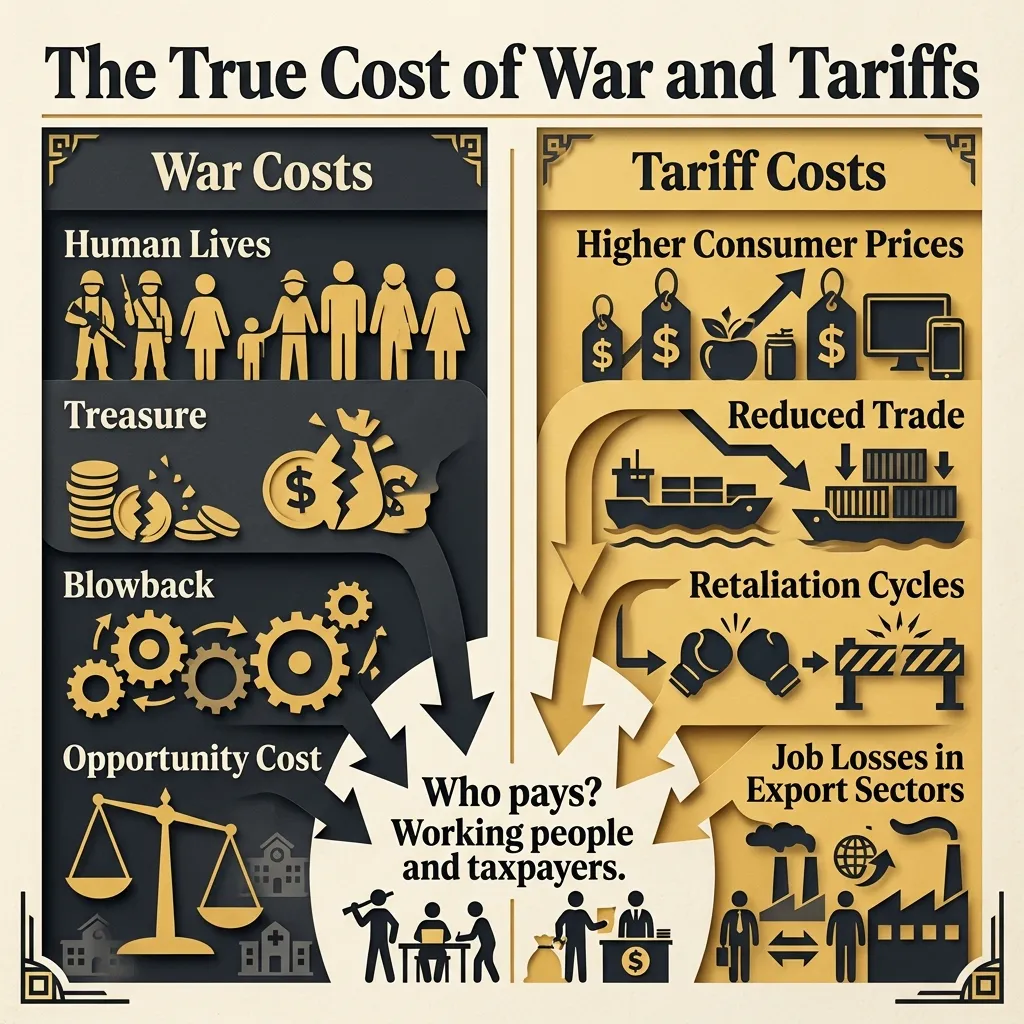
Tariffs impose their own domestic costs. By raising the price of imported materials, they increase the cost of production for domestic manufacturers, making them less competitive and driving up prices for consumers. The state must build a massive border bureaucracy to police trade, inspect cargo, and enforce tariffs, creating opportunities for political corruption and favoritism.
The Concept of Blowback
A critical concept in the libertarian critique of foreign intervention is blowback. Coined by the CIA and popularized by foreign policy analyst Chalmers Johnson, blowback refers to the unintended, harmful consequences of foreign interventions that return to plague the home country.
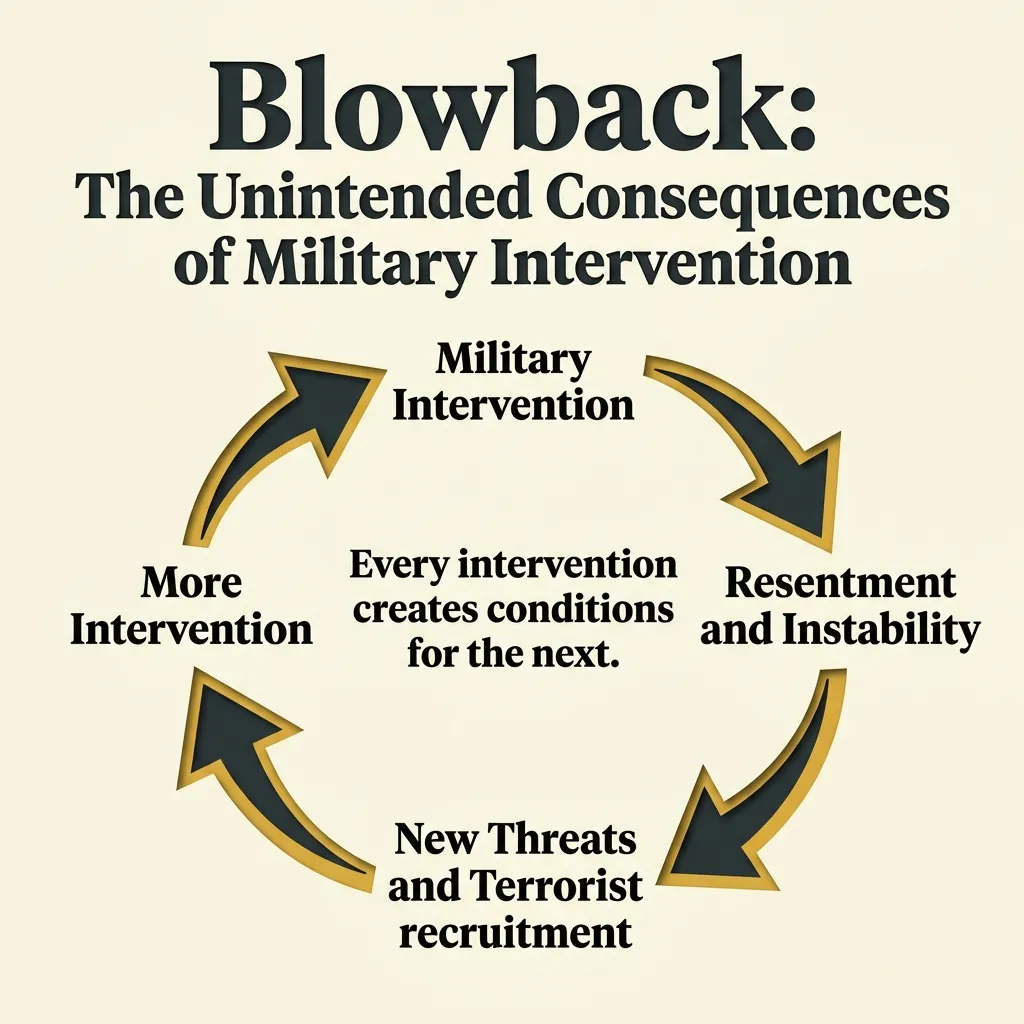
When a government intervenes militarily in foreign disputes, overthrows regimes, or supports dictators, it creates deep resentment among the local populations. This resentment fosters the growth of radical movements, leading to terrorism and guerrilla warfare that target the intervening nation.
Similarly, economic blockades and sanctions can destabilize foreign economies, causing currency collapses, mass unemployment, and poverty. This economic destruction drives mass migration and refugee crises, putting pressure on the intervening nation's borders and social structures. The government then responds by militarizing its borders and expanding domestic surveillance, using the crises created by its own foreign policies as a justification for further domestic coercion.
Conclusion: The Folly of Economic Nationalism
The path of war and tariffs is a cycle of destruction. It is based on the fallacy that a nation can enrich itself by placing barriers on trade and using force to manage global affairs.
In reality, these policies destroy the very foundations of prosperity and peace. Tariffs tax domestic consumers, disrupt supply chains, and invite retaliation. Military interventions consume capital, destroy human lives, and create blowback that makes the world less safe. Both policies expand the size and power of the state, eroding individual liberty and property rights at home. A society that values freedom, wealth, and peaceful coexistence must reject the illusions of economic nationalism. The path to true national security and prosperity is not through the weaponization of trade and the exercise of military force, but through free trade, diplomatic neutrality, and a commitment to voluntary international cooperation.