The United States incarcerates a higher share of its population than any other country on earth. Over two million people are currently in jails or prisons. Tens of millions more carry felony convictions that limit their ability to vote, work, rent housing, obtain professional licenses, and participate fully in civic life. The system is expensive, produces high rates of recidivism, and falls with devastating disproportionality on poor communities and communities of color. By almost any measure of what criminal justice is supposed to accomplish, it is not working.
Libertarians have been critics of mass incarceration and the drug war for decades, for reasons rooted in both principle and practical observation. The state's power to take away a person's liberty is among the most serious exercises of coercion available to any government, and libertarians apply the same skepticism to that power that they apply to every other form of state power. But there is a deeper argument available, one that goes beyond opposition to the drug war and toward a comprehensive case for building a culture of forgiveness.
Accountability Is Not the Same as Punishment
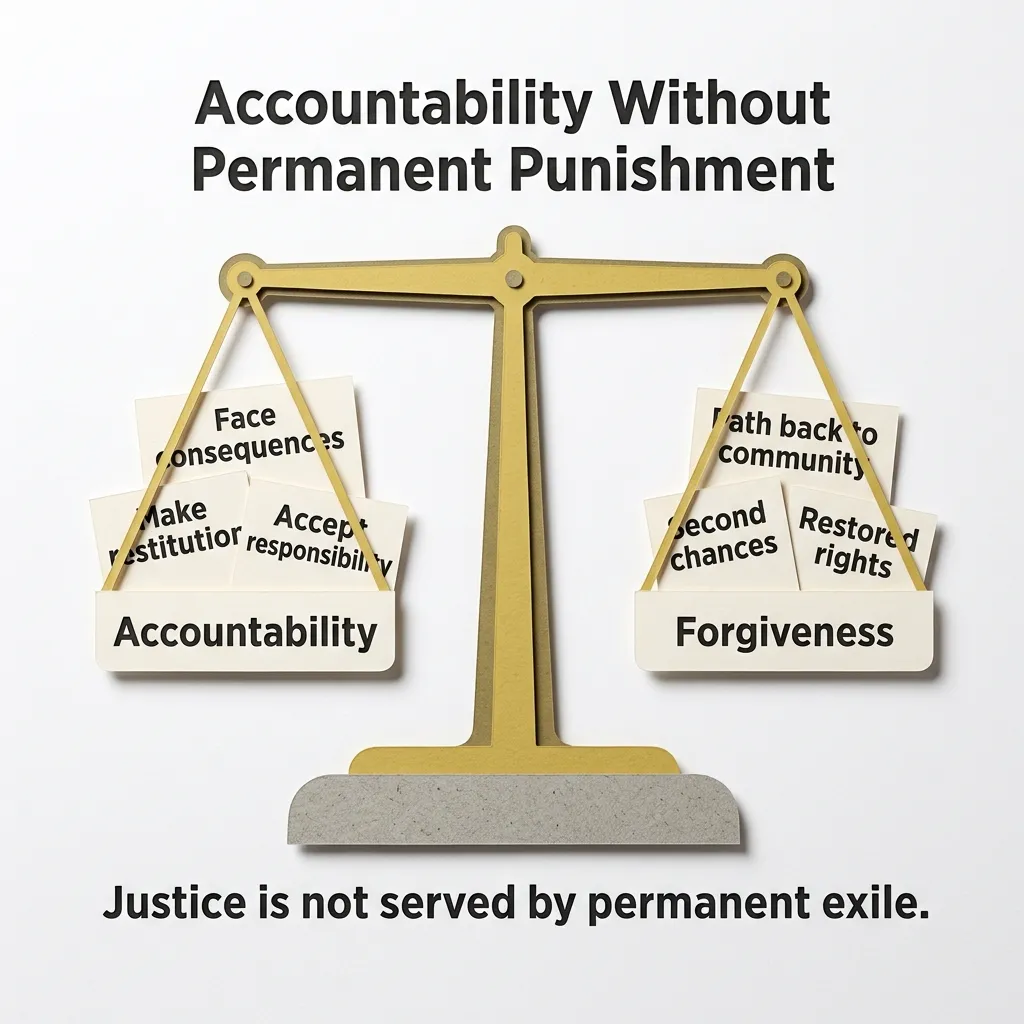
The first thing to establish is that forgiveness does not mean the absence of consequences. When someone wrongs another person, accountability matters. The victim's experience matters. The harm done matters. A libertarian approach to justice does not pretend otherwise. The question is what kind of accountability best serves justice and what serves it least.
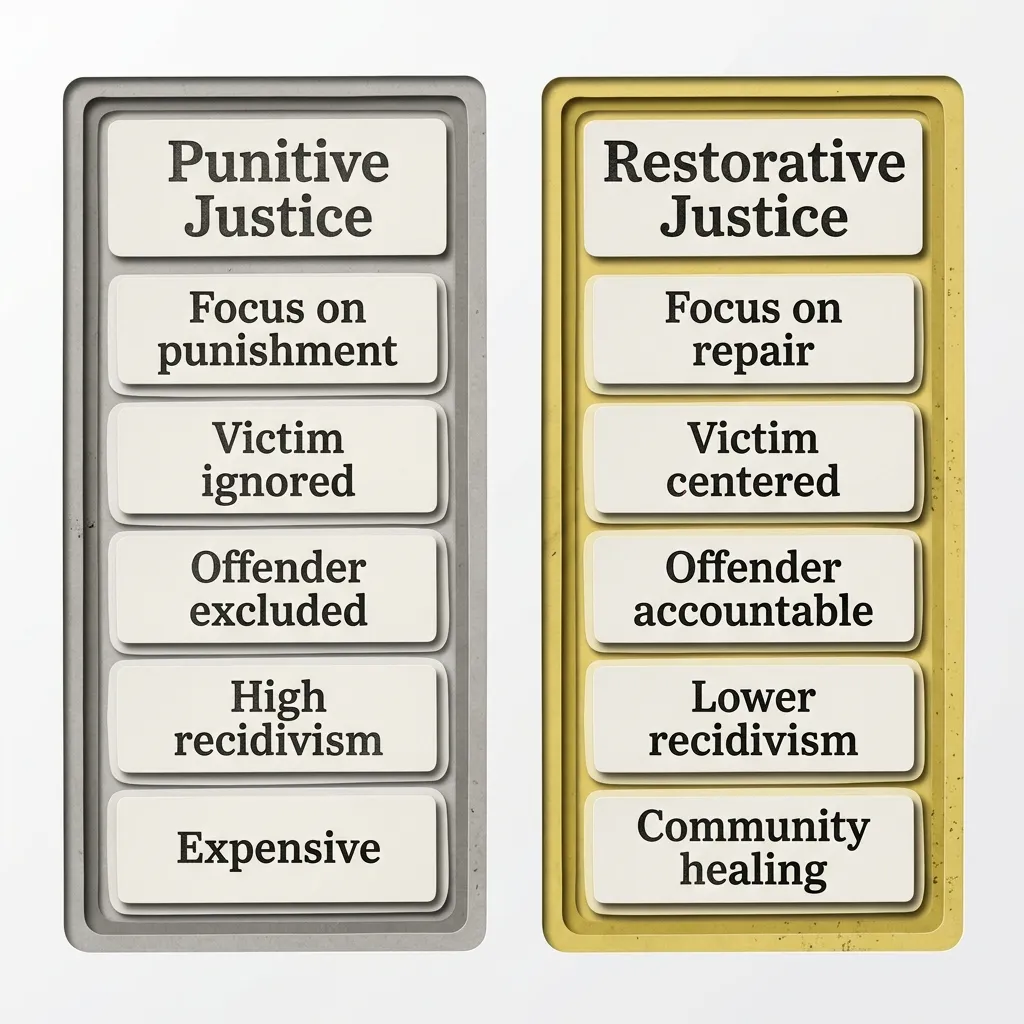
The current punitive system focuses primarily on punishment of the offender and largely ignores the victim. A person who steals from you gets prosecuted by the state, not by you. The case is called State v. Defendant, not Victim v. Defendant. The victim may testify but has no real control over the process. The outcome, if the prosecution succeeds, is that the offender goes to prison, which may satisfy a desire for retribution but does nothing to restore what was taken or repair the harm done.
Restorative justice is an alternative framework that asks different questions: What harm was done? Who is responsible for it? How can the harm be repaired? These questions center the victim rather than the state, require genuine accountability from the offender rather than passive submission to punishment, and aim at repairing the relationship between the offender and the community rather than simply removing the offender from it. There is substantial evidence that restorative approaches produce lower recidivism rates and higher victim satisfaction than conventional punitive ones.
The Permanent Punishment Problem
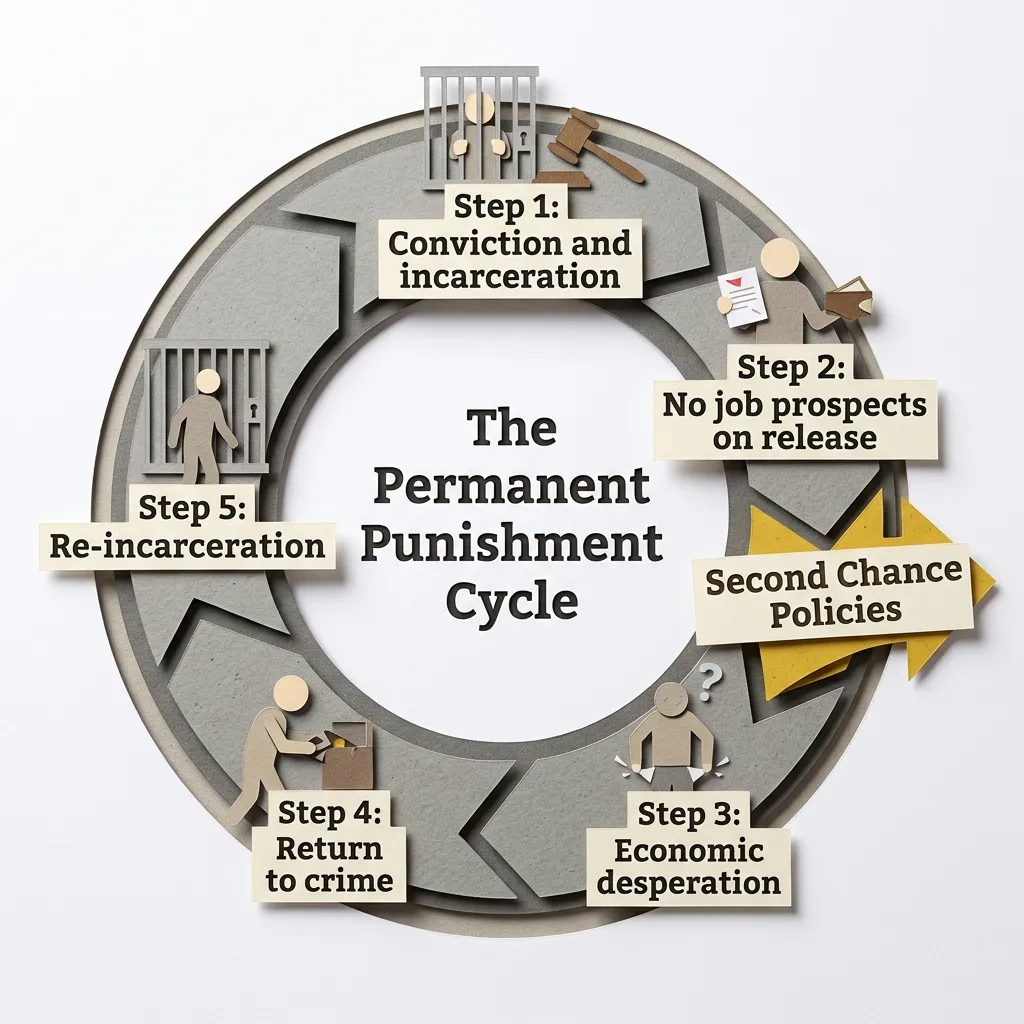
American criminal justice has moved beyond punishment as a temporary consequence toward something more like permanent marking. A felony conviction follows a person for life. Background checks are ubiquitous, and employers, landlords, and licensing boards routinely screen out people with criminal records. Many states permanently disenfranchise people with certain convictions. Federal law prohibits people with drug felony convictions from living in public housing or receiving certain student loans, even after they have served their sentence.
The practical consequences of this permanent marking are devastating and self-defeating. A person who cannot get a job, cannot rent an apartment, cannot vote, and cannot obtain a professional license is a person with limited options for legitimate participation in society. The set of options that remains available often does not include anything better than what led to the original conviction. Recidivism is not primarily a moral failure of individual ex-offenders. It is a predictable response to a system that offers people who have served their sentences no path back in.
Libertarians who take seriously the idea that people own themselves and their choices should be troubled by a system that treats a conviction as a permanent change in status rather than as a specific consequence for a specific act. If we believe that people are capable of making choices and changing, we should design systems that account for this capacity. A system that permanently removes the incentive for change and growth is not consistent with a philosophy of individual responsibility, because responsibility requires the possibility of redemption.
The Drug War as a Failure of Forgiveness
The war on drugs is the most obvious expression of the punitive state's failure of forgiveness. Since the 1970s, millions of Americans have been convicted of drug offenses, many of them for simple possession of marijuana in quantities that are now legal in most states. Many of those convictions produced lifetime collateral consequences: lost housing, lost voting rights, lost professional opportunities.
The moral incoherence of this is by now obvious. A substance that most states have decided is legal enough to sell in licensed stores generated convictions that are still restricting people's lives. People who used marijuana in 1995 carry felony convictions while their neighbors who use the same substance today face no legal consequence at all. Whatever one thinks about marijuana policy, the proposition that a 1995 conviction should permanently restrict someone who might be middle-aged today is very hard to defend on any principle of proportionality or justice.
The broader drug war dynamic illustrates how the punitive system creates problems that forgiveness would solve. Addiction is primarily a health problem. Treating it as a criminal problem removes people from their families and communities, exposes them to violence, and creates conviction records that make reintegration harder. It does not treat the addiction. Countries that have shifted toward health-based approaches have seen better outcomes by most measures. The punitive approach fails even on its own terms.
Forgiveness in Economic Policy
The principle of forgiveness has direct expression in economic policy as well. Bankruptcy law is one of the most explicit legal mechanisms of economic forgiveness. The ability to discharge debts and start over, which American law has provided since the founding era, reflects a judgment that permanent indebtedness is not in the interest of either the debtor or the broader society. A person who cannot escape their debts cannot invest, take risks, or participate fully in economic life. Forgiveness enables the fresh start that makes future productive activity possible.
The same logic applies to business failure. Markets work partly because bad businesses fail and their resources are reallocated to better uses. This requires that the people who ran failed businesses be able to try again, with the knowledge accumulated from failure. Many of the most successful entrepreneurs in American history failed multiple times before succeeding. A culture and legal system that treats business failure as a permanent disqualification from future economic participation would have far less innovation and dynamism than one that treats it as a learning experience.
Occupational licensing reform is another economic application. People who have served criminal sentences routinely find that professional licenses in fields like plumbing, cosmetology, nursing, and construction are denied on the basis of past convictions, sometimes regardless of whether the conviction is relevant to the work being licensed. This is economic punishment that extends indefinitely beyond whatever sentence was served. Reducing or eliminating these barriers is an economic policy that also expresses a moral commitment to second chances.
Cultural Forgiveness and the Cancel Problem
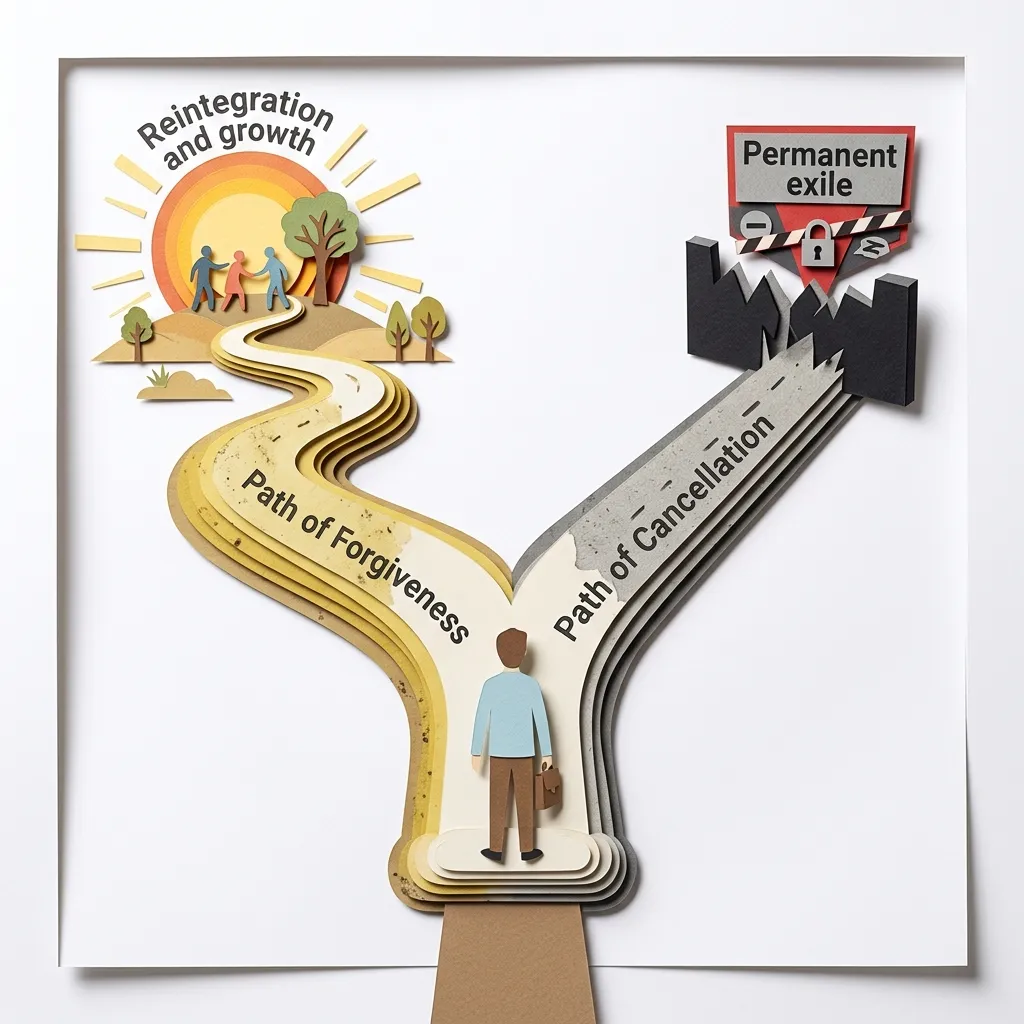
Beyond criminal justice and economic policy, the question of forgiveness arises in culture. The practice of cancellation, which involves the permanent social and professional destruction of people for past statements or actions, applies the logic of permanent punishment to the cultural domain. Someone who said something offensive ten years ago, or who held views that were common then and are less acceptable now, faces career destruction and social exile that admits of no path back.
The libertarian critique of this practice is not that the statements or actions in question were acceptable or that there should be no social consequences for speech and behavior. Social consequences for speech and behavior are legitimate and sometimes appropriate. The critique is of the permanence and the disproportionality. A single tweet from a decade ago does not warrant the same response as a pattern of serious ongoing harm. A view that has been repudiated and corrected deserves different treatment than one being actively defended. A culture that allows no path back closes off the possibility of genuine change and growth, which is the only thing that makes the consequences make any sense.
If the goal is to change behavior and norms, permanent cancellation is a poor tool. It produces fear and silence rather than genuine reconsideration. It creates incentives to hide past views rather than to change them. It forecloses the kind of public dialogue about changing norms that allows cultures to actually move forward. A culture of forgiveness that holds people genuinely accountable for ongoing behavior while allowing for growth and change is more likely to produce the cultural improvement that cancellation claims to seek.
Forgiveness as a Libertarian Value
The case for forgiveness is ultimately a case for consistency in how we apply the principle of individual responsibility. If we believe that people are capable of making genuine choices, then they are capable of making better choices in the future than they made in the past. A philosophy that takes individual agency seriously cannot simultaneously treat past choices as permanently determinative of a person's status. That is a contradiction.
Individual responsibility and the possibility of redemption are not opposites. They require each other. Responsibility means that your choices have consequences, which is an argument for accountability. Redemption means that those consequences can be discharged and that you can earn your way back. A system that denies redemption denies the reality of growth and change that makes responsibility meaningful in the first place.
The libertarian case for forgiveness is also a case against the permanently punitive state. Every time the state permanently bars someone from employment, housing, or civic life on the basis of a past conviction, it is making a decision that an individual has forfeited their rights permanently. That is an enormous exercise of power, and it should be subject to the same skepticism that libertarians apply to all exercises of state power. If we demand that the state justify its other coercive actions, we should demand the same justification for permanent exclusion from the common life.
A society built around forgiveness is not a society without standards. It is a society that takes seriously both the consequences of bad choices and the capacity of people to do better. It holds people accountable in ways that are proportionate and finite rather than permanent and crushing. It creates the conditions for genuine redemption rather than merely requiring the performance of submission to punishment. And it builds the kind of community where people who have made mistakes can return and contribute, rather than being permanently consigned to a separate class with no stake in the society's success.