Every election cycle, public outrage over the influence of money in politics reaches a new peak. Commentators bemoan the billions of dollars spent on political campaigns, the influence of special interest groups and lobbyists, and the sway of wealthy donors. The standard diagnosis is that our democracy has been corrupted by greed, and the standard prescription is campaign finance reform: stricter limits on donations, bans on political action committees, and the public funding of elections.
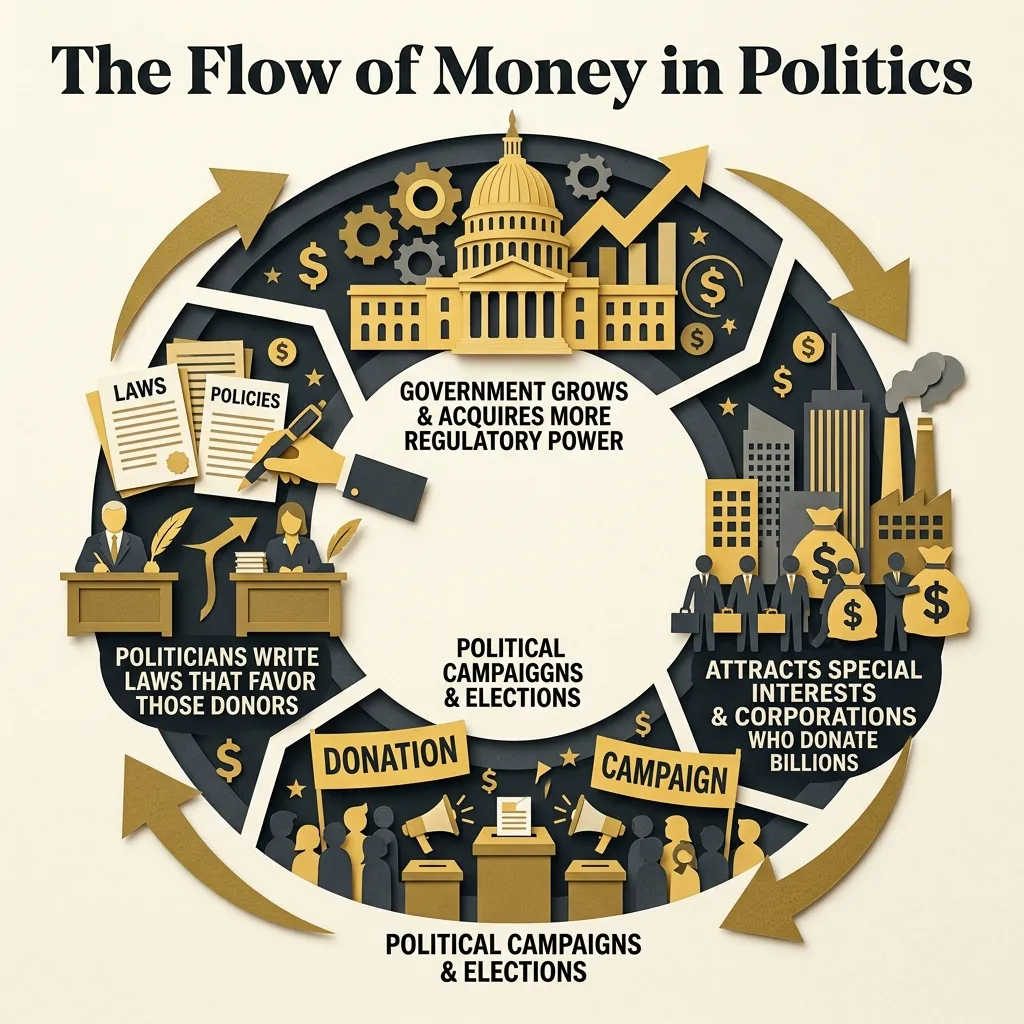
This diagnosis mistakes the symptom for the disease. Money in politics is not the source of political corruption; it is the predictable consequence of state power. As the government grows, acquiring the authority to regulate every corner of the economy, pick winners and losers, hand out subsidies, and grant monopolies, it becomes a rational business decision to invest in political influence. The only genuine way to remove money from politics is to strip the state of the power that makes that money worth spending in the first place.
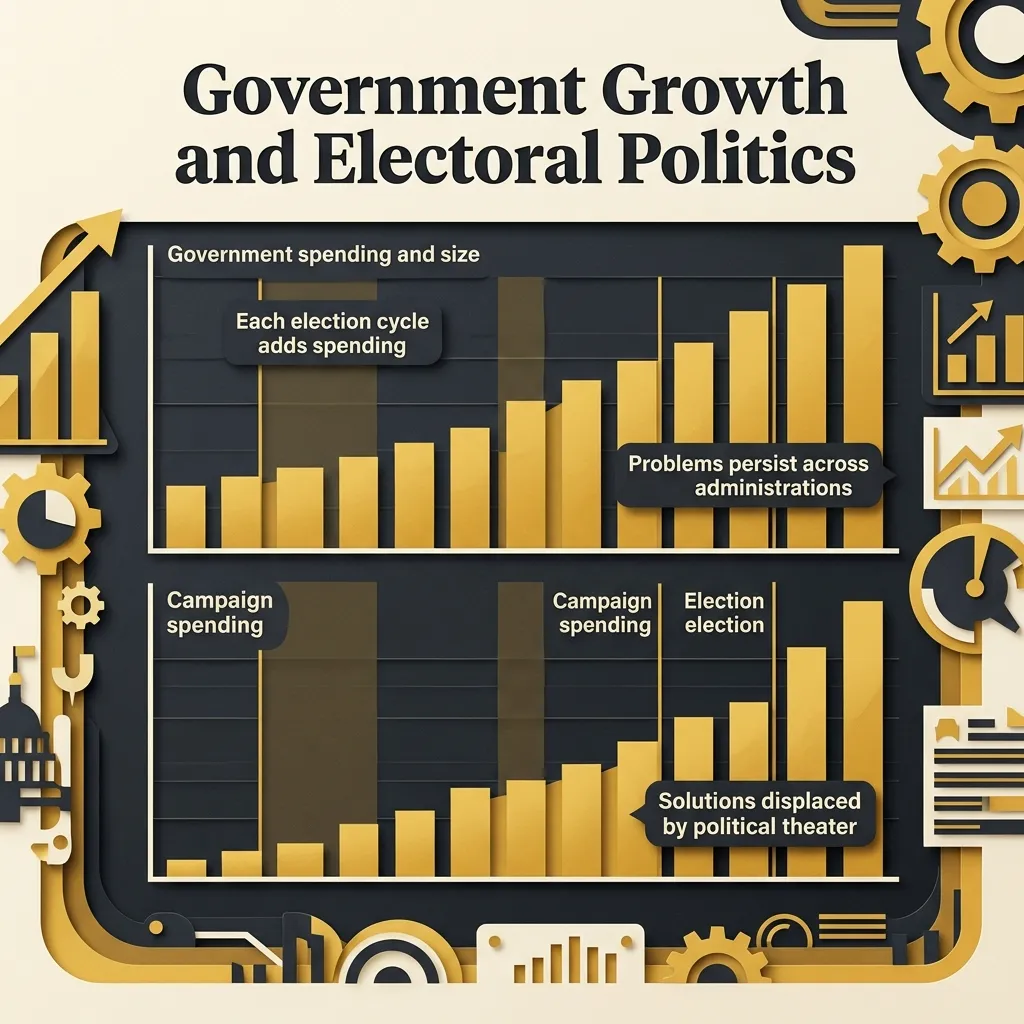
Rent Seeking and the Power Magnet
In a free market, businesses earn revenue by creating value for customers. An entrepreneur must produce a superior product, offer a lower price, or provide better service than their competitors. This is profit seeking, and it drives productivity and increases the wealth of society.
There is another way to acquire wealth: through the political process. Economists call this rent seeking. Rent seeking is the use of political power to secure special privileges, subsidies, tariffs, or regulations that transfer wealth from others without creating any new value.
Government power acts as a magnet for rent seeking. If the state has the power to place a tariff on your competitors, grant your business an exclusive license, or subsidize your research, it is highly profitable to spend money to acquire that power. A million dollars spent on a lobbying firm that secures a ten-million-dollar government subsidy yields a far higher return than a million dollars spent on research and development. As the regulatory state expands, the return on political investment soars, drawing capital out of productive economic activity and into the halls of government.
Regulatory Capture: Defensive and Offensive Lobbying
Mainstream critics of corporate lobbying assume that businesses lobby the government solely to escape oversight and exploit consumers. The reality is more complex. Lobbying is both defensive and offensive.
Defensive lobbying occurs when businesses are forced to spend money to protect themselves from state coercion. If a politician proposes a tax increase or a regulatory ban that would destroy an industry, the affected firms must lobby to survive. In this sense, political spending is a cost of defense, akin to paying protection money to a cartel.
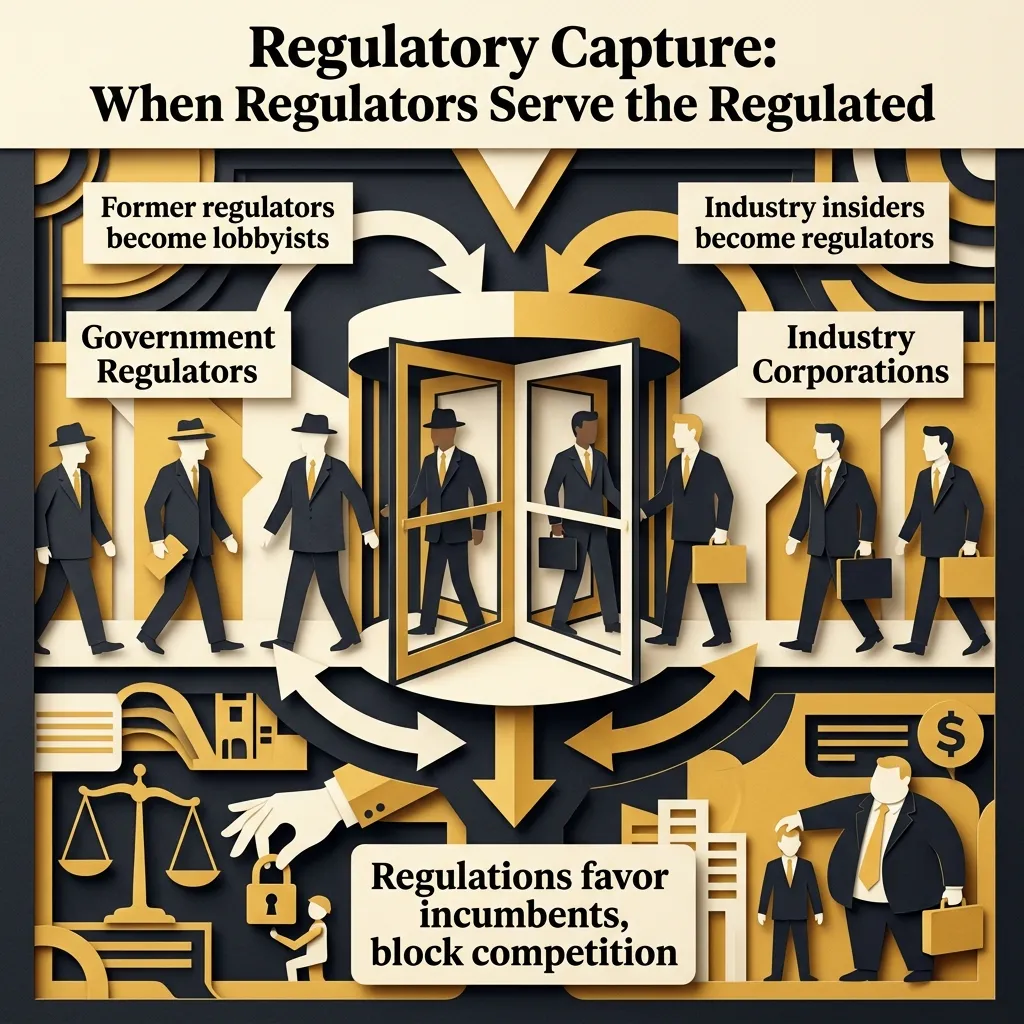
Offensive lobbying occurs when businesses use the regulatory power of the state to crush their competitors. By lobbying for high licensing standards, complex reporting requirements, or mandatory safety certifications, large incumbents can raise the cost of entry for small startups. Large firms frequently support new regulations because they know their compliance costs are manageable, while the same costs will be fatal to their smaller, under-capitalized competitors. This is regulatory capture, where the state's policing power is weaponized by private firms to secure market monopolies.
The Public Choice Analysis: The Iron Triangle
Public choice theory applies economic analysis to the behavior of political actors. It shows that the relationship between money and politics is structured by the incentives of three groups: politicians, bureaucrats, and special interest groups. This structure is known as the Iron Triangle.
Politicians seek to win elections, which requires votes, campaign contributions, and media coverage. Bureaucrats seek to expand the budget, staffing, and authority of their agencies, which increases their own prestige and security. Special interest groups seek favorable laws, subsidies, and protection from competition.
The triangle operates as a system of mutual support. Special interests provide campaign funds and electoral support to politicians. Politicians pass laws that create regulatory agencies and fund bureaucratic programs. Bureaucrats write regulations that favor the special interests and provide them with lucrative contracts or protection.
The general public, which bears the cost through higher taxes, rising prices, and reduced options, is left out. Because the cost of any single program is spread across millions of taxpayers (diffuse costs), while the benefits are concentrated on a small group of special interests (concentrated benefits), the public has no incentive to organize and oppose the corruption, while the special interests are highly motivated to spend millions to maintain it.
The Election Cycle and the Diversion of Capital
As the size of the state grows, elections become high-stakes battles for control of the government's coercive machinery. When the government spends trillions of dollars and regulates every aspect of life, control of the presidency and congress determines which industries will flourish and which will be regulated out of existence.
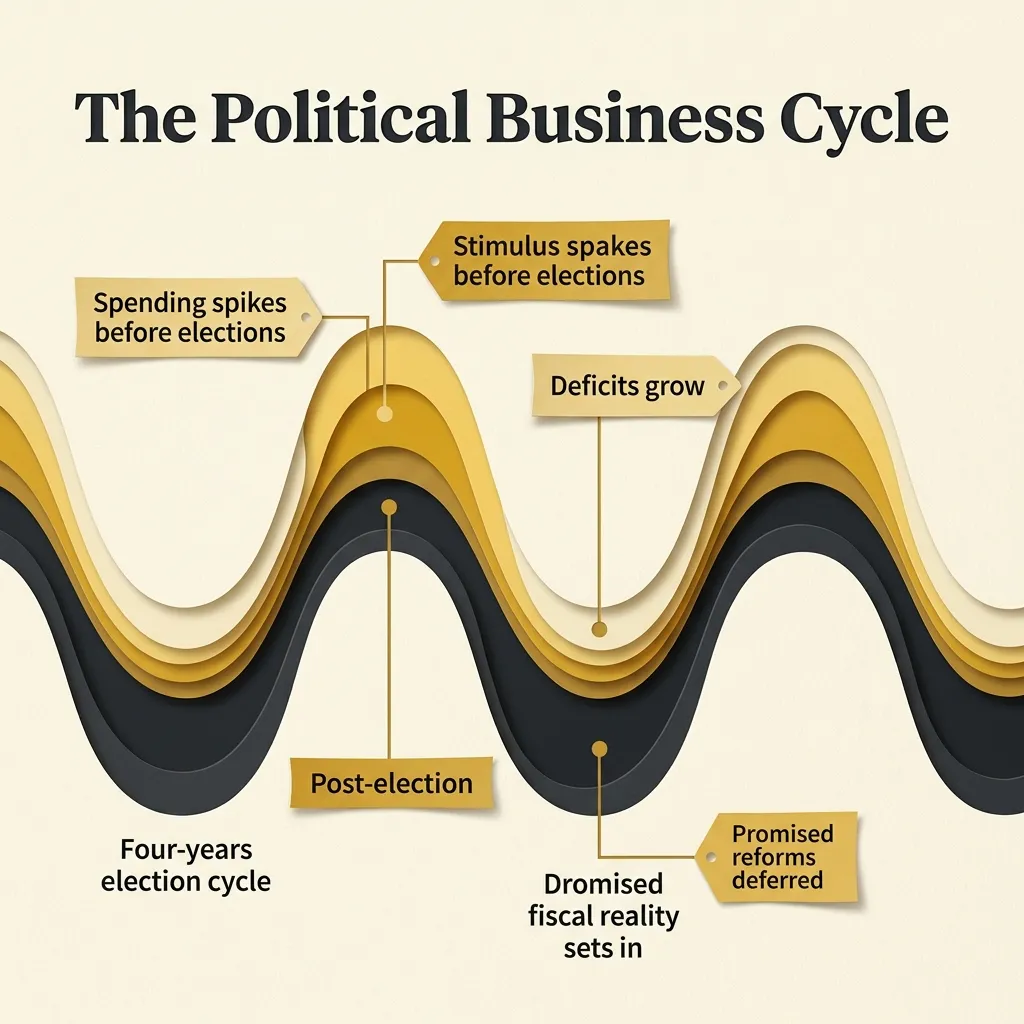
This high-stakes environment drives an enormous escalation in campaign spending. Billions of dollars are poured into advertising, political consultants, polling, and election campaigns.
From an economic perspective, this capital is completely wasted. It is spent entirely on a zero-sum struggle for political control. If that same capital were left in the private sector, it would be invested in factories, research, worker training, and new products that create wealth and lower prices. Instead, it is consumed by political campaigns that resolve nothing over successive election cycles, while the underlying problems (rising debt, inflation, regulatory decay) remain unaddressed because the state is structurally incapable of solving them.
Conclusion: The Folly of Campaign Finance Reform
The persistent failure of campaign finance reform is not due to a lack of political will. It is a logical necessity. As long as the government has the power to grant favors and inflict harm, money will find a way to influence that power.
If you restrict direct campaign donations, money will flow into independent political action committees. If you ban those committees, money will flow into media campaigns, lobbying firms, think tanks, or book deals. Attempting to restrict the flow of money in politics while leaving the state's regulatory power intact is like attempting to hold back a flood with a net.
The only genuine solution to political corruption is to shrink the state. If the government has no subsidies to grant, no monopolies to protect, no tariffs to impose, and no regulatory favors to sell, then investing in political influence is a waste of money. When the government is small, businesses can only succeed by serving consumers in the free market. End political corruption not by regulating the money, but by stripping the state of its power to plunder.