The rhetoric of protectionism is simple and appealing. Politicians tell voters that trade barriers will protect domestic jobs, revive manufacturing, punish unfair foreign competitors, and secure national sovereignty. They point to closed factories and laid-off workers as evidence that free trade is a failure, and promise that tariffs will restore national prosperity. This is the seen in economic policy: the visible domestic factory that is protected, and the workers whose jobs are temporarily saved.
Economic analysis requires us to look further, to the unseen effects. A tariff is not a free lunch, nor is it a tax paid by foreign nations. It is a coercive barrier that acts as a tax on domestic consumers, increases the costs for other domestic industries, destroys economic efficiency, and invites retaliation that harms exporters. By restricting trade, protectionism suppresses the division of labor, distorts comparative advantage, and replaces voluntary global coordination with political favoritism and geopolitical conflict.
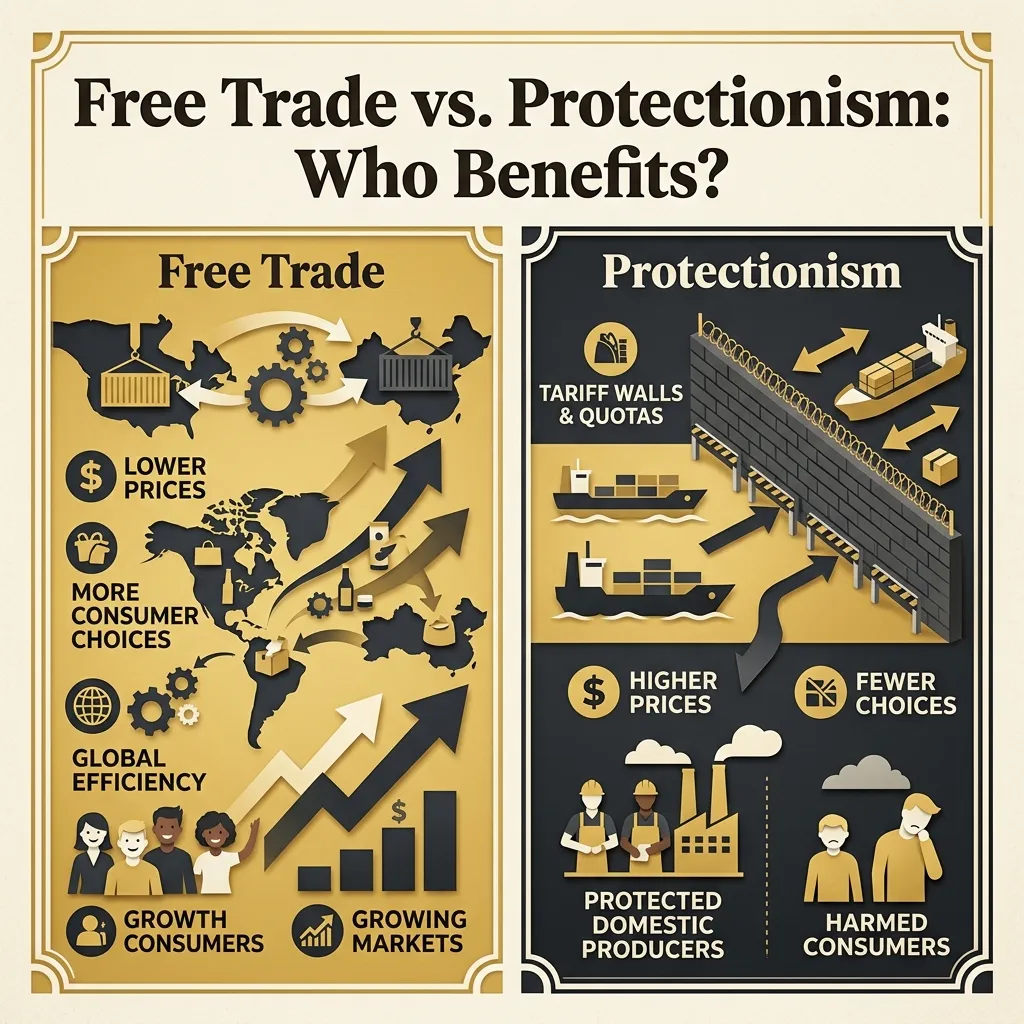
The Principle of Comparative Advantage: Why We Trade
To understand why protectionism is economically destructive, one must first understand why trade is beneficial. Trade is not a zero-sum game where one nation wins and another loses. It is a mutually beneficial process of coordination.
The economic foundation of free trade is the law of comparative advantage, formulated by David Ricardo in the early nineteenth century. Ricardo showed that even if one country is more efficient at producing every single good than another country (having an absolute advantage), both countries still benefit by specializing in the goods they can produce at the lowest opportunity cost, and trading for the rest.
Specialization allows for a greater division of labor, which leads to higher productivity, technological advancement, and a larger total output of goods and services. If a country attempts to produce everything domestically, it must divert resources (labor, capital, land) from industries where it is highly efficient into industries where it is inefficient. The result is a drop in total output and a lower standard of living for the entire society. Trade barriers are simply a forced reversion to inefficiency.
Tariffs as a Tax on Domestic Consumers
A tariff is a tax levied on imported goods. Proponents often argue that tariffs force foreign companies to pay for access to the domestic market.
This argument is economically false. The statutory and economic incidence of a tariff falls on the domestic importer and, ultimately, on the domestic consumer. When a government imposes a tariff on foreign steel or electronics, the importer must pay the tax to the government at the port of entry. To cover this new cost and remain profitable, the importer raises the price of the imported good.
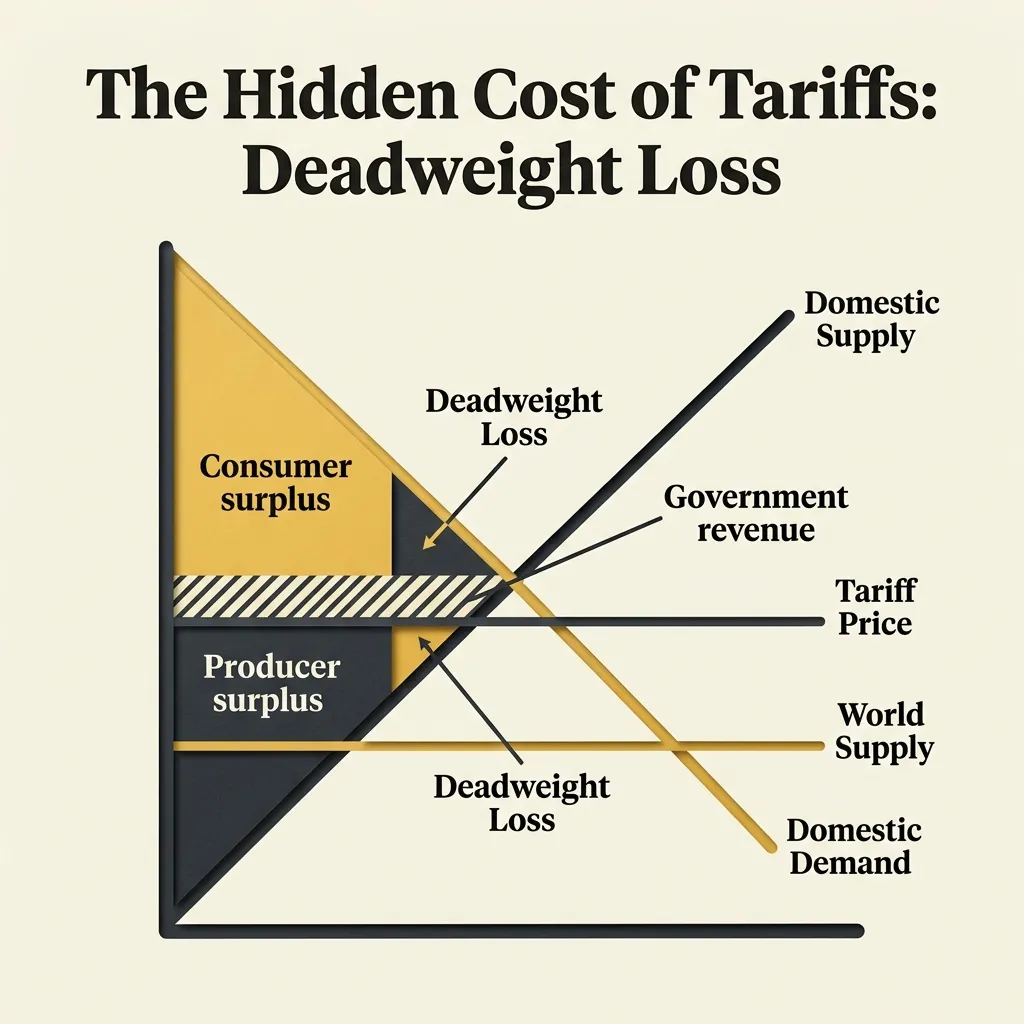
This price increase has a secondary effect. Because the foreign good is now more expensive, domestic producers of the same good face less competition. They respond by raising their own prices, capture higher profits at the expense of consumers.
The tariff does not generate new wealth; it transfers wealth. It takes money from millions of consumers, who must pay higher prices for everyday goods, and transfers it to a few politically connected domestic producers and the government. This is legal plunder, perverting the law to enrich one group at the expense of another.
The Secondary Destruction: Taxing Inputs and Destroying Jobs
The most significant economic damage of protectionism occurs in the industries that use the protected goods as inputs. In a modern economy, goods are not produced in isolation; they are parts of complex, global supply chains.
When the government places a tariff on foreign steel or aluminum to protect domestic steel mill owners, it increases the cost of raw materials for every domestic business that uses steel. Auto manufacturers, appliance makers, construction firms, and machinery manufacturers face higher production costs. To survive, these businesses must raise their own prices, making them less competitive in the global market, or lay off workers to cut costs.
Historical experience shows that the jobs saved in the protected industry are almost always outweighed by the jobs lost in the industries that rely on that product. For example, during the steel tariffs of the early 2000s, economic studies found that more workers lost their jobs in steel-consuming industries than the entire workforce of the domestic steel-producing industry.
The Retaliation Spiral and the Destruction of Exporters
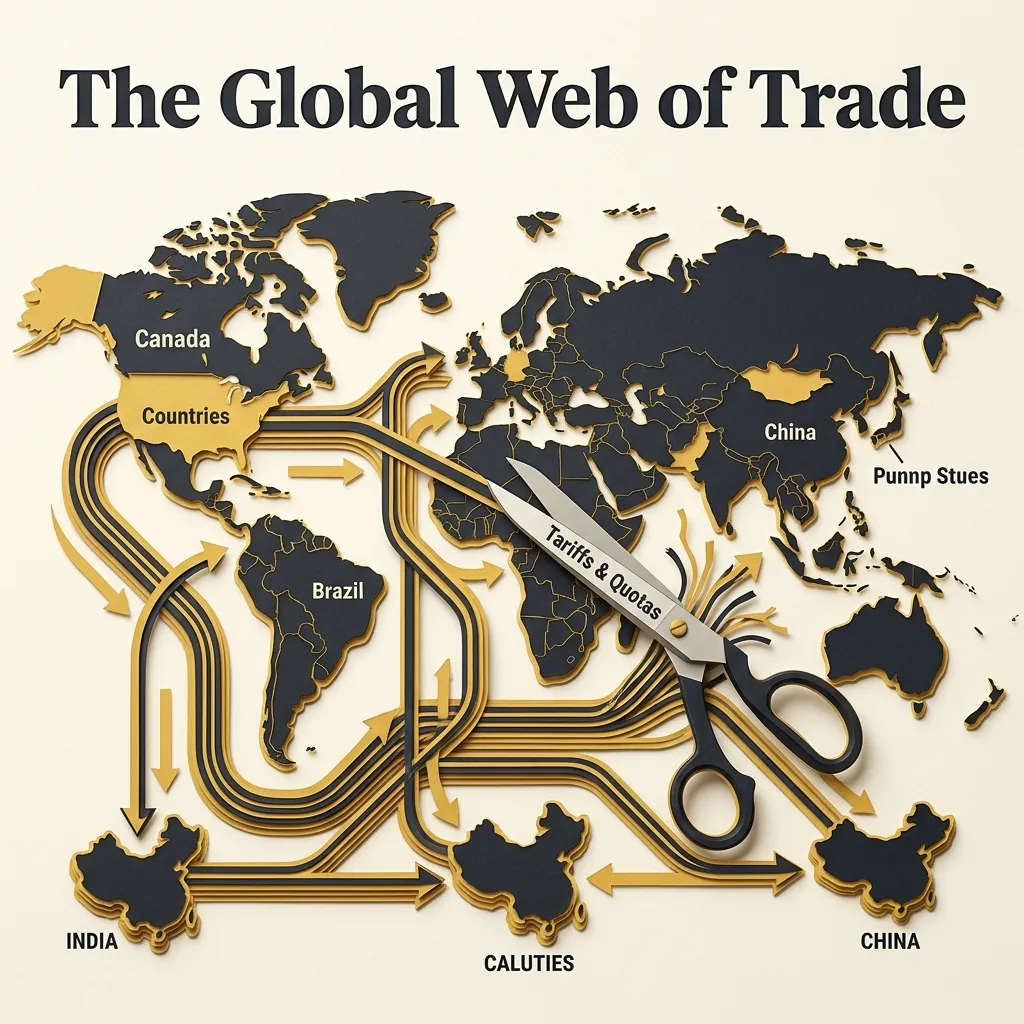
Protectionism does not occur in a vacuum. Foreign nations do not accept tariffs in silence; they retaliate.
When one country imposes tariffs on imports, the affected countries respond by placing tariffs on its exports. They target politically sensitive industries, such as agriculture, technology, or automotive exports. The result is a retaliation spiral, or trade war, where trade between the nations shrinks.
This retaliation directly harms the most efficient, productive sectors of the domestic economy. The exporters, who had succeeded globally by producing high-quality goods at competitive prices, suddenly find their markets closed. The government's policy of protecting inefficient, struggling domestic industries ends up punishing its own most successful and competitive firms.
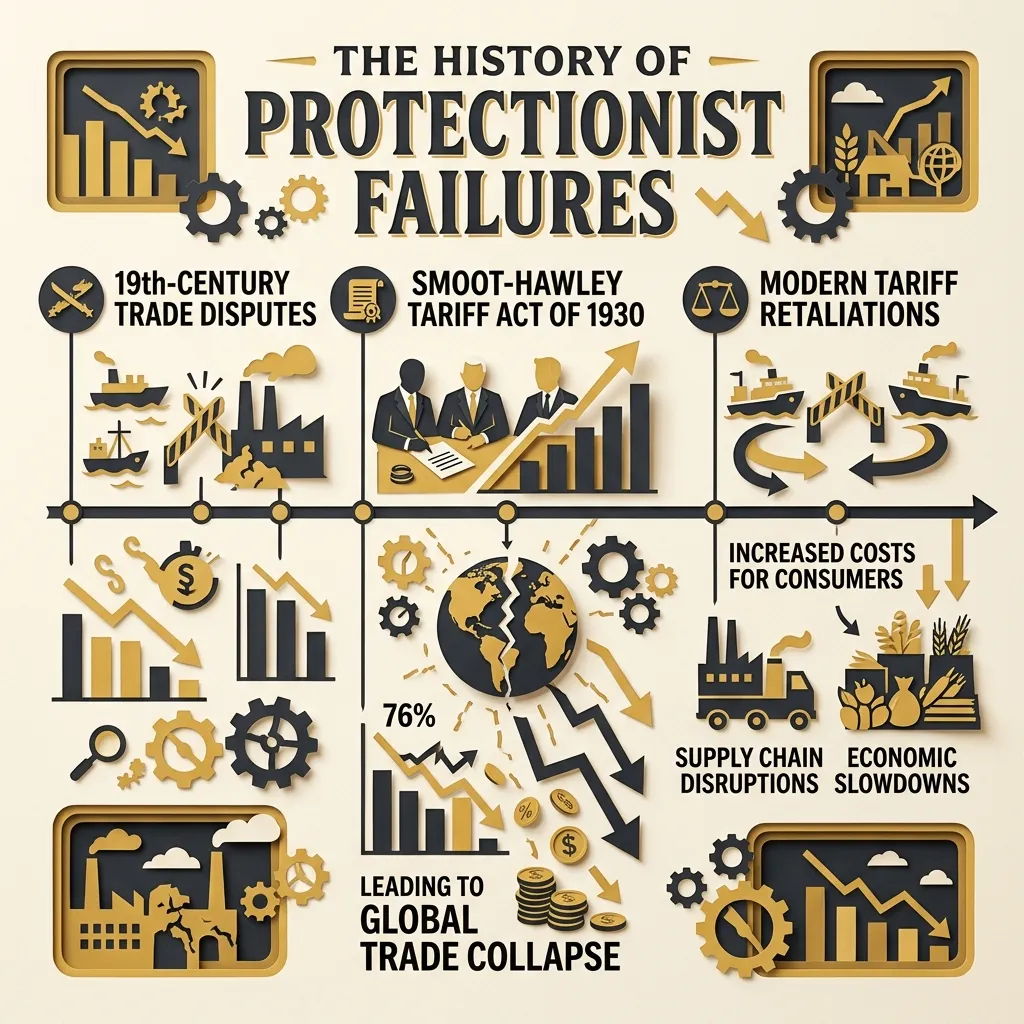
Conclusion: The Moral Case for Free Trade
The debate over protectionism is ultimately a debate over the scope of human freedom. Free trade is not a complex system of treaties and government regulations. Free trade is simply the freedom of individuals to buy and sell goods and services across political borders without interference from the state.
When a government implements protectionist policies, it claims the right to dictate to its citizens where they may buy their food, clothing, tools, and materials. It uses coercion to force consumers to support domestic businesses they would not otherwise choose.
A society that respects individual liberty must reject protectionism. Free trade aligns the material interests of different nations, making cooperation more profitable than conflict. When goods cross borders, armies do not. By allowing individuals to trade freely, we foster global division of labor, reduce prices, encourage peace, and protect the fundamental right of every person to dispose of their property and labor as they see fit.