In public discourse, taxation is frequently described as the price we pay for a civilized society. It is framed as a tool for funding public infrastructure, providing social safety nets, and reducing inequality. From this perspective, the debates over taxation are merely about the rate: how much should be extracted, and from whom?
Economic analysis reveals a different reality. Taxation is not a neutral mechanism for transferring wealth. It is a coercive extraction that alters incentives, distorts prices, destroys capital, and creates structural barriers that lock in existing economic hierarchies. To understand the true cost of taxation, one must look beyond the immediate revenues collected and analyze the unseen effects on capital accumulation, price structures, and the ability of the poorest members of society to climb the economic ladder.
The Destruction of Capital Accumulation
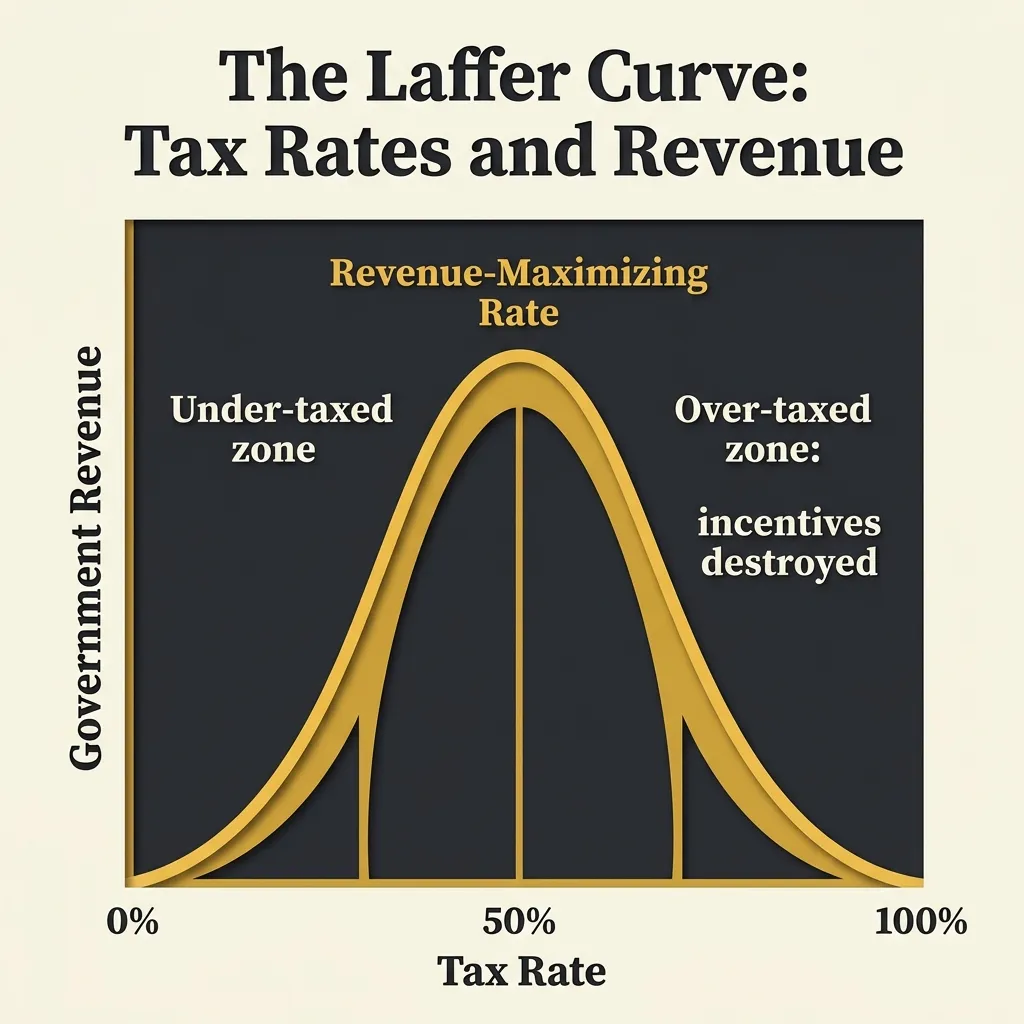
The fundamental driver of human prosperity is the accumulation of capital. Capital consists of the tools, machinery, factories, software, and infrastructure that make human labor more productive. A farmer with a tractor can produce exponentially more food than a farmer with a spade. A worker with advanced computer software can coordinate supply chains infinitely faster than one with a paper ledger.
When labor becomes more productive, real wages rise. Businesses compete for more productive workers by offering higher compensation, and the increased supply of goods drives down real prices, making the average standard of living rise.
Capital accumulation requires savings. Someone must produce more than they consume, and then invest those savings into productive tools rather than immediate consumption.
Taxation directly drains this pool of investable savings. When the government taxes corporate profits, capital gains, dividends, or individual income, it takes resources that could have been used to upgrade equipment, fund research, or expand businesses. Instead, these resources are routed into government bureaucracies, where spending is driven by political incentives rather than market-tested efficiency. The immediate result is a slower rate of capital accumulation, which directly suppresses future productivity growth and keeps real wages lower than they otherwise would be.
The Illusion of Tax Burden: Statutory vs. Economic Incidence
Politicians frequently promise to fund programs by taxing corporations or the wealthy, assuring voters that the average citizen will not pay the bill. This argument relies on a confusion between statutory incidence (who is legally required to write the check to the tax authority) and economic incidence (who actually bears the financial burden of the tax).
Corporations do not pay taxes. A corporation is a legal fiction, a network of contracts connecting shareholders, employees, suppliers, and customers. A tax levied on a corporation must ultimately be paid by real people.
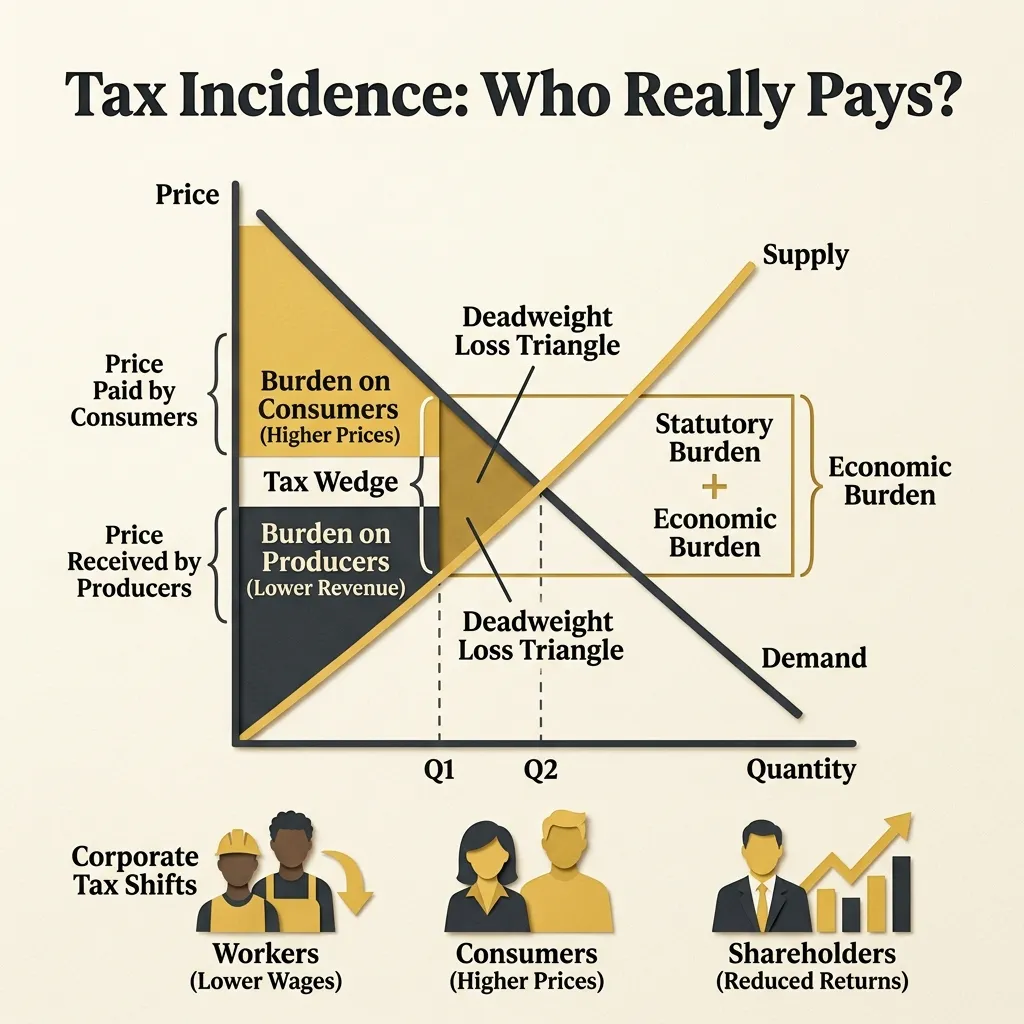
The shifting of the tax burden occurs through changes in prices and wages. When a corporate income tax is increased, the business faces a higher cost of operation. To maintain profitability and attract investment, the corporation must adjust its operations. It does this in three ways:
1. By raising prices: the tax is passed forward to consumers in the form of higher prices for goods and services.
2. By lowering wages or reducing hiring: the tax is passed backward to workers, who receive less compensation or face fewer employment opportunities.
3. By reducing returns to shareholders: the tax reduces dividends and stock growth, harming the pension funds, retirement accounts, and savings of millions of ordinary citizens.
Who bears the majority of the burden depends on the price elasticity of supply and demand. The party that is least able to adjust their behavior (the least elastic) pays the tax. Because capital is highly mobile and can flee to other countries, while workers and consumers are relatively immobile, economic research consistently shows that workers and consumers bear the vast majority of the corporate tax burden.
The Deadweight Loss: Destroying the Gains from Trade
A tax does not simply transfer wealth from the private sector to the public sector; it destroys a portion of that wealth entirely. In economics, this destruction is called deadweight loss.
In a free market, transactions only occur when both sides expect to benefit. A buyer values a product more than the price they pay, and a seller values the price more than the product. This mutual benefit creates consumer and producer surplus.
When the government imposes a tax, it inserts a tax wedge between the buyer's price and the seller's return. The price to the buyer rises, inducing them to buy less. The price received by the seller falls, inducing them to produce less.
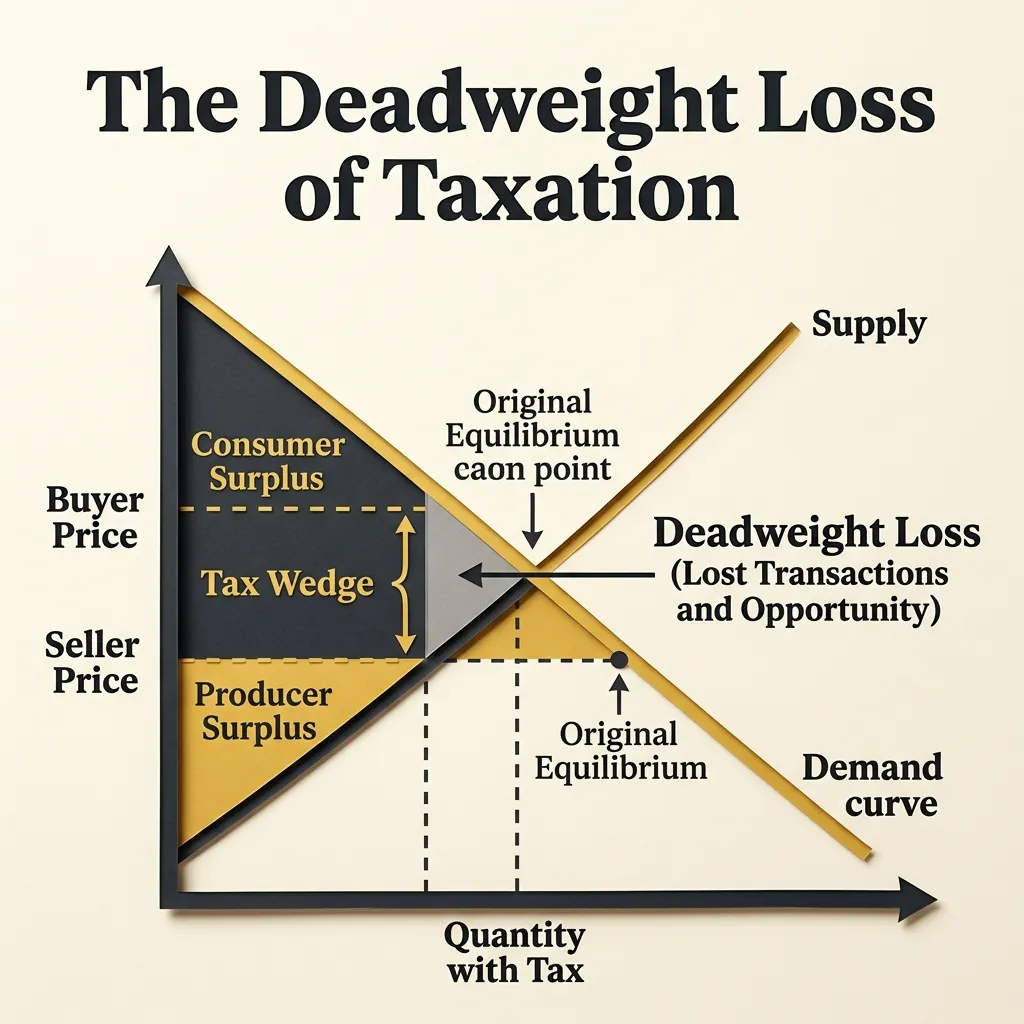
The transactions that lie in the middle, those that would have been profitable without the tax but are unprofitable with the tax, do not happen. The wealth that would have been created by those voluntary exchanges is lost forever. This deadweight loss rises exponentially with the tax rate, making high taxes progressively more destructive to economic coordination.
The Ladder-Pulling Effect: Stunting Upward Mobility
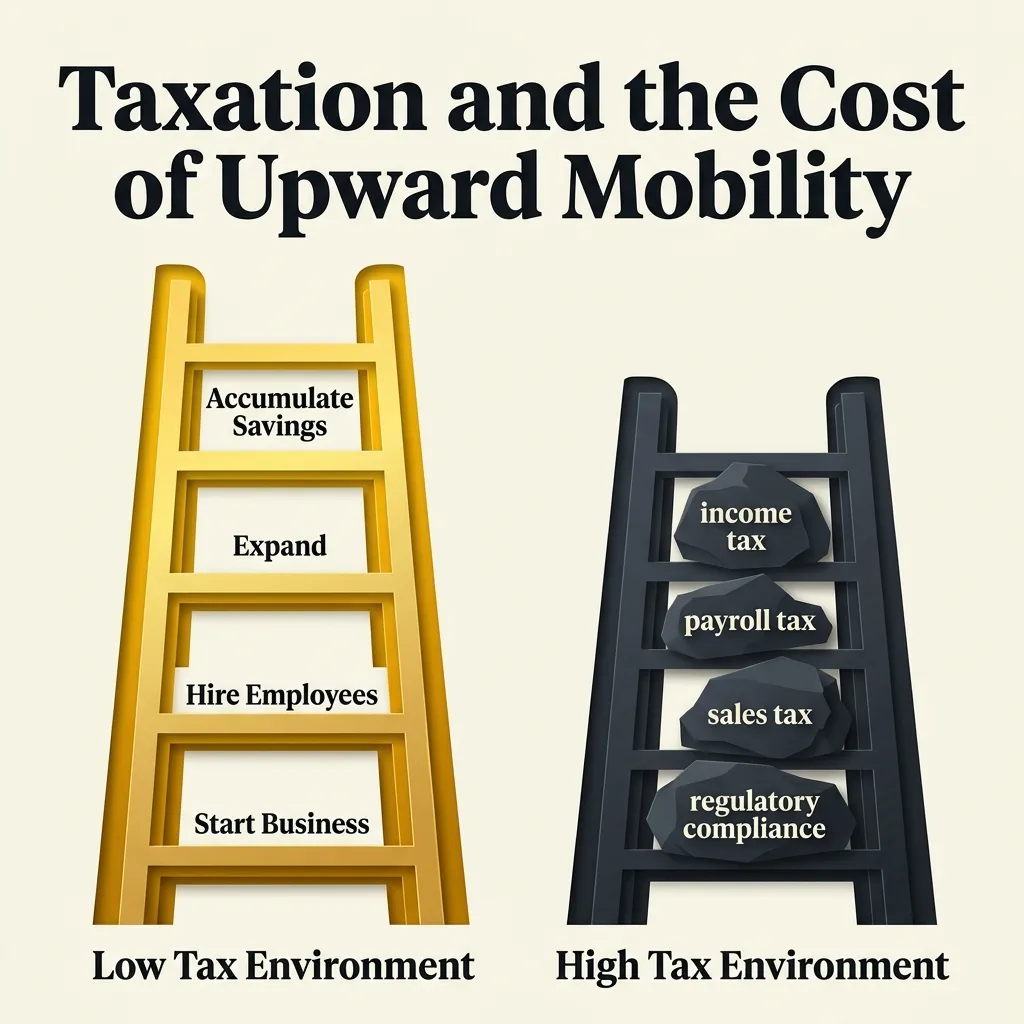
Perhaps the most insidious effect of taxation is how it entrenches existing inequalities and blocks upward mobility. While taxation is promoted as a tool to level the playing field, in practice it acts as a barrier that prevents the poor and middle classes from competing with established wealth.
To rise from poverty, a person must accumulate capital. For an individual, this means earning wages, saving a portion of those wages, and investing them in education, real estate, stocks, or a small business.
High income and payroll taxes target this process directly. They tax the transaction of selling one's labor. Because wage earners do not have access to the sophisticated tax planning, offshore structures, and asset-backed loan mechanisms available to the extremely wealthy, they bear the full brunt of high marginal income tax rates. The tax system extracts a significant portion of their income at the exact moment they are trying to save and build their first pool of capital.
Conversely, those who already possess vast wealth are relatively unaffected. Wealth is an accumulated stock of capital, while taxes are typically levied on flows of income or transactions. The wealthy can live off existing assets, borrow against their portfolios to fund consumption (avoiding income tax entirely), or hold assets in trusts that bypass capital gains taxes.
Furthermore, high corporate taxes and compliance regulations act as barrier-to-entry mechanisms that protect incumbent monopolies from new competitors. Large, established corporations can easily afford teams of accountants and lawyers to navigate complex tax codes and regulatory compliance. For a small, under-capitalized startup, these compliance costs are often fatal. By raising the cost of starting a business, the tax code protects established corporate giants from the creative destruction of new entrants, locking out poor entrepreneurs and reducing the opportunities available to the wider public.
Conclusion: The Coercive Drag on Progress
Taxation is frequently analyzed as a simple math problem: how much money does the government need to fund its programs, and which tax structure will raise that money with the least complaint?
This approach ignores the fundamental nature of the market. The market is not a machine that can be tapped for resources without consequence. It is a dynamic network of human cooperation coordinated by price signals.
When the state extracts resources through taxation, it does not merely take money; it alters the incentives to work, save, and invest. It distorts the prices that consumers and producers rely on, destroys the capital that drives wage growth, and creates a compliance barrier that protects the wealthy while pulling the ladder of opportunity away from those at the bottom. A society that prioritizes upward mobility, low prices, and genuine progress must look toward reducing the size and scope of government, minimizing the tax burden, and allowing individuals to keep the full fruits of their labor to build their own lives and communities.