In a political landscape dominated by a consolidated two-party duopoly, the quest for social and economic liberty faces severe structural barriers. For decades, activists have debated the most effective methods to challenge the growth of the state. The default response has been the construction and maintenance of alternative political parties, most notably the Libertarian Party in the United States. However, the path of third-party politics is fraught with operational inefficiencies, strategic errors, and internal conflicts that often stymie progress.
To build an effective movement for liberty, we must look past the superficial cycles of electoral campaigns and examine the underlying mechanics of institutional change. This requires a rigorous division of labor between political candidates and party committees, a clear-eyed growth strategy that rejects top-down illusions in favor of bottom-up localism, and the integration of alternative, non-political modes of activism. By understanding the proper role of political parties as defensive shields rather than engines of social engineering, we can create a resilient ecosystem where diverse forms of activism work in parallel to expand individual freedom.
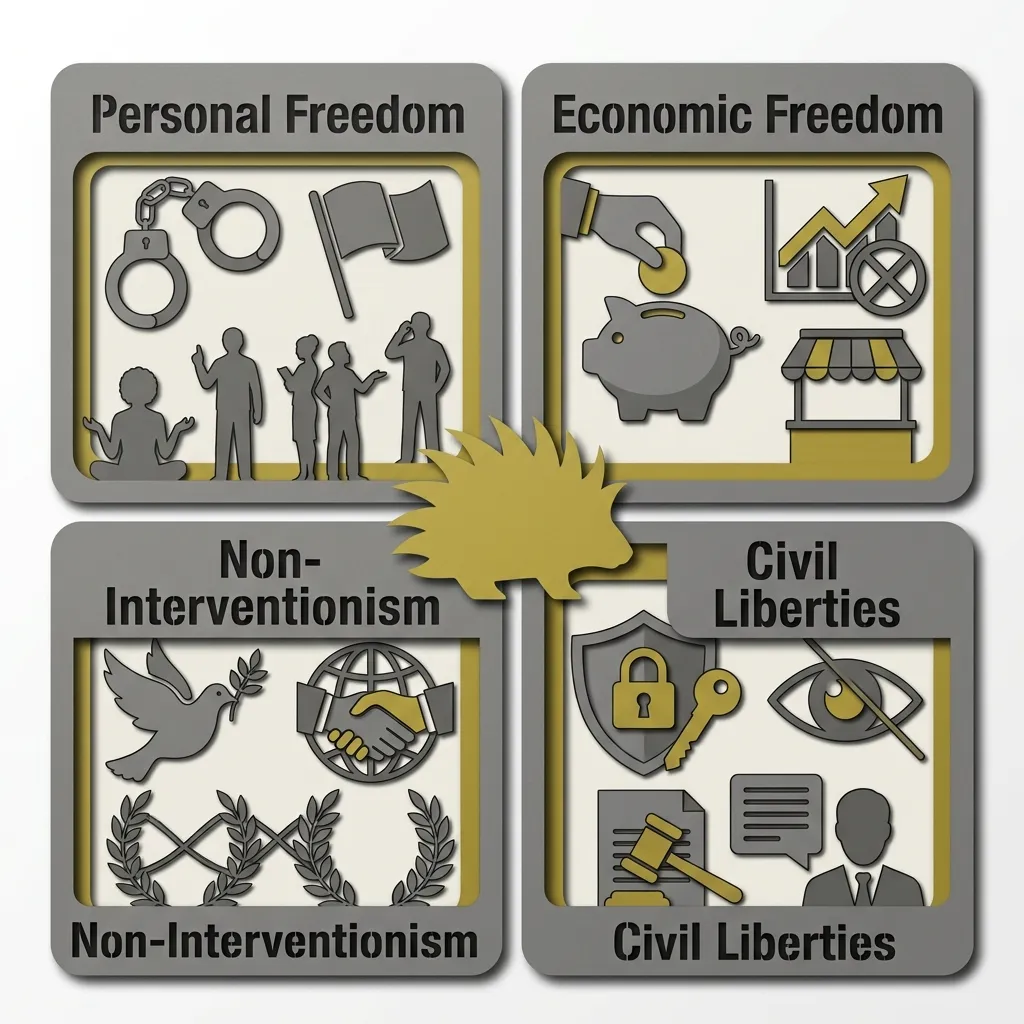
The Duopoly Constraint: Political Monopoly and Electoral Math
Before analyzing the internal operations of a third party, one must understand the hostile regulatory environment in which it operates. The two-party duopoly is not a natural outcome of public preference. It is a state-enforced cartel. In political science, Duverger's Law states that simple-majority single-member district systems (often described as first-past-the-post) mathematically tend to produce a stable two-party equilibrium.
Under these rules, voters rationally avoid supporting minor-party candidates because they fear "wasting" their vote and helping their least favorite major candidate win. This spoiler effect is reinforced by ballot access thresholds and campaign finance laws that act as protectionist regulations for the major parties.
To analyze this cartelization through public choice theory, we can look at the concept of political rent-seeking. Gordon Tullock and James Buchanan observed that when the state holds the power to regulate the political process, the major parties will use that power to write rules that exclude competitors. This is exactly what we observe in the historical evolution of ballot access regulations in the United States.
During the nineteenth century, ballot access barriers were non-existent. Political parties printed their own ballots (known as party tickets), and voters simply placed them in the ballot box. The introduction of the government-printed Australian ballot in the late nineteenth and early twentieth centuries gave the state the authority to determine which parties were allowed on the ballot.
Over the subsequent decades, the two major parties systematically raised the requirements for minor parties. For example, in states like New York, Oklahoma, and Illinois, signature requirements for independent and third-party candidates were increased from a few hundred to tens of thousands. In some states, candidates are required to collect signatures in every single county, meaning a failure in a single rural district can invalidate the entire state-wide petition. These laws do not exist to prevent voter confusion; they exist to protect the major-party cartels from competition, forcing third parties to spend millions of dollars simply to secure the right to be on the ballot.
The Division of Labor: Committees vs. Candidates
A major source of failure in third-party operations is the conflation of roles between permanent party institutions (national and state committees) and temporary campaign organizations (candidates). When these two entities do not respect their unique functions, the result is organizational chaos, wasted resources, and factional infighting.
The Role of National and State Committees
National and state committees are the permanent custodians of the party's institutional infrastructure. Their primary responsibility is not to win individual elections, but to build and maintain the platform upon which candidates can compete. This long-term focus requires committees to prioritize four core functions:
- Ballot Access Maintenance: State and national committees must focus their resources on navigating ballot barriers, defending ballot access in the courts, and organizing petition drives.
This signature collection process is an expensive and logistically intensive operation. Committees must manage professional and volunteer petitioning networks, verify signatures against state voter registries to prevent disqualification by hostile election boards, and raise the capital required to fund signature collection drives (which can run from five to fifteen dollars per signature depending on the state's stringency). When major-party operatives file legal challenges to disqualify third-party petitioners on technicalities (such as using an abbreviation like "St." instead of "Street"), state committees must provide the legal defense to preserve the party's ballot line.
Furthermore, committees must plan petition drives years in advance. They must hire professional petition coordinators, train volunteer signature gatherers in the specific legal requirements of each municipality, and run signature verification software to filter out duplicate, unregistered, or invalid signers. The legal defense of these signatures is often handled by specialized election law attorneys who must represent the party in front of county election boards and state supreme courts. By centralizing this petitioning infrastructure, the committee provides a public common that protects all candidates running under the party's banner. - Brand Management and Positioning: Committees are responsible for defining the party's core platform and maintaining its brand consistency. While individual candidates may adapt their messaging to fit local conditions, the committee must preserve the integrity of the party's philosophical foundations, preventing the brand from being co-opted or diluted by opportunistic actors.
This brand preservation also requires committees to manage internal dispute resolution and credentials processes. When local affiliates diverge on platform definitions or experience leadership disputes, the national committee must act as an objective arbitrator. This process is governed by the party's charter, bylaws, and parliamentary rules (typically Robert's Rules of Order). By resolving internal credentials challenges and organizing national conventions, the committee ensures that the party's legal identity remains secure, preventing factional disputes from fracturing the national brand. - Data Infrastructure and Voter Lists: In modern political campaigning, data is the primary resource. Committees must build and maintain centralized databases of party members, donors, volunteers, and sympathetic voters. By providing candidates with access to clean, segmented voter lists and modern campaign software, committees lower the entry cost for new campaigns.
This requires committees to contract with commercial voter-file providers (such as L2 or Catalist), integrate state voter registration files (such as those obtained from registrars of voters), and manage database synchronization APIs. An effective committee provides candidates with mobile canvassing tools, donor-tracking systems, and email integration pipelines, allowing a candidate to launch their campaign with a functional administrative stack on day one.
The data schema of a political database must track voter history, demographic profiles, donation patterns, and contact logs. Committees must manage these databases in compliance with data privacy regulations (such as the CCPA or state-level privacy statutes), ensuring that voter data is protected from unauthorized access or leakage. By maintaining a clean database, the committee allows local candidates to run targeted SQL queries and generate walk lists for door-knocking campaigns, maximizing the efficiency of volunteer resources.
This database must support synchronization between national and state committees. When a donor contributes to the national party, the data must sync with the state affiliate to ensure local compliance and coordinated outreach. Candidates need to query variables such as voting frequency (to target high-propensity voters), historical donation tiers (to identify potential campaign sponsors), and demographic identifiers, allowing campaigns to allocate their limited marketing budgets with precision. - Regulatory Compliance and Legal Support: Campaign finance laws are designed to act as a barrier to entry, imposing severe compliance costs on new campaigns. Committees must provide training, templates, and legal counsel to ensure that local candidates comply with state and federal disclosure laws.
Federal Election Commission (FEC) guidelines and state-level disclosure boards require detailed, regular reporting of contributions and expenditures. For a volunteer-run local campaign, a minor reporting error can result in ruinous fines or legal investigations. Party committees act as compliance officers, verifying campaign ledgers, hosting treasury training seminars, and providing legal counsel when regulatory bodies launch investigations.
Compliance is especially complex regarding in-kind contributions, joint fundraising committees, and PAC coordination rules. A party committee must monitor all candidate filings to ensure that coordinate expenditures do not violate state law, and that all advertisements carry the proper disclaimers. This compliance shield protects candidate campaigns from being derailed by regulatory enforcement, which is often weaponized by politically appointed election commissioners who seek to suppress minor-party competitors.
The Role of the Candidate Campaign
In contrast to committees, candidate campaigns are temporary, entrepreneurial start-ups. A candidate's goal is short-term and focused: to win a specific office in a specific geographic district during a single election cycle. To achieve this, the candidate must focus on persuasion, fundraising, and voter contact.
Candidates are the front-line marketing vectors for the party's ideas. While committees manage the brand, candidates must sell the brand to the public. This requires candidates to translate abstract philosophical principles into concrete, local policy proposals that address the immediate concerns of their constituents. A candidate running for county commissioner does not need to debate international monetary policy; they must focus on property taxes, zoning regulations, and local infrastructure.
Because campaigns are temporary, they must remain agile and lean. They recruit volunteers, raise funds from local donors, and spend their capital entirely on voter contact (direct mail, digital advertising, door-knocking, and phone banking). The candidate's campaign is consumer-facing, while the committee is infrastructure-facing.
The Tension of Misaligned Incentives
Conflict arises when these roles are reversed. Candidates often view state and national committees as bottomless funding sources, demanding that the party drain its capital to support their individual races. If a committee spends its limited budget on a single congressional race with a low probability of success, it may find itself unable to fund the next petition drive, losing ballot access for the entire state.
Conversely, committees often attempt to micromanage candidate campaigns, demanding absolute ideological purity and centralized approval of campaign literature. This central planning ignores the unique characteristics of local electorates. A candidate in a rural district must use different language, focus on different issues, and adopt a different tone than a candidate running in a metropolitan center.
To resolve this tension, a successful third party must implement a strict division of labor. The committee must behave as a platform provider, supplying ballot access, data, and compliance tools. The candidate must behave as an independent entrepreneur, taking responsibility for their own fundraising, messaging, and campaign execution. By separating infrastructure from marketing, the party can scale its operations without centralized bottlenecks.
The Strategic Growth Path: Factions and Localism
Historically, third parties in the United States have focused their energy on a top-down strategy, allocating the majority of their funds, volunteer hours, and media attention to quadrennial presidential campaigns. This strategy relies on the assumption that a high-profile national campaign will raise brand awareness, attract new members, and build down-ballot strength.
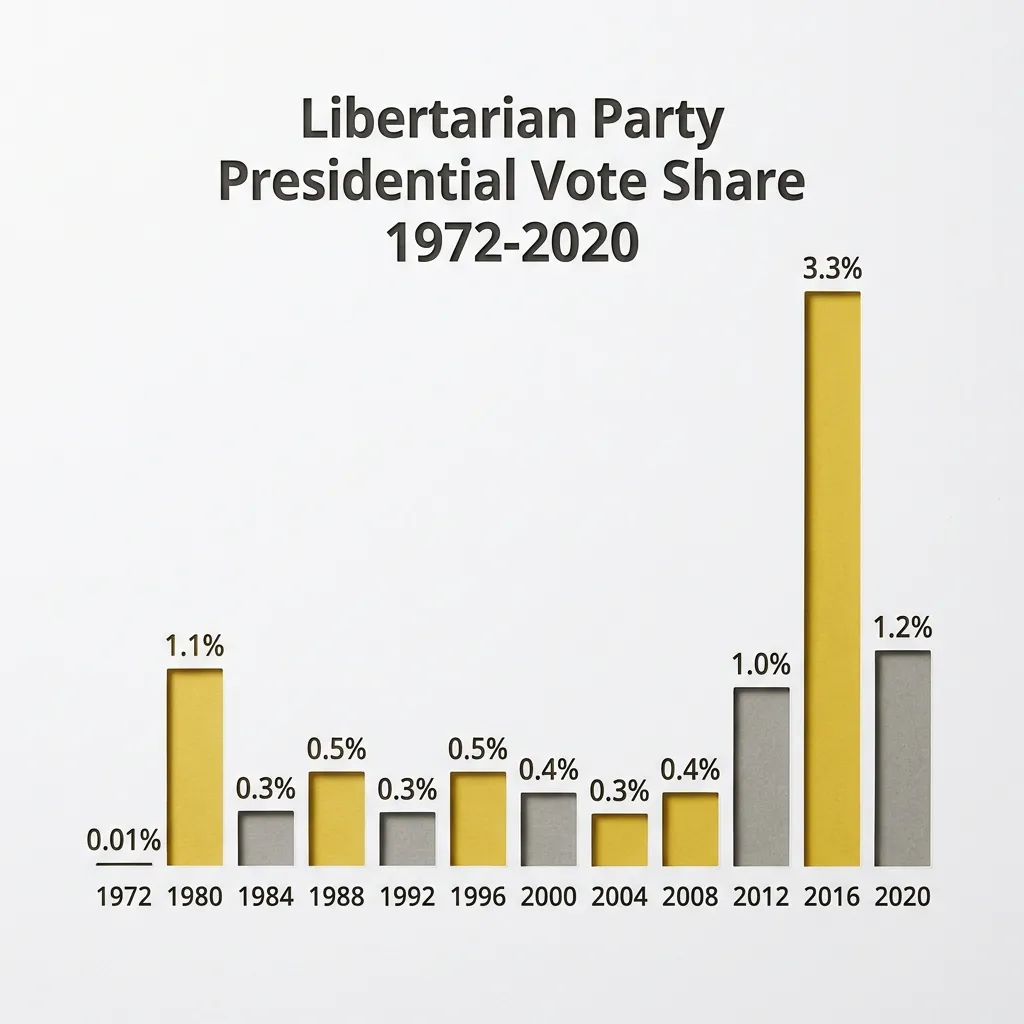
Decades of results suggest that this top-down approach is a structural dead end. Under winner-take-all rules and the Electoral College, the probability of a third-party presidential candidate winning a state (let alone the presidency) is virtually zero. When a movement focuses its identity on a national race it cannot win, it sets itself up for public failure every four years, discouraging volunteers and donors who watch millions of dollars yield single-digit vote shares.
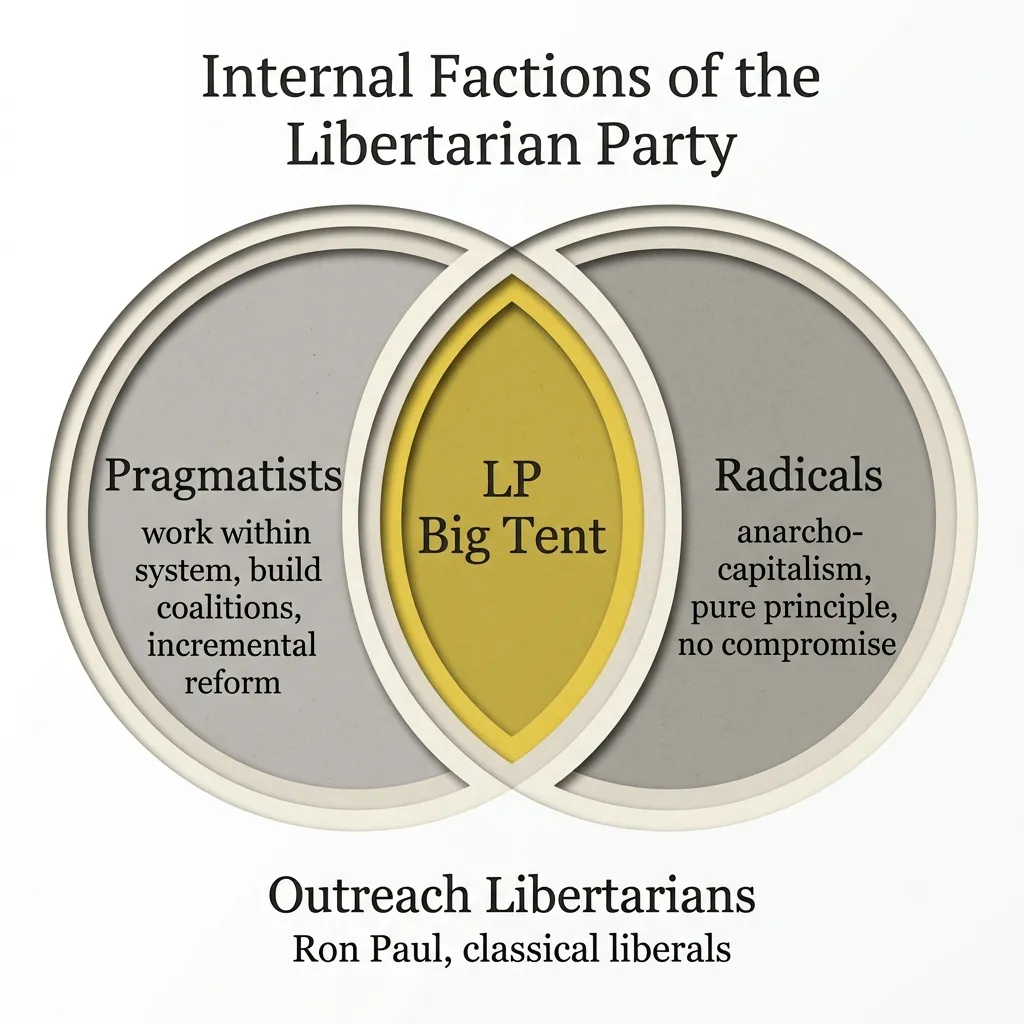
Factions: Radical Purity vs. Pragmatic Outreach
This top-down focus fuels internal factionalism. Third parties are typically divided into two main camps: the purists, who view the party as an educational vehicle and demand strict adherence to abstract philosophical principles, and the pragmatists, who view the party as an electoral vehicle and are willing to moderate the platform to appeal to swing voters.
This factional conflict is a false dichotomy that results from electoral irrelevance. When a party cannot win elections, it stops competing for voters and begins competing for control of the party organization. Purity tests become internal signaling mechanisms used to secure status within the party hierarchy, while pragmatic compromises are framed as sellouts.
In a healthy, growing party, these factions are balanced. The purists keep the party anchored in its core principles, preventing it from becoming a copy of the major parties. The pragmatists focus on customer acquisition, finding the language and issues that make those principles appealing to the public. This balance is only possible when the party focuses its attention on races where victory is achievable.
This debate is often illustrated by Murray Rothbard's analysis of gradualism versus abolitionism. The abolitionist demands the immediate, complete elimination of the state (often framed as the "button-pressing" dilemma: would you press a button to abolish all government instantly?), while the gradualist is willing to accept incremental rollbacks. Rothbard resolved this by arguing that an activist should always advocate for the ultimate goal of complete liberty, but should welcome any intermediate step that moves in that direction. Ideological purity determines the direction, while political pragmatism determines the speed.
To achieve this balance in campaign messaging, candidates must practice "strategic communication." This means explaining radical libertarian principles through local, popular concerns. For example, instead of explaining the abstract ethics of property rights, a candidate can campaign on abolishing local zoning codes, explaining how municipal planning regulations restrict housing construction and drive up rent for working-class families. This approach remains ideologically pure while offering a practical, consumer-facing utility to the voter.
The Power of Localism and Non-Partisan Elections
A successful third-party strategy must invert this pyramid, adopting a bottom-up model centered on localism. The path to institutional viability begins with local, non-partisan, and municipal offices (school boards, city councils, county commissions, water districts, and planning boards).
Local races offer four major structural advantages for a growing third party:
- Low Capital Barriers: A campaign for city council in a medium-sized town can be won with a few thousand dollars and a dedicated volunteer team that knocks on every door. In contrast, a congressional campaign requires millions of dollars in television and digital advertising to achieve basic name recognition.
- Direct Voter Contact: In local races, personal contact is the primary determinant of victory. A candidate who spends months door-knocking, listening to residents' concerns, and participating in community events can easily overcome the party-affiliation advantage of major-party opponents who rely on generic mailers and straight-ticket voting.
- Tangible Policy Influence: Local governments control the policies that affect daily life: property taxes, zoning laws, occupational licensing, business permits, and police practices. By winning local offices, third-party candidates can implement real rollbacks of state power, providing concrete proof that their ideas lead to better community outcomes.
For example, a third-party zoning board member can vote to eliminate minimum parking requirements, reduce setback limits, and permit backyard accessory dwelling units. A county commissioner can vote to cap property tax assessments or defund corporate subsidy pipelines. These actions represent concrete reductions in state coercion that show the community the practical benefits of the party's ideas, building local trust and credibility.
Additionally, county-level offices such as county clerk, sheriff, or tax assessor manage significant local administrative budgets. A third-party tax assessor can adjust assessment methodologies to prevent inflationary property tax increases, while a constitutional sheriff can deprioritize the enforcement of victimless crimes, directly protecting the community from federal or state overreach. By focusing on these specific leverage points, the party can demonstrate that liberty is not an abstract theory, but a practical method of governance. - Building a Bench of Leaders: Winning local office builds institutional credibility. It creates a bench of experienced public servants who understand parliamentary procedure, budget management, and public administration. When the party eventually runs candidates for state legislature or congress, they will do so with established local track records rather than as political novices.
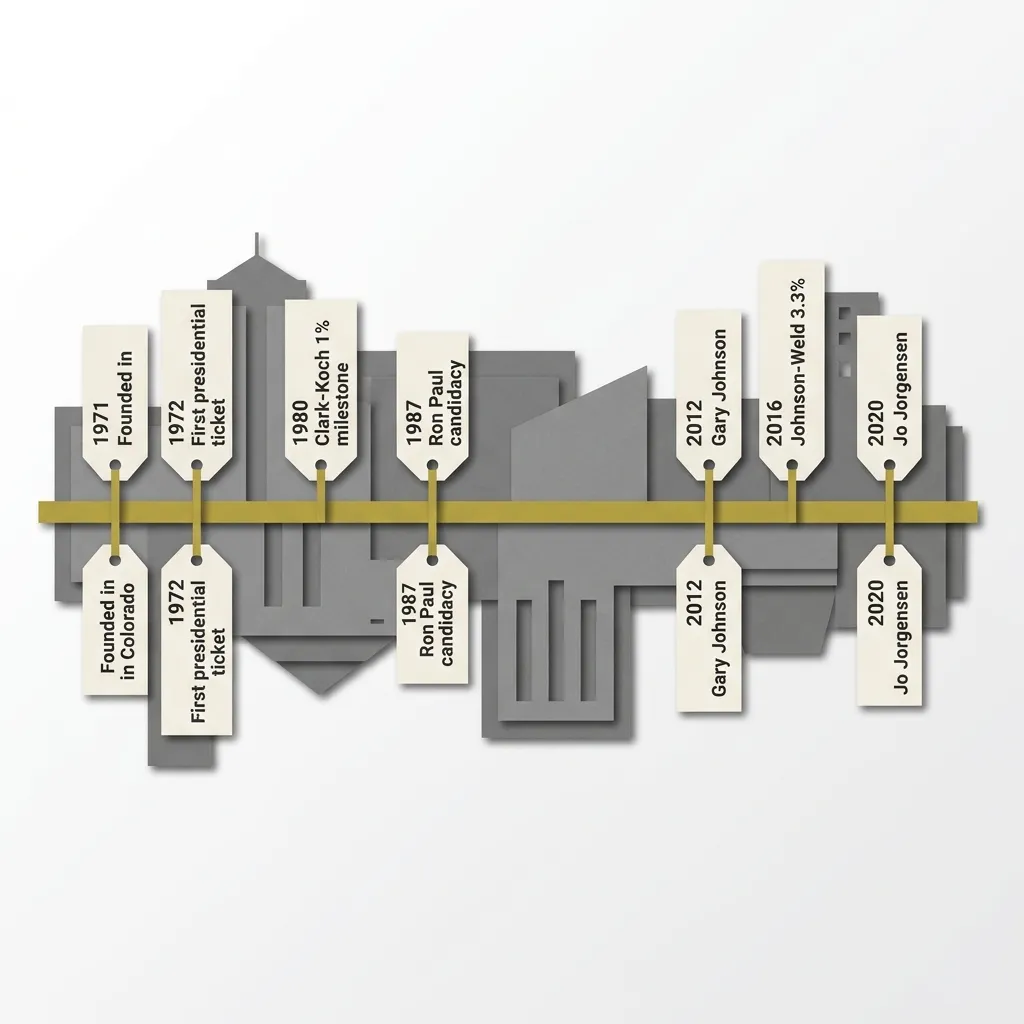
The State Legislature as the Strategic Bridge
Once a third party has established a bench of local elected officials, the next step on the growth path is state legislative races. State assembly and state senate races represent the real bridge between local municipal offices and federal campaigns.
State legislative campaigns require moderate capital (typically $20,000 to $100,000 depending on the district) but carry significant policy weight. A third-party representative in a closely divided state legislature can hold the balance of power, forcing the major parties to make major concessions to pass their budgets or legislation.
Furthermore, state legislative campaigns allow the party to introduce actual bills and force major-party representatives to vote on them. Even when the bills fail, the voting record can be used to hold major-party incumbents accountable in the next election cycle. State-level presence also gives the party platform credibility, showing voters that the party is a functional legislative force, which in turn boosts local fundraising and volunteer recruitment.
In this arena, third-party legislators can introduce high-leverage bills such as "Right to Try" laws (which allow terminally ill patients to access experimental drugs), constitutional carry bills, educational choice bills (voucher programs), and cryptocurrency protection acts. By forcing roll-call votes on these specific, popular issues, minor-party legislators expose the duopoly's opposition to basic freedoms, building a public record that can be weaponized in subsequent election campaigns.
The Proper Role of Presidential Campaigns
This localist focus does not mean third parties should abandon presidential campaigns entirely. Instead, they must redefine their purpose.
The goal of a third-party presidential campaign is not to win the White House; it is to secure state ballot access. In many states, ballot access laws require a party's presidential candidate to receive a certain percentage of the vote (typically one to three percent) to maintain the party's ballot line for the next election cycle.
Therefore, a presidential campaign should be treated as a defensive brand-preservation exercise. The national committee should run a lean, focused campaign designed to hit the ballot access thresholds in target states, while refusing to sink the majority of the party's capital into national advertising. The primary budget must remain anchored in local and state legislative races, where the return on investment in terms of real policy change and institutional growth is infinitely higher.
Alternative Modes of Activism: Shifting the Arena
While reforming third-party operations can improve electoral efficiency, we must confront a deeper reality: political parties are a highly restrictive container for liberty activism.
By their nature, political parties are forced to operate within the state's rules. They must register with election commissions, report their donors to the government, run campaigns for state offices, and participate in a majoritarian system that relies on coercion. For many individuals, the compromises, bureaucracy, and public hostility of party politics do not align with their talents or values.
Fortunately, political action is only one arena of change. Real, lasting social evolution is driven by cultural shifts, technological innovation, legal precedents, and alternative institutions. Those seeking a free society must cultivate alternative modes of activism that bypass the electoral system entirely.
1. Educational Activism and Intellectual Infrastructure
Political parties merely register shifts in public opinion; they do not create them. When a politician proposes a policy, they are choosing from ideas that have already been made socially acceptable by intellectuals, academics, and writers. This dynamic (often referred to as the Overton Window) means that long-term social change requires investment in the production of ideas.
This concept is illuminated by the Italian theorist Antonio Gramsci's analysis of cultural hegemony. Gramsci observed that the ruling class maintains control not merely through physical force, but through the dissemination of values, beliefs, and common-sense assumptions that justify its dominance. To challenge this hegemony, progressives launched what was described as the "long march through the institutions," systematically capturing universities, media outlets, and cultural centers.
For liberty activists, attempting to capture these existing, captured institutions is a low-probability strategy. The solution is the construction of parallel educational and intellectual institutions. Educational activism focuses on building the intellectual infrastructure of liberty. This is the domain of think tanks, research institutes, independent publishers, and educational foundations: institutions like the Mises Institute, the Cato Institute, the Foundation for Economic Education (FEE), and the Independent Institute.
These organizations perform several vital tasks:
- Academic Research: Producing peer-reviewed books, journals, and policy papers that challenge mainstream economic and legal assumptions, providing the intellectual ammunition needed to fight state expansion.
- Student Outreach and Fellowships: Providing scholarships, seminars, and internships to young people, introducing them to classical liberal ideas before they enter academia or corporate life.
- Popular Education: Creating accessible videos, podcasts, articles, and textbooks that explain economic and philosophical principles to the general public.
This structure of idea production mimics the Austrian concept of roundabout production. Instead of producing consumer goods directly, a society first invests in capital goods (tools, machinery) that make future production more efficient. In the marketplace of ideas, basic philosophical research is the primary capital good. Think tanks and scholars spend years developing economic theories and historical analyses.
This pipeline can be traced back to the Mont Pelerin Society, founded in 1947 by Friedrich Hayek, Ludwig von Mises, and others to preserve classical liberalism in the face of post-war collectivism. Over the subsequent decades, members of the society founded think tanks (such as the Institute of Economic Affairs in the UK and the Heritage Foundation in the US) that translated academic ideas into policy briefs. When politicians like Margaret Thatcher and Ronald Reagan came to power in the late 1970s and 1980s, they drew their platforms directly from these think tanks.
This structure of production of ideas was also analyzed by Friedrich Hayek in his essay "The Intellectuals and Socialism." Hayek observed that ideas flow from the philosopher (the creator of the raw concept), to the intellectual (the popularizer: journalists, teachers, cartoonists, academics), and finally to the politician and voter.
If the intellectual class remains committed to statism, no political campaign can succeed, because the public will view liberty as dangerous or impractical. Therefore, the primary task of the movement must be the conversion or replacement of the intellectual class. Think tanks and educational programs function as the machine shops of this process, training the writers, educators, and content creators who will shape the culture of the next generation.
Attempting to run political campaigns without first investing in the intellectual capital of the movement is like trying to build a modern factory with bare hands. It is a structural failure that results in superficial campaigns and empty victories. Educational activism is the slow, patient process of changing the mind of society.
2. Public Interest Litigation: The Legal Shield
Another highly effective non-political arena is public interest litigation. Rather than trying to elect politicians to repeal bad laws, legal activists use the court system to strike down unconstitutional regulations, defending individual rights directly.
Organizations like the Institute for Justice (IJ), the Pacific Legal Foundation (PLF), and the Goldwater Institute have pioneered this approach. They select strategic cases that represent egregious state overreach, represent clients free of charge, and argue them before state supreme courts and the US Supreme Court.
This litigation strategy has secured major victories in several key areas:
- Occupational Licensing: Striking down laws that require government permission (licenses) to work in low-risk professions like hair braiding, floral design, or tour guiding.
These cases often rely on the Fourteenth Amendment's Privileges or Immunities clause or Due Process clause, arguing that the right to earn an honest living is a fundamental liberty that cannot be restricted to protect entrenched cartels from competition. - Property Rights and Eminent Domain: Defending homeowners and small businesses from municipal attempts to seize their property for private development or to impose confiscatory zoning restrictions.
A prime example of this was the legal campaign surrounding the Supreme Court's Kelo v. New London decision. While the court ruled against the property owner, the public outrage generated by the case led to state-level legislative reforms across the country, limiting the power of eminent domain for private economic development.
Similarly, in cases like Sackett v. EPA, public interest lawyers successfully challenged the administrative state's power to regulate private land under the Clean Water Act, securing a major victory that restricted the scope of federal environmental bureaucracies. These cases show that the courts can be used as a powerful legal shield to dismantle state power, bypassing the legislative process entirely. - Civil Asset Forfeiture: Challenging the state's power to seize cash, vehicles, and homes from citizens who have never been charged with a crime.
- Educational Choice: Defending school voucher programs and tax-credit scholarships in court, allowing parents to choose alternative schooling options for their children.
In conducting these legal battles, public interest lawyers must challenge the dominant legal doctrine of the "rational basis test." Under this doctrine, courts defer to government regulations as long as the state can claim a rational connection to a legitimate public interest, which in practice allows regulators to justify almost any restriction on economic liberty. This standard originated in the early twentieth century, culminating in the Supreme Court's Carolene Products decision in 1938, where Footnote Four established a two-tiered system of constitutional interpretation. Under this regime, civil liberties and voting rights receive heightened judicial protection, while economic liberties: such as the right to practice an occupation or use private property free from arbitrary regulation: are relegated to a lower level of scrutiny.
This bifurcated approach effectively abdicated the judiciary's role as a check on legislative rent-seeking. Because the rational basis test allows courts to accept purely hypothetical justifications invented by government lawyers, it creates a massive asymmetry where the state almost always wins. Public interest litigants systematically challenge this imbalance by presenting empirical evidence that demonstrates the predatory, anti-competitive intent behind occupational licensing and zoning codes. By proving that these regulations do not protect public health but instead serve as cartel protection, legal activists seek to restore economic liberty to its rightful place as a fundamental right.
By litigating for economic rights, activists push to elevate economic liberty to a fundamental right that requires "strict scrutiny": a standard that forces the government to prove that a regulation is narrowly tailored to achieve a compelling state interest. This legal strategy seeks to rebuild the constitutional limits of the state, using the judiciary as a check on majoritarian legislative overreach.
Public interest litigation has a massive multiplier effect. A single court victory can strike down a bad law across an entire state or nation, immediately liberating millions of people from regulatory oppression. It is a highly leveraged form of activism that relies on constitutional law rather than democratic majorities.
3. Agorism and Counter-Economics: Building Alternatives
For those who reject both the electoral and legal systems, agorism offers a strategy of direct action. Formulated by Samuel Edward Konkin III, agorism is the philosophy of using counter-economics to build a free society.
Counter-economics is the sum of all non-violent private actions that are restricted or prohibited by the state. Agorists do not petition the government to deregulate the market; they simply operate in the market as if the regulations do not exist. They focus on building parallel, voluntary networks that render government institutions obsolete.
Modern technology has dramatically expanded the feasibility of agorist activism:
- Decentralized Finance: Utilizing Bitcoin and privacy-focused digital currencies to trade outside the state-controlled banking system, avoiding inflation and financial surveillance.
This financial counter-economics relies on cryptographic protocols (PGP, Tor, and decentralized consensus mechanisms) to create non-custodial, peer-to-peer transaction spaces that are immune to central bank control. By separating money from the state, agorism deprives the government of its primary funding tool (monetary expansion).
The mathematical foundations of public-key cryptography represent a structural shift in the balance of power between the individual and the state. By using asymmetric keys, individuals can encrypt messages and authorize transactions using mathematical proofs that cannot be broken by state agencies, regardless of their computational budget. This changes the economics of state enforcement; while physical coercion requires labor-intensive policing, breaking cryptographic protocols is mathematically impossible within reasonable timeframes, making enforcement costs prohibitively high for the state.
The development of decentralized protocols (such as IPFS, mesh networks, and zero-knowledge proof cryptography) has created a technological stack that is immune to centralized control. These tools allow individuals to publish, contract, and trade without needing a trusted third party or a state license, creating a private jurisdiction of exchange that exists purely in the digital commons. - Encrypted Communications: Developing peer-to-peer messaging platforms, virtual private networks (VPNs), and cryptographic tools that protect private correspondence from government surveillance.
- The Sharing Economy: Utilizing decentralized protocols to facilitate peer-to-peer lodging, transport, and freelance labor without registering with state licensing boards.
- Private Arbitration: Resolving contract disputes through independent private judges and arbitration services, bypassing the slow and expensive government court system.
Agorism operates on the premise that technology is a more effective liberator than politics. A politician can promise to defend privacy, but a cryptographic protocol actually enforces it. By building software and marketplaces that cannot be regulated by the state, agorists create pockets of freedom that exist regardless of which political party holds power.
4. Mutual Aid and Voluntary Association: Restoring Civil Society
The growth of the welfare state has systematically crowded out civil society. In the nineteenth and early twentieth centuries, before the rise of state welfare, the working class protected itself from poverty, illness, and workplace accidents through a vast network of voluntary associations (fraternal lodges, mutual aid societies, and cooperative associations).
These mutual aid networks provided several critical services:
- Cooperative Healthcare: Lodges hired "lodge doctors" who provided unlimited primary care to members for a flat annual fee (often the equivalent of a day's wages), creating a highly affordable, market-driven healthcare model.
This lodge-doctor system was highly efficient because members had a direct interest in preventing fraud, and doctors competed for lodge contracts by maintaining high standards of care. - Fraternal Insurance: Providing life insurance, disability benefits, and pension programs funded by membership dues, ensuring that families were not ruined by the death or injury of a breadwinner.
These programs were managed as mutual trusts, with assets invested in local businesses and infrastructure, keeping capital within the community. - Social Safety Nets: Organizing food pantries, emergency loans, and housing for members who fell on hard times, managed by local volunteers who knew the recipients personally, preventing the fraud and dependency of state welfare.
The internal governance of these friendly societies was built on a model of decentralized republicanism. Fraternal lodges operated under democratic constitutions where officers were elected periodically, and members voted directly on expenditure policies. This participatory structure served as a training ground for civic virtue and administrative responsibility, allowing working-class individuals to develop leadership skills and manage significant financial resources without state supervision. The ritualized meetings and codes of conduct fostered mutual accountability, where members were expected to support one another in character development as well as material aid.
At their peak, fraternal societies represented a massive segment of civil society. In the United States and the United Kingdom, membership in friendly societies surpassed that of labor unions and commercial insurance corporations combined, illustrating that voluntary associations were the dominant method of social security before the state monopolized these services.
These fraternal networks (such as the Independent Order of Odd Fellows, the Foresters, and the Free and Accepted Masons) were systematically destroyed in the mid-twentieth century through a combination of state welfare expansion (which subsidized dependency) and medical licensing laws (which outlawed the lodge-doctor model to protect the monopoly pricing of the medical cartel). Rebuilding mutual aid networks is a vital task for modern activists, demonstrating that compassion and social safety can be delivered through voluntary association rather than political force.
The Defensive Purpose of a Political Party
Given the efficacy of alternative activism, we must address the remaining question: does a political party have any value at all?
For libertarians, the answer is yes, but only if the party's role is understood as defensive. A third party is not a tool to capture the state and impose liberty from the top down. Rather, it is a shield used to defend the alternative spaces created by educational, legal, agorist, and mutual aid activists.
A political party serves three key defensive purposes:
1. Defending Alternative Spaces
As agorist technologies, mutual aid societies, and alternative schools grow, they will inevitably face regulatory attacks from the state and its corporate partners. The state will try to ban digital currencies, outlaw health-share ministries, and shut down independent learning cooperatives.
A third party uses its political platform to defend these alternatives. By running candidates who advocate for the legalization of competing currencies, the deregulation of healthcare, and the expansion of educational choice, the party creates a political buffer zone, keeping the state from crushing the seeds of the new society.
2. The Public Platform and Idea Distribution
While think tanks produce ideas for intellectuals and students, political campaigns distribute ideas to the general public. During election cycles, the media is forced to cover candidate debates and platforms.
Third-party campaigns use this temporary window to introduce ideas that would otherwise be ignored: abolishing the central bank, ending corporate subsidies, deregulating occupational licenses, and winding down foreign military interventions. Even when the candidate loses, the ideas are planted in the minds of voters, shifting the Overton Window and forcing the major parties to adapt their platforms to prevent losing votes.
3. Forcing Minor Concessions and The Spoiler Effect
In close elections, the major parties are highly sensitive to "spoiler" effects. If a third-party candidate consistently receives three to five percent of the vote, the major parties will attempt to capture those voters by co-opting parts of the third-party platform.
This pressure function behaves as a political pricing mechanism. When a third party accumulates votes, it signals to the duopoly that there is an unsatisfied demand for specific policies.
To capture this demand and eliminate the spoiler threat, major-party candidates are forced to make concessions (implementing local tax cuts, rolling back licensing barriers, or scaling back aggressive regulatory enforcement). The third-party ballot line acts as a leverage point, extracting minor reductions in state power that benefit the public immediately.
Conclusion: The Multi-Pronged Liberty Ecosystem
The achievement of a free society is not a single political event. It cannot be accomplished by winning a presidential election, passing a single piece of federal legislation, or capturing a majoritarian state. The state is a complex, self-reinforcing system of coercion, and challenging it requires a multi-pronged approach.
Within this ecosystem, the political party plays a narrow, defensive role. Its function is to build state-level ballot lines, run lean local campaigns, and use candidate platforms to defend the private alternatives. The party committees must focus on data, compliance, and ballot infrastructure, while leaving candidates free to run entrepreneurial, locally tailored campaigns.
The primary engine of change, however, lies outside the political arena. It is the work of think tanks and writers changing the culture; public interest lawyers striking down unconstitutional laws; agorists building decentralized financial and economic technologies; and local communities establishing mutual aid safety nets.
We should not place all of our hopes or resources in a single political party. Instead, we must view the party as one tool among many. By working in our respective arenas: whether in the courtroom, the classroom, the marketplace, or the local community council: we can build a resilient, decentralized movement that gradually hollows out state power, replacing coercion with a voluntary, prosperous, and free society.